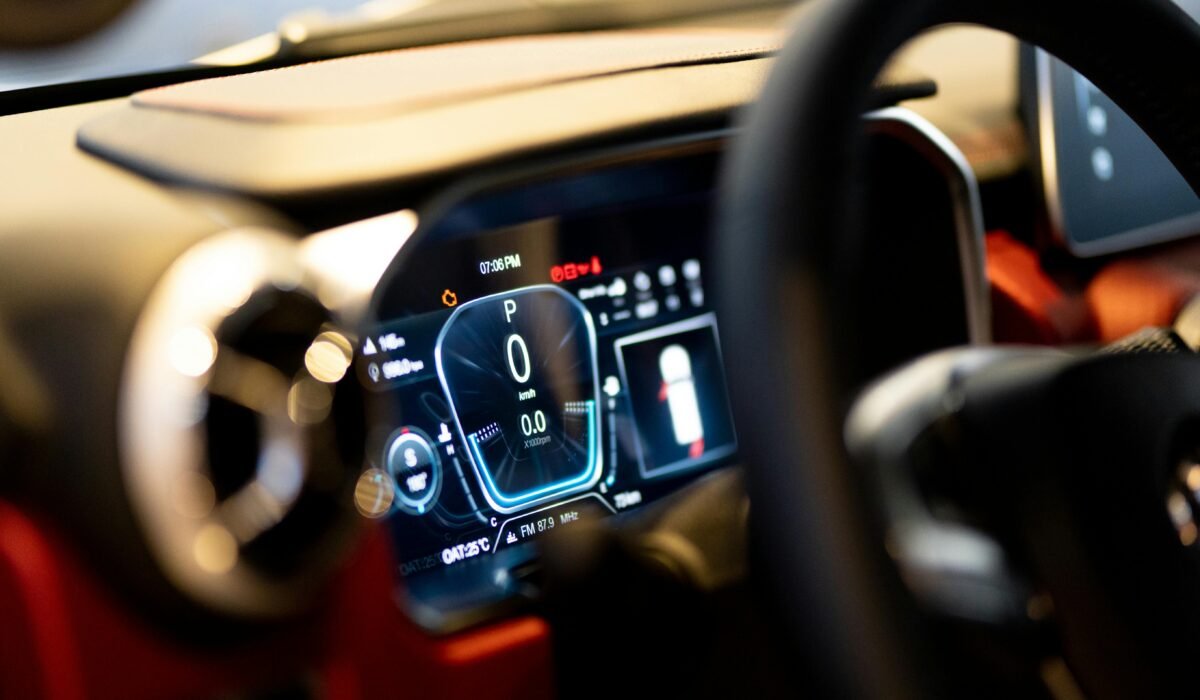
Have you ever wondered how your car seems to know exactly what you want, from the perfect playlist to the fastest route home? The secret lies in the sophisticated world of AI in Smart Infotainment Systems, which are rapidly transforming our driving experience. This article will explain what these intelligent systems are, how they enhance your time on the road, and what the future holds for automotive technology.
What are Smart Infotainment Systems?
At its core, a smart infotainment system is your car’s central hub for information and entertainment, seamlessly integrated into the dashboard. Think beyond a simple radio or CD player; these systems combine audio, video, navigation, communication, and connectivity features into a single, cohesive unit. They are “smart” because they leverage connectivity and advanced processing to offer far more than basic functions.
Modern infotainment systems connect to your smartphone, access cloud services, and often feature intuitive touchscreens and voice controls. What most people miss is that the “smart” aspect isn’t just about connectivity; it’s about the underlying intelligence that makes these features truly useful and responsive to you, the driver. This intelligence is increasingly powered by artificial intelligence.
How Does AI Enhance the Driving Experience?
AI transforms the mundane act of driving into a highly intuitive and personalized journey, making every trip safer, more convenient, and more enjoyable. It achieves this by learning from your habits and preferences, anticipating your needs, and responding intelligently to commands. The short answer is that AI brings a level of responsiveness and foresight that traditional systems simply can’t match.
Personalization and Convenience
Imagine stepping into your car and it automatically adjusts the seat, mirrors, climate control, and even your favorite music playlist based on who is driving. This is the promise of a personalized driving experience AI offers. AI algorithms analyze your past behaviors, preferred routes, and media choices to tailor the in-car environment to your exact liking, creating a truly unique and comfortable space.
Beyond personal settings, AI-powered systems can recommend nearby points of interest, suggest alternative routes based on real-time traffic, and even manage your calendar appointments. This level of proactive assistance helps reduce cognitive load on the driver, allowing for a more focused and relaxed journey.
Enhanced Safety Features
While often associated with entertainment, AI in smart infotainment systems plays a crucial role in improving safety. By integrating with advanced driver assistance systems (ADAS), AI can provide timely alerts and even intervene to prevent accidents. This includes features like lane-keeping assist and automatic emergency braking, which often share data with the infotainment system for display and alerts.
Furthermore, driver monitoring systems use AI to detect signs of fatigue, distraction, or drowsiness by analyzing facial expressions and eye movements. If the system identifies a potential risk, it can trigger alerts, recommend breaks, or even adjust cabin settings to help the driver stay alert. This proactive safety measure is a game-changer for long drives or challenging conditions.
Key AI Technologies Powering In-Car Infotainment
The magic behind these intelligent systems isn’t just one type of AI, but a combination of sophisticated technologies working in harmony. These technologies allow infotainment systems to understand, learn, and adapt in ways that seemed futuristic just a few years ago. Understanding these components helps us appreciate the complexity and capability of modern automotive AI.
Natural Language Processing (NLP) and Voice Recognition
One of the most visible applications of AI is in voice recognition systems. Gone are the days of rigid, command-specific voice prompts. With advanced Natural Language Processing (NLP), an in-vehicle AI assistant can understand natural, conversational commands, much like speaking to a human. Hideaki Ishii, Managing Director at Pioneer India Electronics, notes that “AI-powered voice recognition systems can understand complex commands and respond accordingly, making it easier for drivers to control various car functions” hands-free, significantly reducing distractions.
This allows drivers to control navigation, make calls, adjust climate, or select music without taking their hands off the wheel or eyes off the road. The system learns your accent and speech patterns over time, improving accuracy and responsiveness with every interaction.
Machine Learning and Deep Learning
Machine learning (ML) and deep learning (DL) algorithms are the brains behind the system’s ability to learn and make predictions. These technologies analyze vast amounts of data – from your driving routes and media preferences to sensor data about vehicle performance and external conditions. Here’s how they contribute:
- Predictive Recommendations: ML algorithms learn your habits to suggest music, podcasts, or navigation routes at specific times. If you always listen to news during your morning commute, the system will anticipate this.
- Adaptive Interfaces: Deep learning helps create interfaces that adapt to your usage, prioritizing frequently used features and minimizing clutter on the screen.
- Predictive Maintenance: AI analyzes real-time data from sensors and driving patterns to predict wear and tear of key vehicle components like brake pads, tires, or battery health, often displaying these insights on the car’s dashboard. This proactive approach helps prevent breakdowns and extends vehicle lifespan.
Masashige Mizuyama, Panasonic Automotive Systems’ CTO, emphasizes that AI’s integration into automotive applications has evolved significantly, from “simple voice commands to advanced deep learning models that understand natural language.” This continuous learning is what truly makes these systems “smart.”
Evolving User Experience (UX) and Human-Machine Interaction (HMI) with AI
The way we interact with our cars is undergoing a profound transformation, driven largely by AI. The traditional buttons and knobs are giving way to more intuitive and seamless methods of control, creating a truly immersive smart cockpit technology. This evolution in human-machine interface (HMI) is all about making the car feel like an extension of yourself, rather than just a machine you operate. For more on how connected features enhance driving, you can read our guide on How Connected Cars Enhance Driving: A Personalized Guide.
Adaptive Interfaces and Multimodal Interaction
AI enables adaptive interfaces that dynamically change based on context, driver attention, and preferences. For instance, navigation instructions might appear larger when the system detects high traffic or complex intersections, then shrink back when driving on open roads. This intelligent display management minimizes distractions and presents information only when it’s most relevant.
Furthermore, AI fosters multimodal interaction, combining voice, touch, and gesture controls. You might start a command with your voice, then refine it with a touch, or even use a simple hand gesture to skip a song. This flexibility caters to different driving situations and personal preferences, significantly improving the overall AI automotive HMI benefits. The system learns which modes you prefer for certain tasks, further refining the experience.
Learning User Preferences Beyond the Obvious
AI goes beyond explicit commands to learn your implicit preferences. It observes patterns in your behavior: what music you listen to at certain times of day, your preferred cabin temperature, or even how you react to different navigation prompts. This deep learning allows the system to anticipate your needs, offering a truly proactive and comfortable environment. Modern infotainment systems, according to Cardata, “use AI to personalize media, navigation, and even interior settings, relying on diverse datasets to understand driver preferences and behaviors.” This level of understanding creates an unparalleled personalized driving experience AI can deliver.
Addressing Cybersecurity and Data Privacy in Smart Infotainment
As smart infotainment systems become more connected and intelligent, the importance of robust cybersecurity and strict data privacy measures cannot be overstated. With a projected global automotive infotainment market reaching $70.22 billion by 2027, the volume of data processed and the potential attack surface are enormous. This is a critical area where continuous innovation and vigilance are required.
Protecting Against Cyber Threats
The connectivity that makes these systems so powerful also introduces vulnerabilities. A compromised infotainment system could potentially expose personal data, grant unauthorized access to vehicle controls, or even be used as an entry point to other critical vehicle systems. Therefore, manufacturers are implementing multi-layered security protocols, including:
- Secure Boot Mechanisms: Ensuring only authenticated software can run on the system.
- Over-the-Air (OTA) Updates: Providing timely security patches and software enhancements.
- Intrusion Detection Systems: Monitoring for suspicious activity and alerting the driver or manufacturer.
- Encryption: Protecting data both in transit and at rest within the system.
These measures are vital for preventing malicious attacks and maintaining the integrity of the vehicle’s systems. For a deeper dive into protecting digital assets, our article on How to Prevent AI Data Poisoning: A Complete Security Guide for US Businesses in 2025 offers relevant insights into general AI security practices.
Safeguarding Personal Data
Smart infotainment systems collect a wealth of personal data, from your location history and communication logs to your media preferences and even biometric information if advanced driver monitoring is in place. Ensuring data privacy car systems uphold is paramount to building user trust. Manufacturers are working to:
- Anonymize Data: Where possible, data is anonymized to prevent direct linkage to an individual.
- Data Minimization: Only collecting data that is absolutely necessary for the system’s function.
- Clear Consent Policies: Providing transparent explanations of what data is collected and how it’s used, with clear options for users to consent or opt-out.
- Compliance with Regulations: Adhering to international data protection laws like GDPR and CCPA.
Ultimately, the goal is to provide the benefits of AI-powered personalization without compromising the driver’s privacy or security. This ongoing challenge requires a commitment from both automakers and technology providers to prioritize ethical data handling and robust automotive cybersecurity.
Real-World Examples: AI in Today's Infotainment Systems
AI isn’t just a concept for the future; it’s actively shaping the cars we drive today. From familiar voice assistants to cutting-edge health monitoring, these examples showcase the diverse applications of AI in Smart Infotainment Systems. Seeing these technologies in action helps illustrate their tangible benefits.
Google Assistant in Vehicles
A prime example is the integration of Google Assistant, powered by a large language model, found in many modern car models, such as the **GMC Sierra EV truck**. This in-vehicle AI assistant allows for hands-free control of numerous functions, including calls, navigation, climate control, and even Wi-Fi management through natural voice commands. This makes everyday tasks simpler and safer, as drivers can keep their focus on the road.
In-Cabin Vital Signs Monitoring
Collaborations like Omnivision and Philips have led to innovative in-cabin vital signs monitoring systems. These systems use sensors to measure heart rate and breathing rate, translating this information into automatic adjustments of climate control, audio volume, and cabin lighting. This demonstrates how AI can proactively create a more comfortable and responsive environment, even reacting to a driver’s physiological state.
Driver Monitoring for Safety
Many contemporary infotainment systems integrate with driver monitoring systems that use camera data and facial analysis. These AI-powered systems can detect subtle signs of fatigue, distraction, or drowsiness, such as prolonged eye closure or head nodding. When a risk is identified, the system can trigger real-time alerts – visual, auditory, or haptic – to help keep the driver engaged and safe. This technology is a significant step forward in accident prevention.
Predictive Maintenance Insights
Another practical application is AI-driven predictive maintenance. Modern vehicles are equipped with numerous sensors that generate vast amounts of operational data. AI algorithms analyze this data in real-time to predict the wear and tear of components like brake pads, tires, or even potential battery issues in electric vehicles. These insights are often displayed on the car’s dashboard or via companion apps, allowing drivers to schedule maintenance proactively and avoid unexpected breakdowns. This proactive approach saves time and money for car owners.
The Future of AI in Car Infotainment Systems
The trajectory of AI integration in automotive infotainment is one of continuous growth and increasing sophistication. We’re on the cusp of a new era where our cars will not just transport us, but truly partner with us, anticipating our needs and providing unparalleled levels of comfort, safety, and connectivity. The future of car infotainment systems promises even more immersive and intelligent experiences. For broader insights into AI in vehicles, consider our article on AI in Self-Driving Cars: Beyond Tech to Trust & Ethics.
Seamless Integration and Contextual Awareness
Expect even deeper integration of AI across all vehicle functions, moving beyond mere infotainment to a truly holistic smart cockpit AI technology. Future systems will possess enhanced contextual awareness, understanding not just your preferences but also your emotional state, the weather, traffic, and even external events. This will allow for hyper-personalized adjustments, from dynamic soundscapes that adapt to driving conditions to proactive suggestions for detours around unexpected hazards. IBM defines AI as “technology enabling computers and machines to simulate human learning, comprehension, problem-solving, decision-making, creativity, and autonomy,” a definition that perfectly encapsulates this evolving vision.
Advanced Biometric and Health Monitoring
Building on current vital signs monitoring, future systems will likely incorporate more advanced biometric sensors. These could monitor stress levels, detect early signs of illness, or even offer personalized wellness recommendations during long drives. The car might suggest a breathing exercise during traffic or recommend a scenic, calming route if it senses you’re stressed. This integration of health and wellness into the driving experience represents a significant leap forward.
Augmented Reality and Immersive Displays
Augmented reality (AR) will play a larger role, overlaying navigation instructions, points of interest, and safety warnings directly onto the windshield or other transparent displays. This reduces the need to look away from the road, enhancing safety and immersion. Combined with advanced AI, these displays will be incredibly dynamic and responsive, offering information exactly when and where you need it, without causing visual clutter.
Frequently Asked Questions
What are smart infotainment systems?
Smart infotainment systems are integrated in-car hubs that combine entertainment, navigation, communication, and connectivity features. They are considered “smart” because they leverage internet access, cloud services, and increasingly, artificial intelligence to offer personalized and responsive functionalities that go beyond basic media playback.
How does AI improve driving experience?
AI improves the driving experience by offering personalization, enhancing safety, and increasing convenience. It learns driver preferences for media and navigation, integrates with advanced driver assistance systems (ADAS) for safety alerts, and enables hands-free control through sophisticated voice recognition, all contributing to a more intuitive and less distracting drive.
What is the role of AI in new car models?
In new car models, AI plays a multifaceted role, extending beyond infotainment to critical vehicle functions. It powers personalized cabin settings, enables predictive maintenance by analyzing vehicle data, drives advanced navigation systems, and forms the backbone of sophisticated safety features like driver monitoring and autonomous driving capabilities.
What are the disadvantages of infotainment system?
While beneficial, infotainment systems can have disadvantages, including potential for driver distraction if not designed intuitively or used responsibly. They can also introduce cybersecurity risks due to their connectivity, and raise data privacy concerns with the collection of personal driving and usage data. Complexity in user interfaces can also be a barrier for some drivers.
The journey of AI in Smart Infotainment Systems is far from over; it’s an exciting path toward a more intelligent, intuitive, and ultimately safer driving future. These systems are evolving rapidly, transforming our cars from mere modes of transport into personalized, connected companions. To truly experience the benefits, explore the AI-powered features in your next vehicle and embrace the intelligence that makes every drive better.