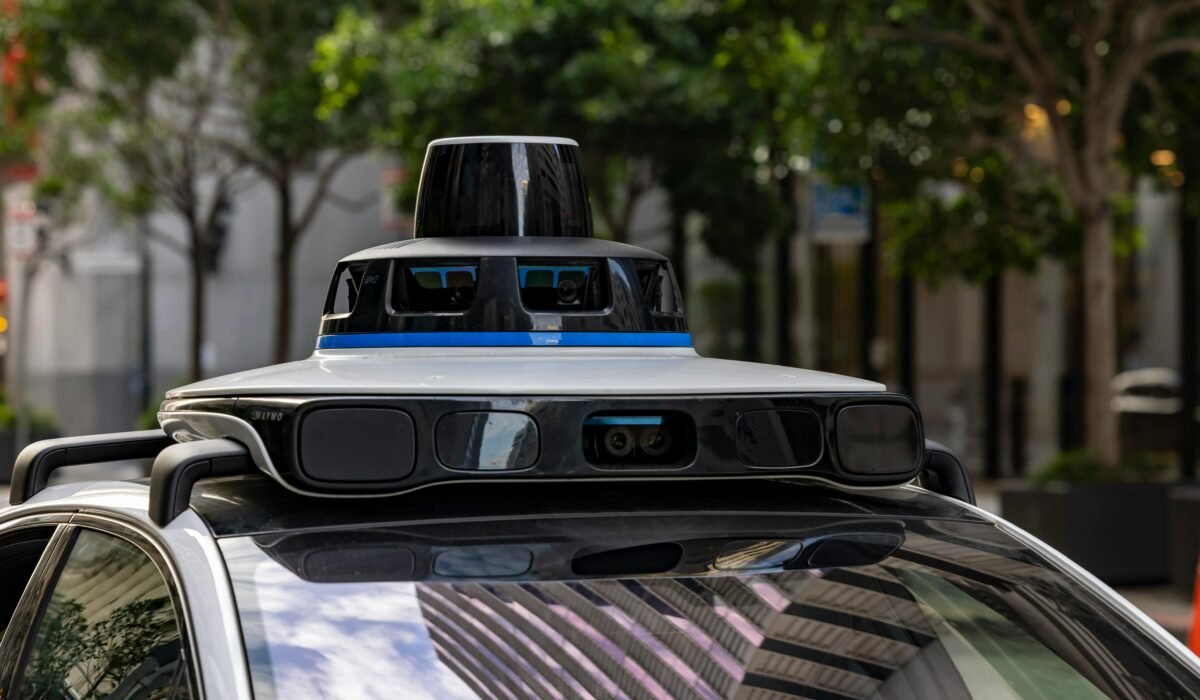
The dream of a car that drives itself, safely navigating complex roads, is rapidly becoming a reality, and at its core is the transformative power of AI in self-driving cars. You might wonder how these intelligent vehicles perceive the world, make decisions, and what it means for our future on the road. This article will demystify the advanced AI technologies making autonomous driving possible, explore the challenges of implementation and ethics, and reveal how human trust is being built for the roads of tomorrow.
What is AI in Self-Driving Cars and How Does it Work?
At its heart, AI in self-driving cars refers to the sophisticated computer systems that enable vehicles to sense their environment, make decisions, and execute actions without human intervention. This capability moves beyond simple automation to genuine intelligence, allowing cars to adapt to unforeseen circumstances. The fundamental process involves a continuous loop of perception, prediction, planning, and control.
Think of it like this: the car uses its “senses” (sensors) to gather information, its “brain” (AI software) to interpret it and decide what to do, and its “limbs” (actuators like steering, brakes) to perform the action. This complex interplay is what allows for true autonomous vehicles technology.
The Levels of Autonomous Driving
Understanding the role of AI requires knowing the SAE International’s classification of autonomy, which ranges from Level 0 (no automation) to Level 5 (full automation). Most vehicles on the road today feature Level 1 or Level 2 ADAS features, such as adaptive cruise control or lane-keeping assist, which use AI to augment human driving. True self-driving cars, like those in commercial robotaxi services, aim for Level 4 or Level 5, where the AI handles all driving tasks under specific or all conditions, respectively.
The short answer to “how does it work?” is that AI processes massive amounts of data in real-time to mimic and often surpass human driving capabilities. It’s a constant learning process, refined through billions of miles of simulated and real-world driving.
Key AI Technologies Powering Autonomous Vehicles
The sophistication of AI in self-driving cars relies on a suite of interconnected technologies that provide the vehicle with its “senses” and “intelligence.” These technologies work in concert to create a comprehensive understanding of the driving environment.
Sensor Fusion: The Car’s Comprehensive View
Autonomous vehicles don’t rely on a single type of sensor; instead, they integrate data from multiple sources in a process called sensor fusion. This typically includes:
- Cameras: Providing visual data, crucial for identifying traffic lights, lane markings, and pedestrians.
- LiDAR (Light Detection and Ranging): Creating precise 3D maps of the surroundings by emitting laser pulses.
- Radar: Detecting the speed and distance of other objects, especially effective in adverse weather conditions.
- Ultrasonic Sensors: Used for short-range detection, particularly helpful for parking and low-speed maneuvers.
By combining inputs from these diverse sensors, the AI system can build a robust and redundant model of the world, overcoming the limitations of any single sensor. For instance, a camera might struggle in fog, but radar can still provide crucial distance information.
Computer Vision and Deep Learning in Cars
Once raw sensor data is collected, computer vision automotive systems, powered by deep learning in cars, spring into action. Convolutional Neural Networks (CNNs) are particularly adept at processing visual information from cameras, recognizing objects like other vehicles, pedestrians, cyclists, and road signs. This allows the car to understand what it’s “seeing.”
Neural networks autonomous driving systems are trained on colossal datasets of real-world and simulated driving scenarios. This training enables them to identify patterns, predict the behavior of other road users, and make split-second decisions. Alex Kendall, CEO of Wayve, emphasizes that “an artificial intelligence-driven approach to self-driving — using onboard intelligence and real-world learning — is reshaping how autonomous cars and robotaxis are built and scaled,” highlighting the data-driven nature of modern AI in self-driving cars.
Beyond the Basics: AI Architectures and Scaling Challenges
Developing AI for autonomous driving is not just about individual technologies; it’s about how these components are structured and how they can be scaled to handle the infinite complexities of real-world driving. This is where the choice of AI architecture becomes critical, presenting significant challenges in autonomous driving AI.
Modular vs. End-to-End AI Systems
Most early autonomous vehicle systems adopted a modular architecture. This breaks down the driving task into distinct stages: perception (what’s around me?), prediction (what will they do?), planning (what should I do?), and control (how do I do it?). Each module is developed and tested somewhat independently. While robust and easier to debug, errors can propagate between modules, and the hand-off between them can be a source of inefficiency.
In contrast, end-to-end AI systems aim to learn directly from raw sensor data to driving commands. Companies like Tesla lean towards this vision-only approach, training a single, large neural network on vast amounts of driving data. The promise here is a more holistic, human-like understanding of driving, but it demands immense data and computational power. The challenge lies in ensuring the system learns to handle rare, unexpected “edge cases” reliably.
The Hurdles of Scaling and Data Requirements
Scaling autonomous driving technology from test fleets to widespread deployment presents formidable challenges. The sheer volume and diversity of data needed to train and validate AI models are staggering. Paul Jordan of the World Economic Forum notes that “Driving has proven to be a particularly tricky task for machines, given the infinite set of new scenarios that may arise during a journey,” underscoring the need for AI to generate synthetic datasets to address these varied scenarios. Collecting, annotating, and managing this data efficiently is a major bottleneck.
Furthermore, the computational demands for real-time processing of sensor data and running complex AI models within the vehicle require powerful, specialized hardware. NVIDIA, for instance, provides platforms like DRIVE Hyperion, which are designed to accelerate autonomous driving development, utilizing high-performance AI compute platforms like DGX for training and Thor chips for in-vehicle Level 4-5 automation.
What most people miss is that the true difficulty isn’t just making the car drive, but making it drive perfectly in every conceivable situation, from a clear highway to a chaotic urban street in a snowstorm. This requires continuous learning and adaptation, often through “world models” that allow the AI to reason and predict beyond immediate observations.
The Role of AI in Robotaxis and Future Mobility
The most tangible manifestation of advanced AI in self-driving cars for many consumers will be through robotaxi services. These fully autonomous ride-hailing fleets promise to revolutionize urban transportation, offering convenience, safety, and efficiency.
Current Status and Market Trends
Companies like Waymo, a pioneer in autonomous driving, already operate commercial Level 4 robotaxi services in cities like Phoenix, San Francisco, and Los Angeles, completing millions of driverless trips. Zoox, an Amazon-operated company, is developing purpose-built autonomous electric shuttles for urban ride-hailing. The robotaxi market trends show significant growth, with the global autonomous vehicles market projected to reach USD 626.9 billion in 2026, and the number of autonomous vehicles in operation worldwide projected to reach 42,770 units in 2026.
The investment is massive: approximately $20 billion will be spent on in-vehicle AI software by 2025, and by 2025, 50% of automotive R&D budgets are allocated to software and AI development. This underscores the industry’s commitment to accelerating the future of self-driving AI.
Impact on Urban Planning and Accessibility
The widespread adoption of robotaxis has the potential to reshape urban landscapes. Reduced need for parking, optimized traffic flow, and decreased congestion could transform city planning. More importantly, autonomous mobility offers unprecedented accessibility for individuals who cannot drive due to age, disability, or other factors, fostering greater independence and inclusion. This represents a significant societal benefit beyond mere technological advancement.
In practice, the expansion of these services, as seen with Baidu’s Apollo having 500 robotaxis in Wuhan with plans to scale to 1,000 units, indicates a future where personal car ownership might become less essential for many urban dwellers.
Building Trust: Human-AI Collaboration in Autonomous Driving
While the technological prowess of AI in self-driving cars is undeniable, the success of autonomous driving hinges on human acceptance and trust. This requires careful design of how humans and AI systems interact, especially in transitional phases.
Designing Intuitive Human-Machine Interfaces (HMI)
For vehicles with partial automation (Level 2/3), where human drivers must be ready to take over, intuitive human-machine interface design is paramount. The car needs to clearly communicate its intentions, limitations, and when human intervention is required. This involves visual cues, auditory alerts, and haptic feedback that are easy to understand and respond to. McKinsey & Company highlights that “Artificial intelligence is reshaping the car and becoming a key differentiator,” noting that premium buyers are increasingly willing to switch brands for better digital features, emphasizing the importance of user experience.
A poorly designed HMI can lead to confusion, frustration, and even dangerous situations, eroding trust in autonomous driving technology advancements.
The Psychological Aspect of Trust
Trust in AI is not purely rational; it’s deeply psychological. People need to feel safe and in control, even when the AI is driving. This trust is built through consistent, reliable performance and transparent communication from the vehicle. Driver monitoring systems (DMS), which use AI to observe the driver’s attention and readiness, play a crucial role in ensuring human-AI collaboration is safe and effective, particularly in Level 3 systems where the driver must be available for fallback. It’s about creating a partnership, not just handing over control.
Volvo Cars’ ambition of “zero collisions” through advanced AI applications speaks directly to building this trust through undeniable safety improvements.
Navigating the Road Ahead: Ethics, Regulations, and Cybersecurity
The path to widespread autonomous driving is paved not only with technological innovation but also with complex ethical dilemmas, evolving legal frameworks, and critical security concerns. Addressing these challenges is vital for the responsible deployment of AI in self-driving cars.
Ethical AI Self-Driving: Dilemmas and Principles
Perhaps the most challenging aspect of autonomous driving is navigating ethical dilemmas. In unavoidable accident scenarios, how should an autonomous vehicle’s AI be programmed to prioritize? Should it minimize harm to occupants, pedestrians, or property? These are questions with no easy answers, and different societies may have different expectations. The field of ethical AI autonomous vehicles seeks to establish principles that guide programming decisions, often focusing on minimizing overall harm and adhering to legal precedents.
This goes beyond simple rules; it requires a deep consideration of societal values embedded within the AI’s decision-making algorithms. For example, if you’re interested in broader AI security, you might find our guide on How to Prevent AI Data Poisoning useful, as data integrity is foundational to ethical AI.
Regulatory Frameworks and Global Harmonization
The development of regulatory frameworks autonomous driving is a dynamic and complex process. Governments worldwide are grappling with questions of liability, data privacy, and safety standards. While some regions, like the US, have taken a more fragmented state-by-state approach, others, like Europe, are working towards more unified regulations.
SAE International, through its Ground Vehicle Artificial Intelligence (GVAI) Committee, is actively developing standards like J3312: Artificial Intelligence Use Cases for Ground Vehicle Applications, emphasizing the need for robust safety standards in this emergent technology. The global divergence and harmonization efforts in these areas will profoundly impact the pace of autonomous vehicle deployment. The Cruise incident in California, where their driverless taxi service was suspended after an accident, starkly illustrates these regulatory challenges.
Cybersecurity: Protecting the Autonomous Vehicle
As vehicles become increasingly connected and software-defined, they become potential targets for cyberattacks. A compromised autonomous vehicle could have catastrophic consequences, from privacy breaches to manipulated driving behavior. Robust AI and vehicle cybersecurity measures are essential, protecting the vehicle’s software, communication systems, and sensor data from malicious actors. This includes secure over-the-air updates, encryption, and intrusion detection systems to safeguard the integrity and safety of self-driving cars.
The Future of AI in Automotive: A Global Outlook
The journey of AI in self-driving cars is far from complete, but its trajectory is clear: a future where autonomous mobility plays a pivotal role in transportation globally. The next decade promises rapid advancements and broader adoption.
Emerging Trends and Innovations
The future of self-driving AI will be characterized by continuous innovation in several key areas. We can expect advancements in predictive analytics, allowing vehicles to anticipate potential hazards even more accurately. The integration of 5G connectivity will enable vehicles to communicate seamlessly with each other (V2V) and with infrastructure (V2I), creating a more coordinated and efficient transportation system. Furthermore, the development of generative AI may revolutionize how synthetic datasets are created, accelerating the training of AI models for autonomous vehicles, as highlighted by the World Economic Forum. This will be crucial for overcoming technological hurdles by generating realistic training scenarios.
Tim Hsiao of Morgan Stanley predicts that “One in four cars sold globally may be equipped with smart-driving technology in five years, versus one in eight cars now,” underscoring the accelerating adoption of automation.
Global Market Projections and Adoption
The global AI in automotive market was valued at USD 4.8 billion in 2024 and is estimated to reach an astonishing USD 186.4 billion by 2034, registering a CAGR of 42.8%. This massive growth signals strong confidence in the future of autonomous vehicles. Adoption of vehicles with partial to full automation is projected to jump from 8% in 2024 to 28% by 2030 in developed markets, creating a market opportunity of $200 billion for automakers in the next five years. The U.S. automotive AI market alone is projected to reach $5.2 billion by 2026. McKinsey’s research emphasizes that OEMs must balance latency, privacy, and cost when deciding where AI models should run (cloud vs. edge), which will influence future development.
The challenges in autonomous driving AI remain, but the significant investment and rapid technological progress suggest that AI in self-driving cars will soon transition from a futuristic concept to an everyday reality for many, fundamentally changing how we experience mobility.
Frequently Asked Questions
How is AI used in cars?
AI is used in cars primarily for perception, decision-making, and control to enable autonomous driving features and enhance safety. This includes processing data from sensors like cameras and radar, recognizing objects, predicting behaviors, and executing steering or braking commands. AI also powers advanced driver-assistance systems (ADAS) like automatic emergency braking and adaptive cruise control, making driving safer and more convenient.
What is the future of AI in vehicles?
The future of AI in vehicles involves increasingly sophisticated autonomous driving capabilities, moving towards widespread Level 4 and Level 5 self-driving cars. This will include enhanced human-machine interfaces, seamless vehicle-to-everything (V2X) communication, and AI-driven predictive maintenance. We can expect AI to transform not only how cars drive but also how they interact with their environment and occupants, creating highly personalized and intelligent mobility experiences.
How do robotaxis and autonomous vehicles use AI?
Robotaxis and other fully autonomous vehicles use AI to perform all driving tasks without human intervention. This involves complex AI algorithms for real-time sensor fusion, computer vision for object recognition, deep learning for behavior prediction, and sophisticated planning algorithms to navigate routes and handle unexpected situations. AI allows these vehicles to perceive their environment, understand traffic dynamics, and make safe, efficient driving decisions, effectively acting as the “brain” of the self-driving system.
How does AI improve auto manufacturing?
While this article focuses on AI in self-driving cars, AI also significantly improves auto manufacturing by optimizing production lines, enhancing quality control, and streamlining supply chains. AI-powered robots and automation reduce errors and increase efficiency in assembly. Predictive analytics can identify potential equipment failures before they occur, minimizing downtime, and AI systems can analyze vast datasets to improve design processes and reduce development cycles.
The journey of AI in self-driving cars is an exciting blend of cutting-edge technology, complex ethical considerations, and a fundamental shift in how we approach transportation. As we’ve explored, the future promises safer roads, increased mobility, and entirely new ways of interacting with our vehicles, all powered by increasingly intelligent AI. Keep an eye on these developments, as they will undoubtedly reshape our daily lives and the world around us. What aspect of autonomous driving excites you the most?