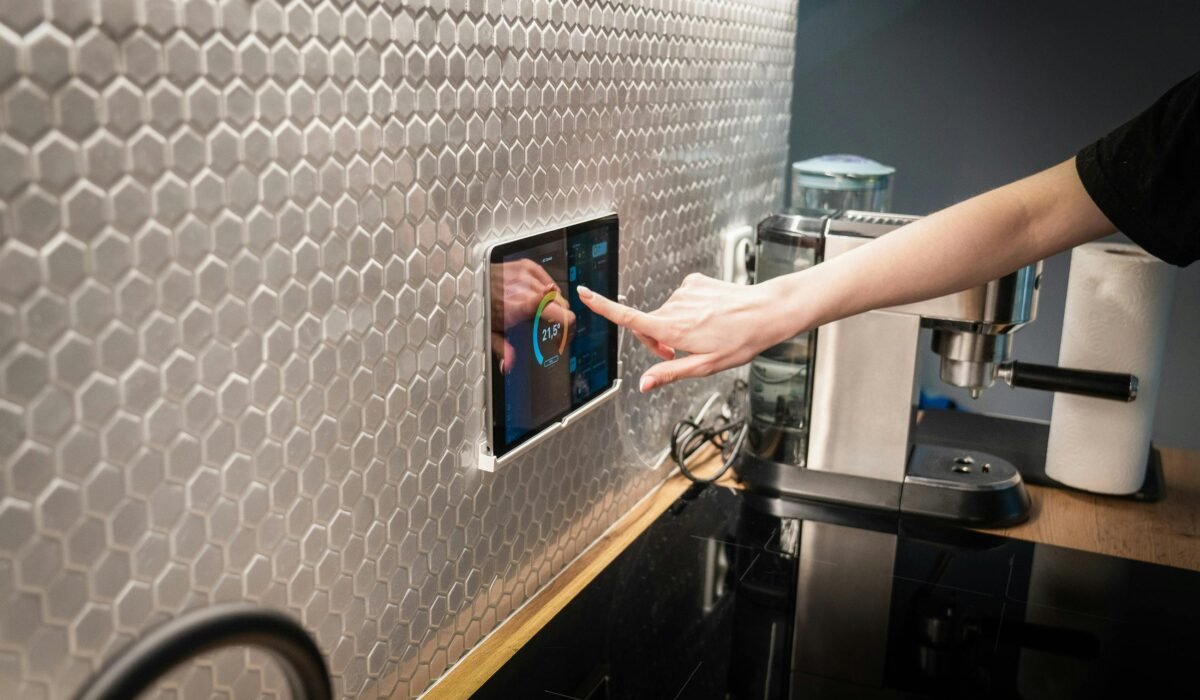
Are you wondering how artificial intelligence will truly reshape your living space in the coming years? Understanding the key AI Smart Home Future Trends is essential for anyone looking to optimize their home for convenience, security, and efficiency. This article will explain the groundbreaking innovations poised to transform how we interact with our homes, from predictive automation to enhanced privacy controls.
What are the Key AI Smart Home Future Trends?
The landscape of smart living is rapidly evolving, driven by sophisticated artificial intelligence. One of the most significant AI Smart Home Future Trends is the move towards truly predictive AI smart home systems that anticipate your needs before you even voice them.
Proactive Personalization and Adaptive Environments
Expect your home to become an intuitive assistant, learning your daily rhythms and preferences to create a perfectly tailored environment. AI-powered smart assistants like the Amazon Echo Show 10, with its ability to adapt to your position, are just the beginning. The future of smart home technology 2030 envisions systems that adjust lighting, temperature, and even music based on your mood, schedule, and who’s in the room.
This goes beyond simple automation; it’s about a home that understands context. According to Tamara Mattox-Kabat, a real estate pro with Redfin, “The smart home of 2026 is all about subtle sophistication that’s highly livable and practical.” This means less manual input and more seamless, intelligent living.
Health and Wellness Integration
Another major trend involves smart home health monitoring woven into the fabric of your home. Devices like the Withings U-Scan, offering at-home urinalysis, exemplify how AI can provide real-time health insights. Smart beds that monitor sleep patterns, breathing, and heart rate are already available, using AI to suggest improvements or adjust firmness for optimal rest.
Air purification systems, such as Alen’s BreatheSmart 35i with airID, leverage AI to detect and report on specific pollutants, ensuring a healthier indoor atmosphere. These innovations transform your home into a proactive partner in maintaining your well-being.
Ubiquitous Connectivity and Robotics
The proliferation of smart home devices with AI capabilities is leading to a more interconnected ecosystem. Beyond fixed devices, household robotics are emerging, with examples like LG’s AI Home Robot designed for chores and Amazon Astro for home monitoring. These robots, powered by advanced AI, will handle routine tasks, connect with other smart devices, and provide assistance, fundamentally changing how we manage our homes.
How is AI Revolutionizing Smart Home Security?
Smart home security AI is moving far beyond basic motion detection, offering unprecedented levels of protection and peace of mind. AI’s ability to analyze vast amounts of data in real-time is transforming how homes detect, predict, and respond to threats.
Proactive Threat Detection and Response
Modern AI security systems can differentiate between a pet and an intruder, or the sound of a tree branch hitting the window versus breaking glass. Advanced security cameras like the Arlo Ultra 2 Spotlight Camera offer 4K HDR video and intelligent motion sensors that can identify packages, vehicles, people, and animals, significantly reducing false alarms. This predictive smart home technology learns patterns to anticipate potential risks, rather than just reacting to them.
For instance, Samsung’s EdgeAware AI Home analyzes sounds like breaking glass or even prolonged coughing, providing crucial alerts without sending private audio data to the cloud. This level of intelligent monitoring means your home is always vigilant, offering a smarter defense.
Advanced Access Control
AI is also enhancing access control, making entry points more secure and convenient. The Philips Wi-Fi Palm Recognition Smart Deadbolt is a prime example, using unique vein patterns for contactless, highly secure unlocking. This biometric authentication is far more robust than traditional keys or codes, making your home virtually impenetrable to unauthorized access.
What’s truly innovative is how these systems can operate even without an internet connection for core functions. As Marcus Thorne, Smart Home Systems Architect, notes, a properly designed AI home with local processing will continue to function for lights, locks, and security even if the internet goes down, pausing only remote access or weather updates. For more on safeguarding your data, check out our guide on AI Smart Home Privacy: Protect Your Data.
The Role of AI in Personalized Automation & Energy Management
At the heart of AI in home automation is the ability to create a living environment that adapts seamlessly to your lifestyle, while also optimizing resource consumption. This goes beyond simple scheduling; it involves genuine intelligence and learning.
Intelligent Personalization
AI-driven systems learn your habits, preferences, and even the nuances of your family’s routines over time. This allows for truly personalized automation, where your home anticipates when you’ll arrive, adjusts the temperature to your preferred comfort level, and even preps your coffee machine. Khoi Vo, CEO of the American Society of Interior Designers, emphasizes that “The evolution of fully integrated smart home ecosystems is redefining convenience, efficiency, and safety for homeowners.” This holistic approach is powered by AI’s capacity to unify various smart home devices and services.
For more detailed insights on how to tailor your smart home experience, explore our article on AI Smart Home Personalization: Master Your Space.
AI Energy Management
AI energy management is a critical area where this intelligence delivers tangible benefits. Systems like GreenTech Innovations’ EcoSmart use AI home automation examples of predictive analytics to learn from household patterns and environmental data. This results in significant energy savings, with some users reporting an average reduction in consumption by 30%.
Smart thermostats with AI control, such as Ecobee’s Eco+, go further by delivering real-time weather-aware comfort and adjusting to user habits and energy prices. Amanda Pendleton, Zillow’s home trends expert, highlights this: “As these systems become more intelligent, they will be able to automatically control and optimize energy consumption, creating homes that are more comfortable, sustainable and affordable.” Whole home batteries are also becoming integral to these intelligent energy systems, further enhancing sustainability.
The smart home market forecast AI shows a strong trajectory here. The AI in Smart Home Technology Market was valued at USD 18.47 billion in 2025 and is predicted to reach USD 126.06 billion by 2035 at a 21.30% CAGR, according to Verified Market Research. This growth underscores the increasing demand for intelligent, energy-efficient solutions.
What is the Matter Protocol and Why is it Essential for Smart Homes?
If you’ve ever struggled to make different smart home devices from various brands work together, you understand the frustration of interoperability. The Matter protocol explained is the solution to this pervasive problem, offering a unified standard for smart home communication.
Matter is an open-source connectivity standard designed to enable smart home devices from different manufacturers to communicate seamlessly with each other and with smart home platforms. This means a Philips Hue light bulb, a Google Nest thermostat, and an Apple HomeKit lock can all speak the same language, simplifying setup and daily use. It’s built on existing, widely used technologies like Wi-Fi, Ethernet, and Thread, ensuring broad compatibility and reliability.
Why is it essential?
- Interoperability: It solves the fragmentation issue, allowing you to choose devices based on features and price, not just brand compatibility. This encourages broader adoption of smart home devices with AI capabilities.
- Simplicity: Setup becomes significantly easier, often just a QR code scan, reducing the headache of complex integrations.
- Reliability: Built on robust technologies, Matter aims to provide consistent and responsive device performance.
- Security: It incorporates strong security features from the ground up, ensuring your smart home network is protected.
In essence, Matter is crucial because it promises to unlock the full potential of the smart home, making advanced AI home automation accessible and reliable for everyone. This protocol is a foundational step towards truly intelligent, cohesive living spaces.
Edge AI vs. Cloud AI: Impact on Smart Home Privacy and Performance
The debate between processing data locally (on the edge) versus sending it to remote servers (in the cloud) has significant implications for your smart home experience, particularly regarding privacy and performance. Understanding edge AI smart home versus cloud AI is key to making informed decisions about your devices.
Edge AI: Local Processing
Edge AI refers to AI processing that happens directly on your smart home device, such as a camera or smart speaker, rather than sending data to external servers. This approach has several compelling advantages:
- Enhanced Privacy: Sensitive data, like video feeds or voice commands, never leaves your home. This significantly reduces the risk of data breaches or unwanted surveillance, addressing major smart home privacy concerns.
- Faster Response Times: Without the need to send data to the cloud and wait for a response, devices react almost instantaneously. This is crucial for applications like security systems where split-second decisions matter.
- Offline Functionality: Many core AI features can operate even without an internet connection, ensuring your home remains smart and secure during outages.
- Reduced Bandwidth: Less data is uploaded to the internet, preserving your home network’s bandwidth.
The real-world observation here is that while cloud AI offers more complex processing capabilities, edge AI delivers immediate, private, and reliable performance for everyday smart home tasks.
Cloud AI: Remote Processing
Cloud AI leverages powerful, centralized data centers to process information. Its strengths lie in:
- Greater Processing Power: Cloud servers can handle highly complex AI models, enabling more sophisticated analytics and learning over time.
- Scalability: It’s easier to update and improve AI models centrally, pushing new features to devices without hardware upgrades.
- Data Aggregation: Analyzing data from many users can lead to more robust and accurate AI models (though this raises privacy questions).
The trade-off for cloud AI’s power is often latency and privacy. Data must travel to and from the cloud, and you’re entrusting your personal information to a third-party server. For a deeper dive into protecting your data, consider reading our article on AI Smart Home Privacy: Protect Your Data.
Addressing Ethical AI and User Control in Smart Homes
As AI becomes more integral to our homes, ethical considerations and user control become paramount. The constant learning of user behaviors, potential for algorithmic bias, and the question of who controls the data are critical discussions for ethical AI smart homes.
Data Privacy and Algorithmic Bias
The core of the issue lies in how much data AI systems collect about you and your habits. While this data enables personalization, it also raises significant smart home privacy concerns. What data is collected? How is it stored? Who has access to it? These are questions every consumer should ask. Jenni Nelson, Consumer Insights Analyst, notes that generative AI implementation will drive innovation but “may deter some privacy-conscious consumers.”
Beyond privacy, there’s the risk of algorithmic bias. If AI systems are trained on non-representative data, they might make decisions that inadvertently discriminate or fail to serve certain demographics effectively. Ensuring diverse and ethical data sets for training AI is a growing challenge for developers.
Empowering User Control
For AI in smart homes to be truly ethical, users must have genuine control over their data and how AI systems operate. This includes clear, understandable privacy policies, easy-to-access settings for opting out of data collection, and transparency about how AI decisions are made. Solutions for ethical AI smart home design must prioritize:
- Granular Permissions: Allowing users to specify exactly what data each device can access and share.
- Clear Opt-Out Options: Making it simple to disable data collection or specific AI features without crippling the device.
- Explainable AI (XAI): Providing insights into why an AI system made a particular decision, fostering trust.
- Local Processing Preference: Favoring edge AI smart home solutions where sensitive data is kept on-device.
The short answer is that responsible AI development must center on empowering users, not just optimizing convenience. Without this, the brilliant future of AI smart homes risks eroding trust.
Practical Solutions for Smart Home Integration Challenges Today
While the Matter protocol promises a seamless future, many homeowners today face challenges integrating diverse smart home devices with AI. Building a cohesive AI smart home ecosystem requires strategic planning and practical solutions.
Choosing Compatible Platforms
The most straightforward approach is to standardize on a major smart home platform like Google Home, Amazon Alexa, or Apple HomeKit. These platforms offer broad compatibility and often integrate with a wide range of third-party devices. When purchasing new devices, always check for compatibility with your chosen ecosystem.
For new users, understanding the basics of setting up an AI-powered home is crucial. Our guide on AI Home Automation for Beginners: Easy Setup Guide can provide a helpful starting point.
Leveraging Smart Hubs and Routines
A dedicated smart home hub can act as a central brain, bridging communication between devices that might not natively speak to each other. Hubs often support multiple protocols (like Zigbee, Z-Wave, and Wi-Fi), expanding your integration possibilities. Furthermore, creating automated routines or scenes within your chosen platform allows different devices to work in concert, triggered by time, presence, or other sensor inputs.
“Centralized hubs—powered by systems like Google Home and Amazon Alexa—unify lighting, climate controls, security, and voice automation, enabling homeowners to manage their spaces remotely via mobile apps.” – Khoi Vo, CEO of the American Society of Interior Designers.
Troubleshooting and Best Practices
Even with careful planning, issues can arise. Common integration challenges include Wi-Fi interference, outdated firmware, or incorrect device settings. Here are some practical tips:
- Check Network Stability: Ensure your Wi-Fi network is robust and has sufficient coverage throughout your home.
- Update Firmware Regularly: Keep all your smart devices and hubs updated to their latest firmware versions to ensure compatibility and security.
- Restart Devices: A simple reboot can often resolve temporary connectivity or performance issues.
- Read Documentation: Consult the user manuals or online support for specific device troubleshooting.
For more in-depth solutions to common problems, our article on AI Smart Home Troubleshooting: Fix Common Issues offers valuable guidance.
The Future Outlook: What’s Next for AI in Smart Homes?
The trajectory for AI in home automation is one of continuous innovation, pushing the boundaries of what our homes can do. The AI Smart Home Future Trends point towards an era where homes are not just smart, but truly intelligent and anticipatory.
Hyper-Personalization and Contextual Awareness
Expect AI to move beyond learning routines to understanding nuances like your emotional state, health metrics, and even subtle environmental cues. This hyper-personalization will create environments that actively support your well-being, adjusting everything from lighting to air quality based on your real-time needs. The goal is a home that feels less like a collection of devices and more like a living extension of yourself.
The global smart home market size was valued at USD 127.80 billion in 2024 and is projected to reach USD 537.27 billion by 2030, growing at a Compound Annual Growth Rate (CAGR) of 27.0% from 2025 to 2030, according to Fortune Business Insights. This massive growth indicates a strong future for these advanced capabilities.
Seamless Integration with the Outside World
Your smart home will increasingly integrate with external services and data streams, from smart city infrastructure to personalized healthcare providers. Imagine your home automatically adjusting energy consumption based on grid demand, or sharing relevant health data with your doctor (with your explicit permission). This interconnectedness will extend the intelligence of your home far beyond its four walls. McKinsey (October 2025) projects that AI summaries will appear in 75% of search results by 2028, indicating the pervasive influence of AI across all aspects of technology, including smart homes.
The journey towards fully autonomous, ethically sound, and seamlessly integrated AI smart homes is well underway. It’s a future where technology fades into the background, leaving you with comfort, efficiency, and peace of mind.
Frequently Asked Questions
How does AI improve smart home security?
AI significantly enhances smart home security by enabling proactive threat detection and advanced authentication methods. It allows systems to differentiate between various events, like a pet moving versus an intruder, and learn patterns to anticipate potential risks, reducing false alarms and improving response times. Biometric access controls, such as palm recognition, also leverage AI for highly secure entry.
What is the Matter protocol and why is it important?
The Matter protocol is an open-source connectivity standard that allows smart home devices from different brands to communicate seamlessly. It is essential because it solves the long-standing problem of device incompatibility, simplifying setup, enhancing reliability, and promoting broader adoption of smart home technology by homeowners.
What are the most important smart home technology trends today?
The most important smart home technology trends today include predictive AI for personalized automation, advanced AI-driven security systems with proactive threat detection, comprehensive smart home health monitoring, and intelligent energy management solutions. The adoption of the Matter protocol for universal interoperability is also a critical trend shaping the future of smart living.
How is artificial intelligence changing smart home technology?
Artificial intelligence is transforming smart home technology by making devices more intuitive, proactive, and personalized. AI enables homes to learn user habits, anticipate needs, and adapt environments automatically. It also powers advanced security features, optimizes energy consumption, and facilitates seamless integration of various devices, moving beyond simple automation to genuine intelligence within the home.
The evolution of AI in smart homes promises a future of unparalleled comfort, efficiency, and security. By understanding these AI Smart Home Future Trends, you can make informed decisions today to build a truly intelligent living space. Explore the possibilities and start integrating these innovations into your home for a smarter tomorrow.