Key Takeaways
- The global entertainment robots market is projected to reach USD 31.97 billion by 2034, according to Market.us (2025).
- Unitree G1 humanoid robots performed complex synchronized dances with singer Wang Leehom in December 2025.
- RoboScreen, developed by Andy Flessas, integrates ABB six-axis robots with LED panels for dynamic visual effects.
- The global humanoid robots for entertainment market is expected to surge to approximately USD 7,829.2 million by 2034, according to Market.us (2025).
- AGIBOT NIGHT in February 2026 showcased a fully robot-led live gala featuring synchronized robot performances.
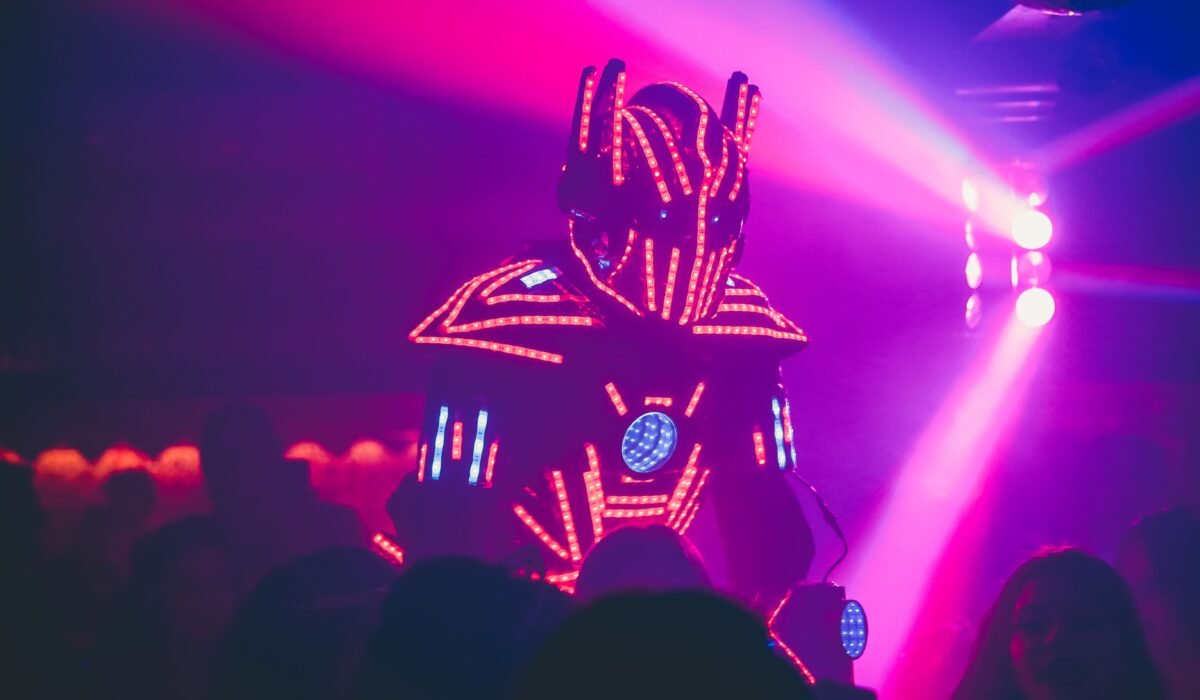
Have you ever wondered how live performances are becoming more spectacular and immersive than ever before? The secret lies in the groundbreaking advancements of Robotics in Live Entertainment. This technology is not just automating tasks; it’s actively transforming stages, pushing creative boundaries, and redefining what audiences can experience.
Quick Answer: Robotics revolutionize live entertainment stages by enabling dynamic visual effects, precise stage automation, and new forms of immersive performances. They facilitate human-robot collaboration, create interactive audience experiences, and offer logistical advantages, pushing artistic boundaries.
How Are Robotics Revolutionizing Live Entertainment Stages?
Robotics are revolutionizing live entertainment stages by enabling unprecedented levels of dynamism, precision, and visual spectacle. This transformation is driving significant growth, with the global entertainment robots market size expected to grow from $44.25 billion in 2025 to $55.91 billion in 2026, according to ReportLinker (2026). These intelligent machines are becoming integral to creating unforgettable experiences, from intricate set changes to captivating robotic performances.
The integration of Robotics in Live Entertainment allows for complex choreographies of lights, props, and even performers themselves. This means that what was once static or manually operated can now move fluidly and precisely, responding to music and human cues with seamless integration.
The market for these technologies is expanding rapidly, with the global entertainment robots market projected to reach USD 31.97 billion by 2034, up from USD 4.10 billion in 2024, according to Market.us (2025). This growth underscores the industry’s increasing reliance on advanced automation to deliver cutting-edge experiences.
In practice, the impact of Robotics in Live Entertainment extends beyond mere automation; it empowers artists and directors to envision and execute performances that were previously impossible. We’re talking about stages that morph, props that dance, and environments that react in real-time to the unfolding drama.
How Do Robots and Humans Collaborate on Stage?
Robots and humans collaborate on stage by working in synchronized harmony, enabling new forms of artistic expression and interaction. This synergy is particularly evident in the burgeoning humanoid robots for entertainment market, which is expected to surge to approximately USD 7,829.2 million by 2034, expanding at an impressive CAGR of 38.10% during the period 2025-2034, according to Market.us (2025). Performers can now share the spotlight with sophisticated robotic counterparts, creating truly unique spectacles.
This collaboration moves beyond simple coexistence, with robots often acting as extensions of human performers or as characters in their own right. For instance, collaborative robots, or “cobots,” from companies like ABB Robotics are designed to work safely alongside humans, as seen in productions like Cirque du Soleil’s “Kurios.”
The precision of Robotics in Live Entertainment allows for intricate interactions, where a robot might hand a prop to an actor, or a group of robots might dance in perfect formation around human performers. This elevates the visual complexity and storytelling potential of a show.
What most people miss is that this collaboration isn’t just about robots mimicking human movement; it’s about combining the strengths of both. Humans bring emotion and spontaneity, while robots offer flawless execution and superhuman capabilities, leading to captivating results in Robotics in Live Entertainment.
Creating Immersive Audience Experiences with Robotics
Robotics creates immersive audience experiences by transforming passive viewing into active engagement through dynamic stage elements and interactive performances. These advanced systems ensure every audience member feels a deeper connection to the spectacle. The rise of interactive stage design robotics is key to this shift.
One of the most compelling aspects of Robotics in Live Entertainment is its ability to craft environments that react and evolve. Imagine a stage floor that shifts, or props that fly overhead, all precisely controlled to enhance the narrative or musical rhythm.
This goes beyond simple visual effects; it’s about creating a multi-sensory experience. For example, RoboScreen, a patented technology developed by Andy Flessas, combines an ABB six-axis robot with LED display technology, allowing video panels to move and transform, enveloping the audience in dynamic visuals.
The goal is to eliminate the passive distance between performer and spectator, drawing everyone into the heart of the show. This makes for a truly memorable experience powered by cutting-edge robotics entertainment.
Here are some ways robotics enhance audience immersion:
- Dynamic Visuals: Moving LED screens and projection surfaces create ever-changing backdrops.
- Interactive Elements: Robots can react to audience input or movement, fostering direct engagement.
- Atmospheric Effects: Precisely controlled robotic systems manage fog, lights, and lasers for dramatic impact.
- Synchronized Choreography: Robots performing in sync with human dancers or musicians add a layer of complex artistry.
The Tech Behind the Spectacle: AI and Motion Control
The seamless spectacle of modern live entertainment is underpinned by sophisticated AI and advanced motion control systems that dictate every robotic movement. These technologies are the unsung heroes of Robotics in Live Entertainment, ensuring precision, safety, and breathtaking effects. The global stage automation market, which includes these systems, is expected to grow at a CAGR of 5.0% from 2023 to 2028, according to MarketsandMarkets (2024).
AI in live performance enables robots to learn, adapt, and even improvise within defined parameters. This intelligence allows for more complex and fluid interactions, making robotic performers feel more lifelike and responsive.
Motion control, on the other hand, provides the meticulous choreography. Using software like Robot Animator™, engineers program every joint and axis of a robot to execute movements with microsecond accuracy. This precision is critical for the safety of human performers and the flawless execution of complex stage effects.
The synergy between AI and motion control is what allows a robot to not only move but to move intelligently and gracefully. This level of technical sophistication is rapidly advancing the capabilities of Robotics in Live Entertainment.
From experience, integrating these systems requires deep expertise in both robotics engineering and artistic vision. It’s a blend of science and art that truly brings the future of stage technology to life.
What Are the Logistical Benefits of Stage Robotics?
Stage robotics offer significant logistical benefits, including enhanced safety, increased efficiency, and unparalleled consistency in complex productions. These advantages streamline operations and reduce the risks associated with manual labor. This is a key aspect of robotic automation live events.
By automating repetitive or dangerous tasks, Robotics in Live Entertainment significantly improves safety for stagehands and performers alike. Heavy lifting, precise positioning of large props, and rapid set changes can all be handled by machines, minimizing human error and potential injuries.
The efficiency gained is also remarkable. Robots can execute complex movements and transitions faster and more reliably than human crews, leading to quicker setup times and smoother show flows. This consistency is crucial for touring productions where every performance must be identical.
Consider the cost savings over time. While initial investment in stage automation can be substantial, the reduction in labor costs, increased reliability, and decreased risk of damage to expensive equipment can yield considerable returns. North America, for instance, dominated the entertainment robots market in 2024 with a 35.10% share, generating USD 1.4 billion in revenue, according to Market.us (2025), reflecting the region’s adoption of such technologies.
The ability of Robotics in Live Entertainment to perform tasks with exact repeatability ensures that every show delivers the intended artistic vision without variation. This level of control is invaluable for directors and producers aiming for perfection.
| Logistical Benefit | Traditional Method | Robotics in Live Entertainment |
|---|---|---|
| Safety | Manual heavy lifting, human error risk | Automated, precise handling, reduced human risk |
| Efficiency | Time-consuming manual set changes | Rapid, pre-programmed transitions |
| Consistency | Variations in human performance | Flawless, repeatable movements every show |
| Complexity | Limited by human strength/precision | Enables highly intricate, dynamic movements |
Real-World Examples of Robotics on Stage
Real-world examples vividly demonstrate how Robotics in Live Entertainment is already transforming stages globally, showcasing everything from synchronized dancers to dynamic set pieces. These instances underscore the practical applications and artistic potential of robotic automation.
In December 2025, six Unitree G1 robots performed live with singer Wang Leehom at a concert in China, dancing in sync with human performers and executing complex movements. Elon Musk even reshared a clip, calling their movements “impressive,” highlighting the serious leap forward in humanoid robotics.
Another striking example is AGIBOT NIGHT in February 2026, a fully robot-led live gala featuring humanoid robots performing synchronized dances, magic illusions, and comedy skits. This event showcased robots collaborating with humans in real-time, pushing the boundaries of what robot performers can achieve.
We’ve also seen industrial robots take the stage. Bon Jovi’s “The Circle Tour” in 2010 famously utilized five ABB IRB 7600 industrial robots, each equipped with 6×9 ft LED video panels, known as RoboScreen. These panels moved to the rhythm of the music, displaying real-time video and animations, transforming into a continuous, dynamic screen.
Even individual props have been given a robotic twist; ABB IRB 120 robots were used to make Lady Gaga’s piano “dance” at the 2016 Grammy Awards. These examples illustrate the diverse applications of Robotics in Live Entertainment, from background elements to leading roles.
What's Next for Robotics in Live Entertainment?
The future of Robotics in Live Entertainment promises even more immersive, interactive, and personalized experiences, driven by continuous advancements in AI, sensor technology, and human-robot interaction. We are on the cusp of a new era where stages will be more dynamic and responsive than ever before.
Experts like David Grilk, founder of a new robotics venture, envision robots moving beyond labs into real-world experiences, not just as performers but also enhancing hospitality. This suggests a broader integration of robotics into the entire event ecosystem, from ticketing to post-show interactions.
We can expect to see more sophisticated humanoid robots concert performances, capable of even greater agility and emotional expression. The goal is to blur the lines between human and machine performance, creating seamless and believable robotic characters.
Another exciting frontier is the development of truly adaptive and improvisational robotic systems. Imagine a robot that can respond spontaneously to an audience’s energy or an unforeseen stage event, making every performance genuinely unique. This is where AI in live performance will truly shine.
The continuous innovation in motion control and sensory feedback will enable robots to interact with their environment and human partners with even greater nuance and safety, further enhancing how robots enhance concert experience and theatrical productions. The future of Robotics in Live Entertainment is undoubtedly bright and full of groundbreaking possibilities.
Frequently Asked Questions
How are robots used in live entertainment?
Robots are used in live entertainment for dynamic visual effects, precise stage automation, and as performers alongside or independently of humans. They control moving sets, project visuals, and execute complex choreographies, contributing to spectacular shows, according to ThinkRobotics.com (2024). This enhances the artistic range and technical capabilities of any production.
What role do robots play in theme parks?
In theme parks, robots play a crucial role in creating immersive storytelling through animatronics, character interactions, and ride automation. They bring fictional worlds to life with lifelike movements and programmed behaviors, captivating visitors. The global entertainment robots market size has reached $44.25 billion in 2025, according to ReportLinker (2026), indicating significant investment in these experiences.
Are robots replacing human actors in movies?
While robots are increasingly used for special effects, stunt work, and animated characters in movies, they are not currently replacing human actors in leading roles. They serve as complementary tools, enhancing visual storytelling and performing tasks too dangerous or complex for humans, rather than fully substituting human talent.
What other advancements in robotics can we expect to see in future entertainment?
Future advancements in robotics for entertainment are expected to include more intelligent AI for improvisational performances, enhanced human-robot emotional interaction, and personalized audience experiences. Imagine robots that learn audience preferences in real-time or adapt their performance based on crowd reactions, pushing the boundaries of interactive stage design.
How do robots enhance the concert experience?
Robots enhance the concert experience by creating dynamic visual spectacles with moving screens and lights, providing precise stage automation for seamless transitions, and performing alongside artists. They allow for complex, synchronized choreographies that elevate the overall sensory impact of a performance, making it more memorable and engaging.
The integration of Robotics in Live Entertainment has irrevocably reshaped the landscape of performances, moving beyond mere spectacle to enable deeply immersive and technically masterful experiences. As technology continues to advance, we can anticipate even more innovative applications, pushing the boundaries of human-robot collaboration and redefining artistic expression. Embrace the future where every stage is a canvas for robotic innovation, inviting you to witness the next generation of live entertainment.