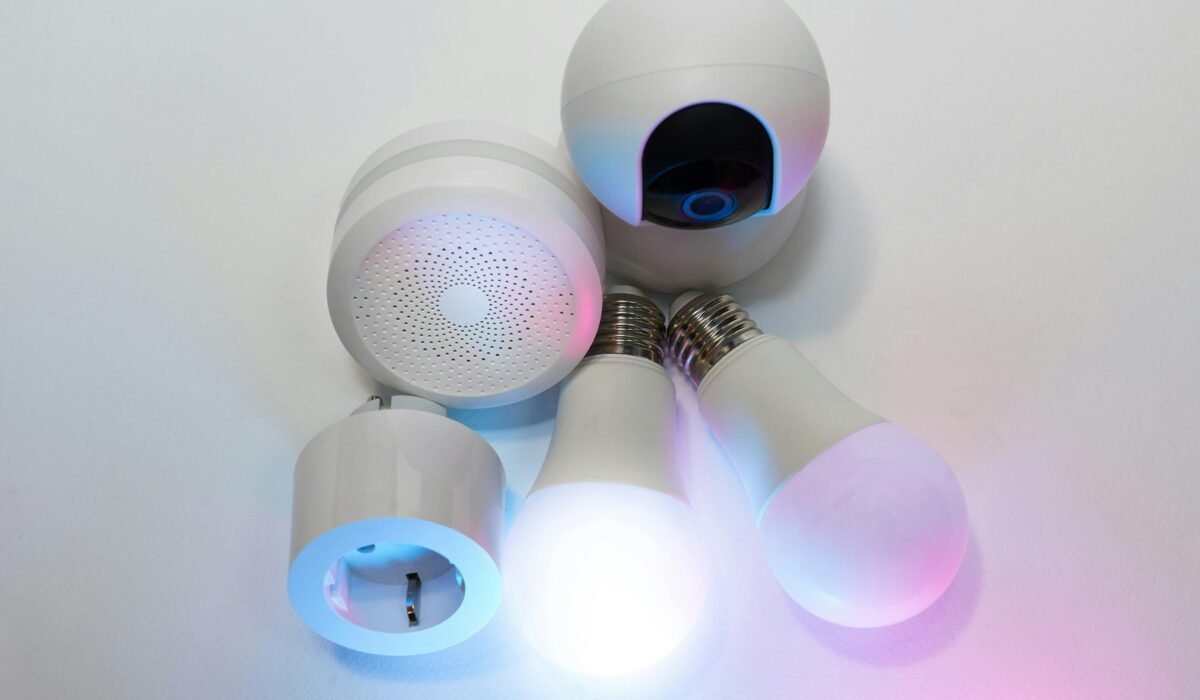
Are you looking to slash your utility bills and make your home a greener place, but aren’t sure where to start? Understanding how AI enhances smart home energy efficiency is the key to unlocking significant savings and a more sustainable lifestyle. This article will demystify the technology, show you exactly how it works, and provide actionable insights to transform your home’s energy consumption.
What is AI in a Smart Home?
At its core, Artificial Intelligence (AI) in a smart home refers to systems that can learn, reason, and adapt to optimize various aspects of your living environment. Unlike simple automation that follows pre-set rules, AI observes your habits, analyzes data, and makes intelligent decisions autonomously.
Think of it as your home gaining a brain. This “brain” processes information from sensors, devices, and even external sources like weather forecasts, transforming raw data into actionable insights for better smart home energy management. It’s about more than just turning lights on and off; it’s about making your home intuitively responsive and efficient.
What most people miss is that AI isn’t a single technology, but a collection of advanced algorithms and machine learning techniques. These allow your smart home to move beyond basic commands to truly understand and anticipate your needs, especially when it comes to energy use.
How AI Enhances Smart Home Energy Efficiency
The real magic of AI lies in its ability to predict and adapt, providing unparalleled energy consumption optimization. This is precisely how AI enhances smart home energy efficiency, moving beyond manual adjustments to create a continuously optimized environment.
AI algorithms analyze vast amounts of data, including your past usage patterns, occupancy, outdoor temperatures, and even electricity prices. Based on this analysis, the AI makes proactive decisions to reduce waste without sacrificing comfort, leading to significant AI home automation benefits.
Predictive Learning & Adaptive Control
One of AI’s most powerful capabilities is its ability to learn your routines. Smart thermostats, for example, observe when you’re home, when you’re away, and your preferred temperatures at different times of day. Over time, they build a model of your comfort needs.
This predictive learning allows the system to adjust heating or cooling proactively, ensuring your home is comfortable when you arrive, but not wasting energy when it’s empty. This is far more effective than a static schedule, as it adapts to changes in your life and external conditions. This continuous adaptation is crucial for effective HVAC optimization AI.
Real-time Monitoring & Optimization
AI-driven systems don’t just learn; they also monitor energy usage in real-time. By connecting to various smart devices, they can identify which appliances are consuming the most power and suggest or even implement energy-saving measures. This could mean automatically turning off lights in empty rooms or optimizing the run cycles of your washing machine.
This constant feedback loop allows for immediate adjustments, ensuring that your home is always operating at peak efficiency. It’s like having a dedicated energy manager for your home, constantly looking for ways to save.
Integration with Renewable Energy Sources
For homes with solar panels or other renewable energy systems, AI offers even greater advantages. It can intelligently manage energy storage, deciding when to charge batteries using excess solar power and when to draw from them, or even from the grid, based on predicted energy demand and electricity rates.
This sophisticated renewable energy integration AI maximizes your self-sufficiency and minimizes reliance on more expensive grid electricity. It’s about making your home’s energy ecosystem truly smart and resilient.
AI-Powered Devices That Optimize Home Energy Use
So, what does this look like in practice? A range of smart devices leverage AI to bring these efficiencies to life, making it easier than ever to reduce home energy bill.
These devices often work together as part of a larger ecosystem, sharing data to create a holistic approach to AI energy saving technology. Here are some of the most impactful:
Smart Thermostats
Devices like the Google Nest Learning Thermostat and Ecobee Smart Thermostat are prime examples of AI in action. They learn your preferences, detect occupancy, and can even integrate with local weather forecasts to optimize your home’s climate control. This leads directly to substantial smart thermostat savings.
Intelligent Lighting Systems
Brands such as Philips Hue offer lighting systems that go beyond simple scheduling. With AI, they can adjust brightness and color temperature based on natural light levels, occupancy, time of day, and even your personal preferences. This ensures lights are only on when needed and at the most efficient setting, significantly reducing lighting energy consumption by up to 75% with motion sensors.
Smart Appliances & Energy Monitors
Modern appliances are increasingly incorporating AI to manage their energy use. AI-powered washer-dryer combos from brands like LG and Samsung are reported to use 60% less energy than traditional models. Samsung’s Bespoke refrigerators can even identify food items and suggest energy-efficient recipes.
Devices like the Sense Energy Monitor provide real-time insights into your home’s electricity usage, identifying energy-hungry devices and offering actionable suggestions for cutting back. This granular data is invaluable for pinpointing areas for improvement in smart appliances energy use.
Home Energy Management Systems (HEMS)
For a truly integrated approach, HEMS like EcoFlow DELTA Pro Ultra X or Schneider Electric’s Wiser Home platform use AI to orchestrate all your smart devices. They can prioritize energy use, manage battery storage, and even optimize the charging of electric vehicles and water heaters based on demand and utility rates.
These systems provide a centralized brain for your entire home’s energy ecosystem, ensuring every component works in harmony for maximum efficiency. For more on smart home integration, consider exploring resources on AI-Powered Smart Home Security, as many systems share common platforms.
Real-World Energy Savings: What to Expect from AI
The promise of AI isn’t just theoretical; it translates into tangible savings for homeowners. The financial benefits of adopting AI for energy efficiency are compelling, making the initial investment a smart move for your home energy ROI.
Here’s what you can realistically expect, backed by data:
- Significant HVAC Savings: Smart thermostats alone can lead to energy savings of approximately 10-15% on heating and cooling costs, potentially saving homeowners about $200 annually, according to industry estimates. This is a direct impact of smart thermostat savings.
- Overall Home Energy Reduction: Case studies demonstrate even broader impacts. SmartHome Innovations reported that their AI-driven home automation systems resulted in a 40% reduction in overall energy usage for customers. EcoGuard Technologies users experienced up to a 50% reduction in monthly energy bills by integrating AI-driven home automation.
- Specific Appliance Efficiency: Beyond HVAC, AI-powered smart appliances contribute significantly. As mentioned, AI washer-dryer combos use 60% less energy. Even older heating systems in frequently ventilated buildings have measured energy savings of ~20% to 40% with AI technology.
- Long-term Value: While initial setup costs exist, the continuous savings accumulate over time, often making the payback period surprisingly short. Roy Simmons of Savant Systems, a leader in smart home technology, affirms that “AI can help optimize energy usage based on consumer preferences and utility rates, leading to greater cost savings, convenience and sustainability.”
These figures highlight the power of AI energy saving technology to make a real difference in your household budget and environmental footprint.
Addressing the AI Energy Paradox: A Balanced View
While AI offers immense potential for residential energy savings, it’s important to acknowledge a growing concern: the energy footprint of AI itself. The servers and data centers required to train and run AI models consume vast amounts of electricity.
Theo Alves da Costa (NGO Forever) points out that “while model training was once the most energy-intensive stage, day-to-day use by millions of users now surpasses it in scale.” This means the collective energy demand of AI inference is substantial. Jana Nythruva, Global Data Centre Vertical Lead at Siemens Energy, emphasizes that “AI can transform the industry by decoding complex data and optimising critical systems,” which includes the energy sector itself, but the energy cost of AI development remains a critical discussion.
Here’s the thing: while AI’s broader energy consumption is a valid concern, the AI deployed in smart homes is generally focused on *edge computing* and optimizing local systems, which are far less energy-intensive than large-scale AI model training. The energy saved by intelligently managing home heating, cooling, and appliances often outweighs the minimal energy footprint of the local AI processes.
The International Energy Agency (IEA) projects that “global power consumption will nearly double by 2050,” underscoring the urgent need for *all* forms of energy optimization, including those driven by AI in our homes. Smart home AI is a crucial piece of the puzzle, helping to mitigate residential energy use which accounts for approximately 20% of global electricity consumption.
Practical Challenges & Solutions for Implementing AI Smart Home Energy Systems
Adopting AI for your home’s energy efficiency isn’t always plug-and-play. Homeowners might encounter a few hurdles, but thankfully, there are practical solutions and considerations to navigate them effectively.
Initial Setup & Complexity
Getting started with a comprehensive smart home energy system can feel daunting. Integrating various devices, setting up accounts, and configuring preferences might seem complex at first.
- Solution: Start small. Begin with a smart thermostat or intelligent lighting system, then gradually expand. Many brands offer user-friendly apps and installation guides. Consider professional installation for whole-home systems to ensure seamless integration.
Interoperability & Ecosystems
Different smart home brands often use proprietary technologies, leading to potential interoperability issues. You might find that devices from brand A don’t easily communicate with devices from brand B.
- Solution: Choose a central smart home hub (like Google Home, Amazon Alexa, Apple HomeKit, or a dedicated HEMS platform) that supports a wide range of devices. Look for products that adhere to open standards like Matter or Zigbee, which promote better cross-brand compatibility.
Data Privacy Concerns
AI systems rely on collecting data about your habits and home environment to optimize performance. This raises legitimate questions about data privacy smart homes and how your personal information is used and protected.
- Solution: Research brands carefully. Opt for companies with strong privacy policies and robust security measures. Understand what data is collected, how it’s stored, and whether it’s shared with third parties. Many devices now offer local processing of data, reducing reliance on cloud servers.
By addressing these challenges proactively, you can ensure a smoother transition to an AI-enhanced energy-efficient home and maximize your home energy ROI.
Future of AI in Smart Home Energy Management
The journey of AI in smart homes is just beginning. The future promises even more sophisticated and integrated systems that will redefine smart home automation energy use and contribute to truly AI for sustainable homes.
The global AI in energy market size is projected to grow from USD 8.91 billion in 2024 to USD 58.66 billion by 2030, at a Compound Annual Growth Rate (CAGR) of 36.9%. This explosive growth signals massive innovation ahead.
We can expect AI to become even more predictive, leveraging advanced machine learning models like Artificial Neural Networks (ANNs) that have already achieved 99.99% accuracy in predicting energy consumption patterns. This will lead to hyper-personalized energy management, where your home anticipates your needs with incredible precision.
Further integration with smart grids, electric vehicle charging, and advanced renewable energy solutions will be commonplace. Companies like Schneider Electric are already leading the way with AI-powered features in their Wiser Home app that optimize water heaters and EV chargers, showcasing the direction of the future of smart energy.
Imagine homes that not only manage their own energy but also communicate with the grid to sell excess power or draw it during off-peak hours, becoming active participants in a decentralized energy network. This vision of energy autonomy and efficiency is rapidly becoming a reality.
Frequently Asked Questions
How does AI help in smart energy management?
AI helps in smart energy management by learning user habits, predicting energy needs, and optimizing device operation in real-time. It analyzes data from sensors, weather forecasts, and utility rates to make intelligent decisions that reduce waste and ensure comfort, leading to a more efficient home energy ecosystem.
How can AI be used to optimize energy consumption?
AI optimizes energy consumption through predictive analytics, adaptive control, and real-time monitoring. It can automatically adjust heating, cooling, lighting, and appliance schedules based on occupancy, preferences, and external factors, ensuring energy is only used when and where it’s truly needed.
What is AI in smart home?
AI in a smart home refers to intelligent systems that use machine learning and algorithms to understand, adapt to, and manage various aspects of your home environment. Unlike simple automation, AI learns from your behavior and data to make autonomous decisions, enhancing comfort, security, and especially energy efficiency.
What is the role of AI in home energy management?
The role of AI in home energy management is to act as a central intelligence that orchestrates all energy-consuming devices and systems for maximum efficiency. It analyzes usage patterns, integrates with renewable sources, and makes continuous adjustments to reduce consumption, lower bills, and minimize environmental impact.
Embracing AI in your smart home is more than just adopting new technology; it’s a strategic move towards a more efficient, cost-effective, and sustainable future. By understanding these powerful capabilities, you’re now equipped to make informed decisions that will transform your home’s energy footprint. Start exploring AI-powered smart home solutions today and take control of your energy destiny.