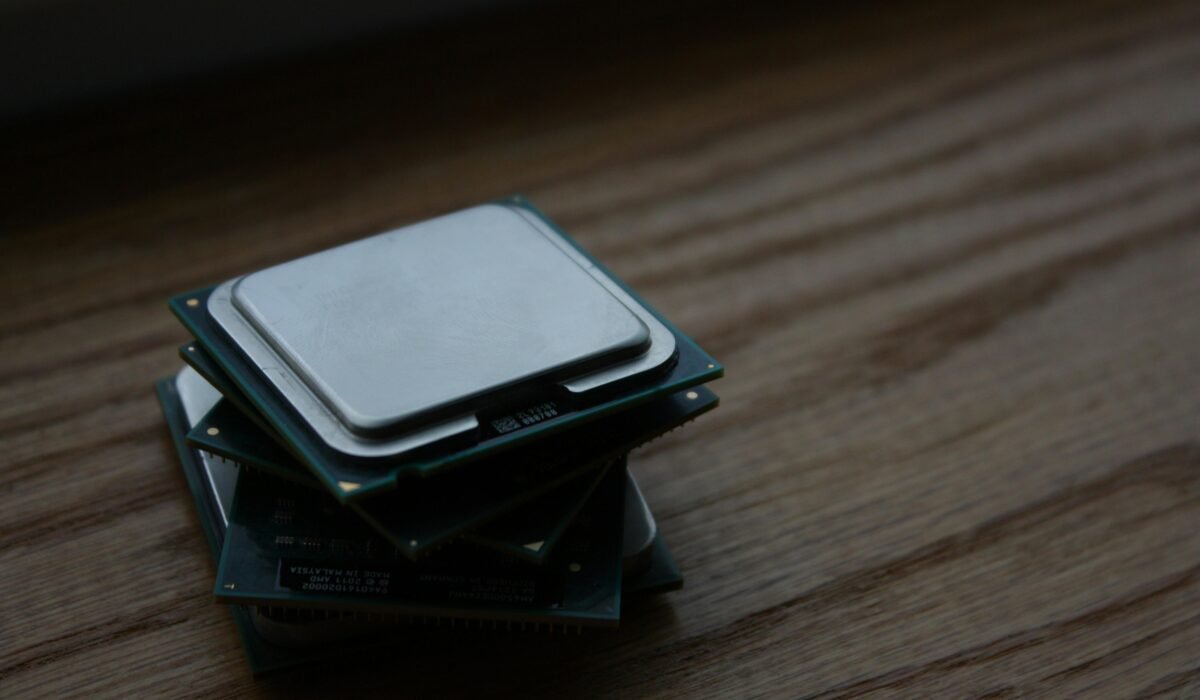
If you’re wondering about the core technology powering your devices, understanding **ARM vs x86 explained** is crucial for making informed decisions. These two foundational CPU architectures dictate everything from your smartphone’s battery life to your server’s processing power. This article will break down their fundamental differences, explore their real-world implications, and help you navigate the evolving landscape of computing.
What is the Fundamental Difference Between x86 and ARM CPU Architectures?
The fundamental difference between x86 and ARM CPU architectures boils down to their core design philosophy, specifically how they handle instruction sets. x86, primarily developed by Intel and AMD, uses a Complex Instruction Set Computer (CISC) approach. ARM, on the other hand, is built upon a Reduced Instruction Set Computer (RISC) design.
This distinction isn’t just academic; it profoundly impacts how processors are built, how they consume power, and what tasks they excel at. Understanding this architectural divergence is key to grasping why certain devices use one over the other. In essence, it dictates the very language the CPU speaks to execute commands.
CISC vs RISC: Understanding the Core Architectural Differences
The architectural battle of CISC vs RISC CPU is at the heart of the x86 vs ARM debate. CISC (Complex Instruction Set Computer) architectures, like x86, are designed with a vast set of complex instructions. Each instruction can perform multiple operations, sometimes including memory access, arithmetic, and logic in a single step.
RISC (Reduced Instruction Set Computer) architectures, exemplified by ARM, utilize a smaller, simpler set of instructions. Each instruction typically performs only one operation, such as adding two numbers or loading data from memory. This simplicity means that more instructions are often needed to complete a complex task, but each instruction executes much faster and with less power.
Here’s a breakdown of their core characteristics:
- CISC (x86):
- Complex Instruction Sets: Single instructions can perform intricate operations.
- Variable Instruction Lengths: Instructions vary in size, requiring more complex decoding logic.
- Microcode: Complex instructions are often broken down into simpler micro-operations internally.
- Higher Transistor Count: More hardware is needed to implement the complex instruction set.
- Performance: Historically offered high performance for desktop applications due to powerful single instructions.
- RISC (ARM):
- Simple Instruction Sets: Each instruction performs a basic, atomic operation.
- Fixed Instruction Lengths: Simplifies instruction decoding and pipeline design.
- Many Registers: More general-purpose registers are available, reducing memory access.
- Lower Transistor Count: Simpler design requires less silicon, leading to smaller, more power-efficient chips.
- Performance: Achieves high performance through efficient pipelining and parallel execution of many simple instructions.
What most people miss is that while CISC instructions are “complex,” modern x86 processors often translate these into simpler RISC-like micro-operations internally. However, the fundamental difference in their external instruction sets and design philosophies still dictates their overall performance characteristics and power efficiency profiles.
Performance and Power Efficiency: Is ARM Better Than x86?
The question “Is ARM better than x86?” is complex, as “better” depends heavily on the specific application and priorities. For decades, x86 dominated high-performance computing, but ARM has made significant strides, particularly in power efficiency and, more recently, raw performance.
When it comes to **power efficiency**, ARM’s RISC design inherently allows for smaller, cooler, and less power-hungry chips. This is why ARM has been the undisputed king of mobile devices like smartphones and tablets. In laptops, Apple’s M-series processors, based on ARM, have demonstrated exceptional battery life while delivering robust performance. For instance, Apple’s M4 series processors offer significant performance gains, with the M4 Pro providing a 75% uplift in memory bandwidth compared to the M3 Pro, alongside 25% faster single-core and 35% faster multi-core performance compared to the M3. This showcases ARM’s capability to deliver high performance-per-watt.
However, Intel CEO Pat Gelsinger, at Computex 2024, reaffirmed x86’s capabilities, stating, “Lunar Lake has the best CPU, best graphics, best NPU, and it has a very compelling battery life. Why would you change it?” He also dismissed claims that x86 cannot match others in power consumption as “a myth.” This highlights that modern x86 chips, with innovations like Intel’s hybrid architectures (P-cores and E-cores), are also pushing the boundaries of efficiency. The rise of specialized accelerators, such as NPUs integrated into chips like Qualcomm’s Snapdragon X Elite, also blurs the lines, as these dedicated units handle AI workloads with extreme efficiency, regardless of the core CPU architecture. Ultimately, the choice between ARM and x86 involves weighing raw compute power against energy consumption for your specific needs.
Software Compatibility and Emulation: Running x86 Apps on ARM
One of the most significant challenges for ARM’s expansion into traditional x86 domains like desktops and servers has always been **software compatibility**. The vast ecosystem of existing applications, operating systems, and drivers has been built and optimized for x86 architecture over decades. When you switch to an ARM-based system, these legacy x86 apps won’t run natively.
This is where **x86 emulation on ARM** comes into play. Emulation layers translate x86 instructions into ARM instructions on the fly, allowing x86 software to run on ARM hardware. Apple’s Rosetta 2, for example, is a highly successful emulation layer that enables Intel-based Mac applications to run seamlessly on Apple M-series Macs. Similarly, Microsoft offers an emulation layer for Windows on ARM, allowing many standard Windows applications to function.
However, emulation isn’t magic. There’s almost always a **performance overhead** associated with it. The CPU has to do extra work to translate instructions, which can lead to slower performance compared to native ARM applications. While Rosetta 2 is remarkably efficient for many everyday tasks and even some professional software, demanding applications like certain games or intensive video editing suites might experience noticeable slowdowns or even compatibility issues. For instance, complex 3D rendering or high-frame-rate gaming often reveals the limitations of emulation. Developers are increasingly releasing native ARM versions of their software (e.g., Adobe Creative Suite, Microsoft Office), which mitigates this issue and unlocks the full potential of ARM hardware.
x86 vs ARM in Real-World Applications: From Desktops to Servers
The battle between x86 vs ARM architecture differences plays out dramatically across various computing landscapes. Each architecture has carved out its niche, but the boundaries are increasingly blurring.
In the **PC market**, x86 still holds a dominant position, with Intel alone holding a 78.9% market share in Q2 2024, according to Semicon electronics. However, ARM-based chips have captured 8% of the PC market and are growing. This growth is largely fueled by:
- Smartphones and Tablets: ARM is the undisputed leader here, thanks to its superior power efficiency. Every major smartphone, from iPhones to Android flagships, runs on an ARM-based System-on-Chip (SoC).
- Laptops: Apple’s M-series processors (M1, M2, M3, M4) in MacBooks have been a game-changer, demonstrating ARM’s capability for high performance and exceptional power efficiency in consumer laptops. This has set a new benchmark, leading to devices like the 2024 MacBook Air with M3 and MacBook Pro with M4 Pro.
- Windows on ARM compatibility: Qualcomm’s Snapdragon X Elite and X Plus processors are powering a new wave of Windows on ARM laptops, including devices like the Microsoft Surface Pro 11 and Dell XPS 13 (2024). These devices are highlighted for their superior performance-per-watt and integrated NPUs for AI features.
The **server market share** is also seeing a significant shift. While x86 has historically dominated data centers, ARM’s share was approximately 15% in 2024. Mohamed Awad, Arm’s head of infrastructure, projects this to surge to 50% by the end of 2025, driven by the “insatiable demand for computing” for AI infrastructure and energy efficiency. However, IDC predicts a more conservative 21.1% of worldwide servers shipped in 2025 will be ARM-based. Companies like Amazon Web Services (AWS) have widely adopted ARM-based Graviton processors for their cloud infrastructure, demonstrating the viability of ARM servers vs x86 servers for various workloads. Even high-performance computing (HPC) showcases ARM’s potential, with Fujitsu’s Fugaku Supercomputer, once the world’s most powerful, utilizing ARMv8-A SVE architecture.
The Future of CPU Architectures: Will ARM Replace x86?
The question “Will ARM replace x86?” is on many people’s minds, especially with the rapid advancements in ARM technology. The short answer is likely **no, not entirely**, but the market landscape will continue to evolve towards coexistence and specialization.
The future of CPU architectures points towards a world of increasing diversity and **hybrid architectures**. Intel, despite Pat Gelsinger’s strong support for x86 and his dismissal of power consumption myths, has also expressed an “open door policy” for ARM, stating, “That said, if ARM emerges, I want to be the foundry.” This indicates a recognition of ARM’s growing influence. The rise of specialized cores and accelerators, such as NPUs (Neural Processing Units) for AI workloads, is a key trend. Qualcomm’s Snapdragon X Elite, for instance, features an integrated AI Engine capable of over 45 trillion operations per second (TOPS), enhancing AI features in Windows apps. ARM is noted to be much better for machine learning, doing three times more work than x86 and offering 50% higher memory bandwidth for data-heavy tasks. This integration of specialized silicon means that the core CPU architecture is just one piece of a larger, more complex puzzle.
The drive for energy efficiency in large-scale AI infrastructure is a major tailwind for ARM. Mohamed Awad of Arm emphasizes that power efficiency is now a “necessity” for scaling AI. This positions ARM well for future growth in data centers and edge computing where power consumption is paramount. While x86 will likely remain dominant in areas where legacy software compatibility and raw single-threaded performance are critical, ARM’s strengths in efficiency, integrated accelerators, and its open licensing model will continue to drive its expansion into new areas. It’s less about one replacing the other and more about each architecture finding its optimized role in a diverse computing ecosystem.
Total Cost of Ownership: ARM vs. x86 for Enterprise & Cloud
When considering large-scale deployments, especially in enterprise and cloud environments, the **Total Cost of Ownership (TCO)** for ARM vs. x86 becomes a critical factor. Beyond the initial purchase price of the chips, TCO encompasses power consumption, cooling requirements, rack space, maintenance, and long-term operational expenses. This is where ARM-based solutions are demonstrating significant advantages.
Cloud providers like Amazon Web Services (AWS) have heavily invested in ARM-based Graviton instances, and companies are seeing tangible benefits. For example, Netflix reportedly saves $15 million annually by migrating video encoding to AWS Graviton instances, while achieving 20% faster processing. This is a powerful testament to the efficiency gains. ARM cloud instances, such as AWS Graviton, can offer up to 40% lower cost compared to x86 for suitable workloads, primarily due to their superior power efficiency. Less power consumed means lower electricity bills, reduced cooling demands, and higher server density in data centers.
For enterprises, this translates to substantial long-term savings. While initial software migration or optimization costs might exist, the ongoing operational benefits can quickly outweigh them. The energy efficiency of ARM processors, combined with their strong performance characteristics for parallelizable workloads often found in cloud computing and AI, makes them an increasingly attractive option for minimizing TCO. If you’re exploring cloud solutions, understanding these cost implications is crucial; you can learn more about different cloud providers in our Cloud Computing for Beginners: Your AWS, Azure, GCP Guide.
Frequently Asked Questions
What is the difference between ARM and x86?
The primary difference lies in their instruction set architectures: x86 uses Complex Instruction Set Computer (CISC), while ARM uses Reduced Instruction Set Computer (RISC). CISC allows single, complex instructions, while RISC uses many simple, fast instructions, leading to ARM’s typically higher power efficiency and x86’s traditional focus on raw performance for complex tasks. This fundamental design choice impacts everything from chip size to energy consumption.
Is ARM better than x86?
“Better” is subjective and depends on the application. ARM generally excels in power efficiency, making it ideal for mobile devices and increasingly for laptops and servers where energy consumption is critical. x86 traditionally offers higher raw performance for demanding desktop applications and gaming, though modern ARM chips are closing this gap. Each architecture has its strengths, and the choice depends on your specific needs and priorities.
Will ARM replace x86?
It’s highly unlikely that ARM will completely replace x86. Instead, the future points towards a diverse computing landscape where both architectures coexist and specialize. ARM is rapidly expanding its market share in laptops, servers, and AI infrastructure due to its efficiency, while x86 continues to innovate with hybrid architectures and maintain dominance in areas requiring legacy software compatibility and maximum single-threaded performance.
Is x86 still relevant?
Absolutely, x86 is still highly relevant and continues to be the dominant architecture in desktop PCs, high-end workstations, and a significant portion of the server market. Intel and AMD are constantly innovating, integrating specialized cores (like Intel’s P-cores/E-cores) and powerful GPUs, ensuring x86 remains a powerful and competitive choice for a wide range of applications, especially those requiring maximum raw compute power or extensive software compatibility.
In conclusion, the debate between ARM vs x86 explained reveals a dynamic and evolving landscape of CPU architectures. While x86 has long been the powerhouse of personal computing and data centers, ARM’s relentless focus on power efficiency and recent performance gains are reshaping the industry. Understanding these core differences empowers you to make smarter technology choices, whether you’re buying a new laptop, choosing a server for your business, or simply curious about the chips that power our digital world. The future of computing promises continued innovation from both camps, offering specialized solutions for every need.