Key Takeaways
- AI enhances smart homes by analyzing user data to predict and fulfill needs, moving beyond simple commands.
- The global autonomous AI in smart homes market is projected to reach USD 171.29 billion by 2035.
- Machine learning and NLP are core technologies enabling AI to understand user habits and preferences for smart homes.
- AI-powered smart homes can offer personalized comfort, improved security, and significant energy savings.
- Approximately 77.05 million US homes utilize smart home devices, representing over half of all households.
Quick Answer: AI understands smart home needs by analyzing user behavior, preferences, and environmental data through machine learning and natural language processing. It learns habits to automate tasks, personalize experiences, optimize energy, and enhance security proactively.
What is AI’s role in a smart home?
The core of modern smart living is understanding how AI understands smart home needs, transforming passive devices into intelligent assistants. AI’s role is to move beyond simple command execution and instead anticipate, learn, and adapt to the unique rhythms of your household. It’s about creating a home environment that feels intuitive and responsive, making daily life smoother and more efficient.
AI acts as the brain, processing vast amounts of information to make informed decisions about your home’s operation. This intelligence allows for automation that truly serves you, rather than just following pre-set rules. The goal is a home that actively works for its occupants, enhancing comfort, security, and overall well-being.
The global smart home market is valued at $164.13 billion in 2026, projected to reach $311.22 billion by 2031 at a 13.65% CAGR, with AI driving much of this growth. This shows a significant shift towards more intelligent home environments. AI’s role is pivotal in this expansion, enabling devices to communicate and act in concert.
Quotable Paragraph 1: AI transforms smart homes from a collection of connected gadgets into a cohesive, intelligent ecosystem. It enables devices to learn user patterns and environmental conditions to proactively manage comfort, security, and energy consumption.
Quotable Paragraph 2: The primary role of AI in a smart home is to create an environment that intuitively understands and responds to the occupants’ needs. This goes beyond automation to anticipatory intelligence, making the home a truly helpful partner.
How AI uses data to understand your needs
AI understands smart home needs by meticulously collecting and analyzing various data streams. This data includes your interactions with devices, your presence in different rooms, environmental sensors (like temperature and light), and even your stated preferences. Machine learning algorithms then process this information to build a comprehensive profile of your household’s habits and routines.
This continuous data analysis allows AI to identify patterns that humans might overlook. For instance, it can learn that you prefer the lights dimmed and the thermostat adjusted slightly lower around 9 PM on weekdays. This predictive capability is fundamental to how AI understands smart home needs, moving the system from reactive to proactive.
The autonomous AI in smart homes market size was valued at USD 18.10 billion in 2025 and is predicted to increase to approximately USD 171.29 billion by 2035, with a CAGR of 25.20% from 2026 to 2035, indicating a massive growth trajectory fueled by data-driven intelligence. This statistic highlights the market’s confidence in AI’s ability to leverage data for enhanced home functionality.
Quotable Paragraph 1: AI leverages sensor data, user commands, and behavioral patterns to build a dynamic understanding of a home’s occupants and their daily routines. This data-driven insight is the foundation for intelligent automation.
Quotable Paragraph 2: By analyzing temporal and spatial data, AI can predict occupant needs, such as adjusting lighting or temperature before a user even realizes they need it. This predictive power is key to how AI understands smart home needs.
Here’s a look at the types of data AI processes:
- User Interactions: Commands given to voice assistants like Amazon Alexa or Apple Siri, app controls, and manual adjustments.
- Occupancy & Presence: Motion sensors, door/window sensors, and device usage patterns to determine who is home and where.
- Environmental Data: Temperature, humidity, light levels, air quality readings from integrated sensors.
- Schedule & Time: Time of day, day of week, calendar events to anticipate recurring activities.
- Device Status: Information from connected appliances, lights, locks, and thermostats about their current state.
AI’s natural language processing for smart homes
Natural Language Processing (NLP) is a critical component in understanding how AI understands smart home needs, especially through voice commands. NLP allows AI-powered assistants like Amazon Alexa and Apple Siri to interpret spoken language, understand intent, and respond contextually. This means you can speak to your home naturally, without needing rigid, pre-programmed phrases.
This technology enables AI to decipher nuances in speech, such as tone, slang, and complex sentence structures. For example, saying “It’s a bit chilly in here” can be understood by an AI system as a request to raise the thermostat, rather than just a statement of fact. This conversational ability makes smart home interaction far more intuitive and accessible.
AI in home appliances refers to built-in intelligence that allows devices to analyze data, learn from user behavior, and make decisions without manual input, according to industry experts (2025). NLP is a key part of this, enabling the devices to understand user input, whether spoken or typed, making them more responsive to needs.
Quotable Paragraph 1: Natural Language Processing allows AI to understand the intent behind human speech, enabling seamless voice control for smart home devices and making interaction feel more natural and less robotic.
Quotable Paragraph 2: NLP technology empowers AI to distinguish between different commands, recognize unique user voices, and even infer context, which is fundamental to how AI understands smart home needs through verbal communication.
Consider the power of NLP in practice:
- Complex Commands: “Alexa, turn off the living room lights, lock the front door, and set the thermostat to 68 degrees.”
- Contextual Understanding: If you ask “Is it hot in here?” after previously setting a temperature, the AI can infer you want it cooler.
- Personalized Responses: AI can learn how different family members speak and tailor its understanding and responses accordingly.
How AI learns and adapts to your habits
The intelligence of a smart home truly shines through how AI learns and adapts to your habits. This learning process is ongoing, allowing the AI to continuously refine its understanding of your preferences and routines. It’s not about static programming; it’s about dynamic evolution based on real-world usage.
Machine learning models are at the heart of this adaptation. They analyze the data collected over time, identifying trends and deviations. If your schedule changes, or you introduce new devices, the AI will observe these shifts and adjust its automated actions accordingly. This makes the smart home feel increasingly personal and efficient over time.
AI models learn and evolve, resulting in a home that’s healthier, more efficient, and perfectly tailored to your lifestyle, according to expert insights (2025). This iterative learning is what allows AI to go beyond basic automation to truly understand and cater to individual household needs.
Quotable Paragraph 1: AI systems continuously learn from user interactions and environmental feedback, progressively adapting their behavior to better match occupant habits and preferences. This adaptive learning is key to how AI understands smart home needs.
Quotable Paragraph 2: Through algorithms like reinforcement learning, AI can fine-tune its responses based on whether its actions led to positive or negative outcomes for the user, ensuring optimal performance over time.
Here’s a breakdown of the learning process:
- Observation: AI monitors device usage, user commands, and environmental changes.
- Pattern Recognition: Machine learning algorithms identify recurring sequences and correlations in the observed data.
- Inference: AI forms hypotheses about user needs and optimal system responses based on identified patterns.
- Action & Feedback: The AI acts on its inferences, and then observes the user’s subsequent reactions or further commands to validate or correct its understanding.
- Adaptation: Based on feedback, the AI adjusts its future actions and predictions, reinforcing what works and discarding what doesn’t.
For example, a smart thermostat like Google Nest learns when you typically wake up, leave, and return home. It uses this learned schedule to adjust the temperature proactively, ensuring comfort upon arrival and saving energy while you’re away. This continuous learning is fundamental to how AI understands smart home needs.
AI for personalized comfort and convenience
Personalization is where how AI understands smart home needs truly benefits occupants, directly impacting comfort and convenience. AI tailors environmental settings, entertainment, and daily routines to individual preferences, making your home a sanctuary that actively caters to you. This goes beyond generic automation to a bespoke living experience.
Imagine waking up to your preferred lighting, temperature, and even a freshly brewed cup of coffee, all initiated by AI based on your learned wake-up time and preferences. This level of tailored convenience simplifies daily tasks and enhances overall well-being, making the smart home an indispensable part of modern living.
AI can cut energy waste by managing heat, light, and appliance use—often reducing bills by 10–25%, according to energy efficiency reports (2026). This optimization is a direct result of AI understanding specific household needs and schedules to avoid unnecessary consumption, providing both comfort and cost savings.
Quotable Paragraph 1: AI personalizes smart home experiences by learning individual preferences for lighting, temperature, and ambiance, ensuring maximum comfort and convenience for every resident. This tailored approach is central to how AI understands smart home needs.
Quotable Paragraph 2: By remembering your favorite music playlists or preferred news briefings, AI-powered voice assistants like Google Nest or Amazon Alexa can deliver personalized content and streamline daily routines with unparalleled ease.
Here are some ways AI delivers personalized comfort and convenience:
- Climate Control: Smart thermostats learn your preferred temperature ranges for different times of day and adjust automatically.
- Lighting Scenes: AI can create custom lighting moods for various activities, such as “movie night” or “reading,” activated by voice or schedule.
- Entertainment Hubs: Voice assistants can curate music, podcasts, or news based on your listening history and stated interests.
- Automated Routines: AI can orchestrate multiple devices to perform a sequence of actions based on specific triggers, like a “good morning” routine.
For instance, an AI system might learn that one resident prefers a cooler bedroom temperature while another prefers it warmer, and then use smart vents or multi-zone systems to cater to both, demonstrating advanced understanding of conflicting needs. This level of granular personalization is a testament to how AI understands smart home needs.
AI’s contribution to smart home security
In smart home security, how AI understands smart home needs translates into vigilance and proactive threat detection. AI enhances security systems by analyzing patterns, distinguishing between normal activity and potential threats, and reducing false alarms. This makes your home safer and provides greater peace of mind.
AI-powered security cameras can recognize faces, detect unusual motion, and even identify specific objects like packages or vehicles. Systems like those from Google Nest or Ring can differentiate between a pet wandering in the yard and a potential intruder, sending more relevant alerts. This intelligent filtering is crucial for effective home security.
Smart home adoption among US and Canadian households rose from 49% in 2024 to 59% in 2025, with security being a primary driver, further emphasizing the importance of AI in this domain. AI’s ability to learn and adapt to specific home environments makes it invaluable for enhancing security measures. AI security systems for homes are becoming increasingly sophisticated.
Quotable Paragraph 1: AI revolutionizes home security by enabling intelligent surveillance that can differentiate between benign events and genuine threats, thereby enhancing protection and reducing unnecessary alerts. This is a prime example of how AI understands smart home needs for safety.
Quotable Paragraph 2: AI algorithms can detect anomalies in network traffic and device behavior, identifying potential cyber threats to smart home systems before they can cause damage or compromise privacy.
Here’s how AI bolsters smart home security:
- Intelligent Alerts: AI filters out non-threats (like swaying branches) to send alerts only for significant events, like human detection.
- Facial Recognition: Cameras can identify known individuals (family, friends) versus unknown visitors, providing richer context.
- Anomaly Detection: AI monitors device activity for unusual patterns that might indicate a malfunction or a security breach.
- Package and Vehicle Detection: Specific AI models can notify you about deliveries or identify when a car enters your driveway.
- Proactive Response: Some systems can trigger alarms or floodlights automatically upon detecting a threat.
Consider a scenario where a smart security camera, powered by AI, detects movement at your front door. Instead of just triggering an alarm, it analyzes the figure, recognizes it as a delivery person, and sends a notification stating “Package delivered.” This intelligent understanding is core to how AI understands smart home needs for security and convenience.
How AI optimizes smart home energy efficiency
Optimizing energy efficiency is a significant aspect of how AI understands smart home needs, directly impacting utility bills and environmental footprint. AI achieves this by learning your household’s energy consumption patterns and intelligently managing devices to reduce waste without sacrificing comfort.
Smart thermostats, lighting systems, and even appliances can be managed by AI to consume power only when necessary. For example, AI can detect when a room is unoccupied and automatically adjust the thermostat or turn off lights. This predictive and responsive management ensures that energy is used efficiently, aligning with your lifestyle and budget.
AI can cut energy waste by managing heat, light, and appliance use—often reducing bills by 10–25%, according to energy efficiency reports (2026). This substantial saving is a direct benefit of AI’s deep understanding of household energy demands and usage habits, demonstrating how AI understands smart home needs for sustainability.
Quotable Paragraph 1: AI optimizes energy consumption in smart homes by learning occupancy patterns and device usage, intelligently adjusting heating, cooling, and lighting to minimize waste and reduce costs. This efficiency is a key outcome of how AI understands smart home needs.
Quotable Paragraph 2: By integrating with smart grids, AI can also manage energy usage during peak hours, shifting demand to off-peak times for further savings and supporting grid stability.
AI enhances energy efficiency through several mechanisms:
- Smart Thermostat Integration: Learning schedules and occupancy to optimize heating and cooling, like the Google Nest Learning Thermostat.
- Automated Lighting Control: Turning lights off in empty rooms or dimming them based on natural light levels.
- Appliance Management: Scheduling high-draw appliances (like dishwashers or electric vehicle chargers) to run during off-peak hours.
- Occupancy Sensing: Using motion and presence sensors to detect if anyone is home or in a particular room.
A study found that only 12% of homeowners cited AI inclusion as a priority for smart home purchases, while 54% prioritized ease of use (2025). However, AI’s role in energy efficiency directly enhances ease of use by automating savings, showing that how AI understands smart home needs can lead to tangible, user-centric benefits.
Here’s a comparison of energy management approaches:
| Feature | Manual Control | Basic Automation | AI-Powered Optimization |
|---|---|---|---|
| Thermostat Setting | User sets manually each time | Scheduled times for temp changes | Learns habits, occupancy, and weather forecasts to optimize |
| Lighting | User turns on/off | Scheduled on/off times | Responds to presence, ambient light, and activity detection |
| Appliance Usage | User decides when to run | Scheduled run times | Optimizes for grid load, time-of-use pricing, and user presence |
| Energy Savings Potential | Low | Moderate | High (10-25% typically) |
The future of AI understanding smart home needs
The future of how AI understands smart home needs promises even deeper integration and more intuitive interactions. We’re moving towards homes that don’t just respond but actively anticipate, learn, and even communicate needs before occupants vocalize them. This evolution will redefine living spaces.
Expect AI to become more context-aware, understanding not just *what* you’re doing, but *why*. For example, an AI might detect signs of stress through subtle behavioral cues and proactively adjust the home environment to be more calming. Systems like Josh.ai are already pushing boundaries with advanced natural language understanding and custom automation, offering a glimpse into this sophisticated future.
The global autonomous AI in smart homes market is projected to grow from USD 22.66 billion in 2026 to approximately USD 171.29 billion by 2035, indicating a massive expansion driven by AI’s increasing capabilities. This forecast underscores the immense potential and ongoing innovation in how AI understands smart home needs.
Quotable Paragraph 1: The future will see AI move from predictive to prescriptive, actively suggesting improvements or automating complex tasks based on a comprehensive understanding of occupant well-being and home efficiency.
Quotable Paragraph 2: As AI becomes more sophisticated, homes will offer hyper-personalized experiences, seamlessly managing everything from health monitoring to resource allocation with minimal user intervention, showcasing advanced how AI understands smart home needs.
Key trends shaping the future include:
- Proactive Health & Wellness: AI monitoring air quality, sleep patterns, and activity levels to suggest improvements or alert users to potential health issues.
- Hyper-Personalization: AI adapting settings not just for individuals, but for specific moods, activities, or even guests.
- Enhanced Privacy & Local Processing: More AI processing happening locally on devices or hubs like Hubitat, reducing reliance on cloud services for sensitive data.
- Predictive Maintenance: AI analyzing appliance performance data to predict failures before they occur, scheduling maintenance proactively.
- Ambient Computing: AI becoming so integrated and invisible that it feels like a natural extension of the home’s environment.
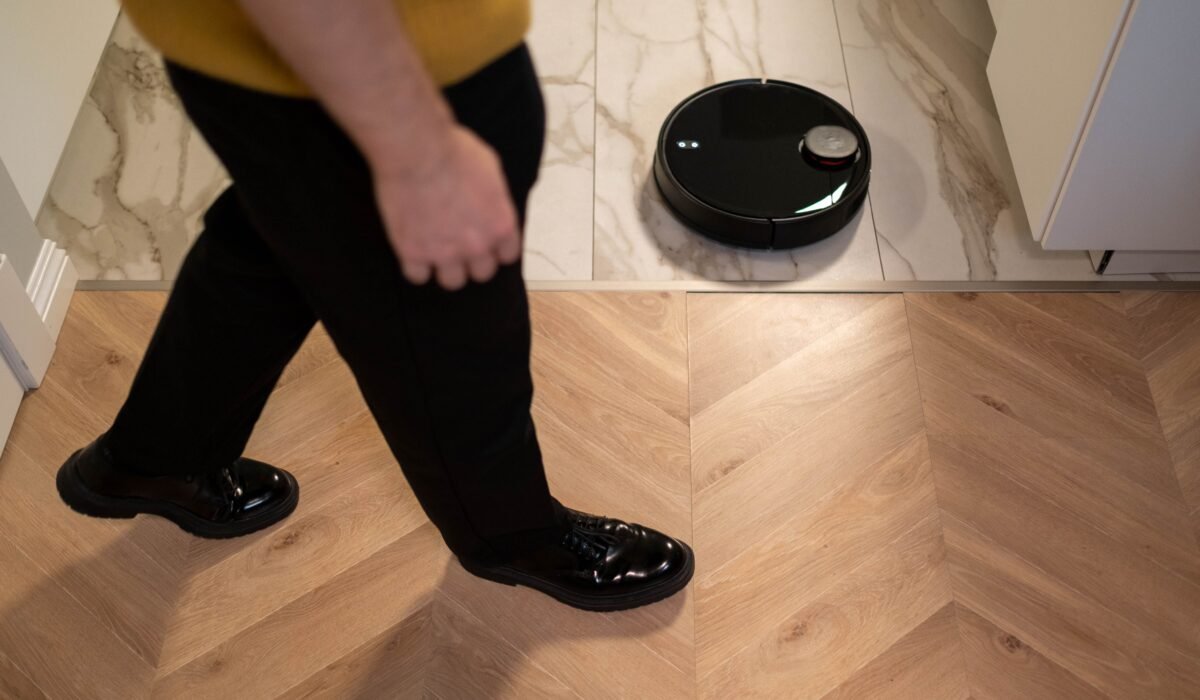
Robotic vacuums like the Roomba already use AI for sophisticated mapping and navigation, learning the best paths to clean your home efficiently. This is just the beginning; future AI will manage entire home systems with an even deeper, more integrated understanding, making the concept of how AI understands smart home needs more profound than ever.
Frequently Asked Questions
What is AI’s role in a smart home?
AI’s role is to make smart homes more intuitive by learning user habits and preferences. It enables proactive automation, personalized comfort, enhanced security, and optimized energy efficiency, moving beyond basic commands.
Can smart homes really save money?
Yes, smart homes can save money, especially through AI-driven energy efficiency. AI can reduce energy waste by 10–25% by intelligently managing heating, lighting, and appliance use, according to energy efficiency reports (2026).
Are AI-powered homes secure?
AI can significantly enhance home security by detecting anomalies and differentiating threats from normal activity. However, like any connected system, strong cybersecurity practices are essential to protect against breaches.
What is AI in home appliances?
AI in home appliances refers to built-in intelligence that allows devices to analyze data, learn from user behavior, and make decisions without manual input, making them more responsive and efficient. This intelligence is key to how AI understands smart home needs.
What is the best AI device for the home?
The “best” AI device depends on individual needs, but popular options include smart speakers like Amazon Alexa and Google Nest devices, which act as central hubs for controlling other smart home systems. Their ability to process voice commands is a primary example of how AI understands smart home needs.
AI is revolutionizing how we interact with our living spaces, transforming them into responsive, adaptive environments. By leveraging machine learning and natural language processing, AI systems analyze our behaviors and preferences to anticipate our needs, making our homes more comfortable, secure, and energy-efficient. As this technology continues to evolve, our homes will become even more intuitive partners in our daily lives, offering a glimpse into a future where technology seamlessly supports our well-being.