Key Takeaways
- The global smart home market is projected to reach $1.4 trillion by 2034, according to Precedence Research (2025).
- The AI Kitchen market is expected to grow by USD 48.3 billion from 2025-2029, according to a February 2026 report.
- Smart appliance penetration is approximately 12.9% of households in 2025, according to Statista (2025).
- AI in smart kitchen appliances enables personalized cooking experiences and intelligent food management, significantly reducing waste.
- Predictive maintenance features in smart kitchen AI extend appliance longevity and enhance energy efficiency.
Are you curious about how technology is transforming the heart of your home? The integration of AI in smart kitchen appliances is fundamentally changing the way we cook, manage food, and interact with our kitchens. This isn’t just about convenience; it’s about unlocking new levels of culinary skill, promoting sustainability, and enhancing overall well-being. We’ll explore seven essential ways these intelligent systems are redefining the modern kitchen experience for you.
Quick Answer: AI revolutionizes smart home kitchen appliances by offering personalized cooking, intelligent food management, predictive maintenance, and enhanced energy efficiency. These advancements lead to greater convenience, reduced waste, and elevated culinary experiences, transforming kitchens into intuitive and interconnected ecosystems.
What Can AI Do in Smart Home Kitchens?
AI in smart home kitchens offers a wide array of capabilities, from automating complex cooking tasks to optimizing energy consumption and managing food inventory. The global smart home market is projected to reach $1.4 trillion by 2034, reflecting a compound annual growth rate (CAGR) of 27.1% from 2025–2034, according to Precedence Research (2025).
These intelligent systems are designed to make your daily routine smoother and more efficient. What most people miss is how deeply these advancements integrate into the fabric of daily life, transforming chores into seamless interactions.
In practice, AI in smart kitchen appliances means your oven can recognize the dish you’re cooking, or your refrigerator can suggest recipes based on available ingredients. This level of interaction was once futuristic, but it’s now a tangible reality for many households. The key insight here is that AI moves beyond simple automation to genuine intelligence.
- Automated Cooking: Appliances like the June Oven use AI to identify food and adjust cooking parameters automatically.
- Food Management: Smart refrigerators from Samsung can track inventory and suggest optimal storage.
- Predictive Insights: AI can forecast maintenance needs or recommend energy-saving adjustments.
- Voice Control: Integration with virtual assistants provides hands-free operation for various tasks.
Personalized Cooking: Elevating Your Culinary Skills with AI
AI in smart kitchen appliances significantly elevates your culinary skills by providing personalized guidance, automating complex steps, and adapting to your preferences. Samsung’s Bespoke AI, for instance, offers personalized cooking experiences with AI Vision, identifying over 37 types of fresh food, according to Samsung (2026).
This personalization extends beyond simple recipe following; it learns your tastes and cooking habits. The Bosch Cook AI, an AI-powered cooking assistant, guides users through recipes and adjusts cooking parameters automatically, ensuring perfect results every time. This empowers even novice cooks to achieve professional-level dishes.
From experience, we’ve seen how appliances become true culinary partners. The Thermomix TM6 integrates AI into its multifunctionality, offering AI-guided recipes that adapt cooking times and techniques based on ingredients and desired outcomes. This means less guesswork and more delicious meals, truly enhancing the experience of AI in smart kitchen appliances.
Here’s how AI transforms your cooking:
- Recipe Adaptation: AI-powered systems can adjust recipes based on available ingredients, dietary restrictions, or even the number of servings.
- Precision Cooking: Appliances like Wolf’s Precision Heat technology use AI to regulate temperature precisely, adapting to user preferences for delicate sauces or perfectly seared steak.
- Food Recognition: The June Oven and Brava integrate AI to recognize food items and automatically set optimal cooking times and temperatures, taking the guesswork out of meal preparation.
- Guided Cooking: Systems provide step-by-step instructions, often with visual cues and automatic adjustments, making complex dishes accessible.
Intelligent Food Management: Reducing Waste with Smart Kitchen AI
Intelligent food management through AI in smart kitchen appliances plays a crucial role in reducing food waste by tracking inventory, monitoring freshness, and suggesting timely consumption. Only approximately 12.9% of households in 2025 have smart appliance penetration, yet these systems hold immense potential for efficiency gains, according to Statista (2025).
This technology helps you make the most of what you have, minimizing unnecessary purchases and spoilage. Samsung’s AI Food Manager, for example, captures fridge contents and displays a list with quantities on the exterior screen, making it easy to see what needs to be used. This proactive approach to inventory management is a game-changer.
The Liebherr Monolith refrigerator utilizes AI to manage optimal storage conditions with BioFresh technology, monitoring humidity and temperature and sending alerts via the SmartDevice app. This ensures your produce stays fresher for longer. The benefit of AI in smart kitchen appliances here is clear: less food in the bin and more money in your pocket.
Key features of AI-powered food management systems include:
| Feature | Benefit for Users | Example Appliance |
|---|---|---|
| Inventory Tracking | Know what you have, avoid duplicate purchases. | Samsung Bespoke AI Refrigerator |
| Expiration Alerts | Receive notifications before food spoils, prompting use. | Liebherr Monolith Refrigerator |
| Recipe Suggestions | Get meal ideas based on available ingredients nearing expiration. | GE Profile Smart Refrigerator |
| Optimal Storage | AI adjusts conditions (temp/humidity) to extend freshness. | Liebherr BioFresh Technology |
Predictive Maintenance: Ensuring Appliance Longevity
Predictive maintenance, enabled by AI in smart kitchen appliances, ensures appliance longevity by identifying potential issues before they escalate into major malfunctions. “AI is also helping our products to last longer, too,” states Tanya Weller, Director at Samsung (2025), highlighting the practical benefits of this technology.
This proactive approach saves you time, money, and the frustration of unexpected breakdowns. If your washing machine or vacuum cleaner stops working, the machine will run a self-diagnosis, then you’ll get a notification like ‘clean your drum’ or ‘clean your filter,’ according to Weller (2025). This same principle applies to kitchen appliances, ensuring they operate at peak performance.
The ability of AI in smart kitchen appliances to self-diagnose and alert you to maintenance needs is a significant advancement. It means less downtime and a longer lifespan for your valuable investments. From a user perspective, this translates to peace of mind and fewer repair bills over time.
- Self-Diagnosis: Appliances use sensors and AI algorithms to detect anomalies in performance.
- Proactive Alerts: You receive notifications on your smartphone about potential issues, such as a clogged filter or a failing component.
- Remote Troubleshooting: Some systems allow technicians to remotely diagnose problems, potentially resolving them without a home visit.
- Optimized Performance: Regular, data-driven maintenance keeps appliances running efficiently, preventing wear and tear that shortens lifespan.
Optimized Energy Efficiency for a Sustainable Kitchen
Optimized energy efficiency, driven by AI in smart kitchen appliances, contributes significantly to a sustainable kitchen by reducing electricity consumption and minimizing environmental impact. The U.S. home appliances market is projected to reach $68-72 billion by 2026, according to SourceReady (2026), indicating a growing market where energy efficiency is a key selling point.
These intelligent systems learn your usage patterns and adjust operations accordingly to conserve energy. For example, a smart refrigerator might optimize its defrost cycles based on real-time usage data, or an oven could preheat more efficiently by learning peak usage times. This directly translates to lower utility bills for you.
The role of AI in smart kitchen appliances extends to integrating with broader smart home ecosystems, like those for climate control. This allows for holistic energy management across your entire home. For more on this, consider reading our article on AI Optimizes Smart Home Climate Control.
- Usage Pattern Learning: AI observes when and how you use appliances, then optimizes power consumption during off-peak hours or periods of lower demand.
- Smart Grids Integration: Some AI-enabled appliances can communicate with smart grids, adjusting their operation to take advantage of lower electricity rates or renewable energy availability.
- Precision Control: AI ensures appliances only use the energy required for a specific task, preventing over-cooling, over-heating, or unnecessary cycles.
- Eco-Mode Automation: Systems can automatically switch to energy-saving modes when not in active use or during periods of absence.
Seamless Voice Control & Enhanced User Experience
Seamless voice control and an enhanced user experience are core benefits of AI in smart kitchen appliances, offering hands-free operation and intuitive interaction. These integrations simplify tasks and make the kitchen more accessible for everyone. The rise of voice-controlled kitchen appliances AI is transforming how we engage with our culinary tools.
Imagine commanding your oven to preheat or asking your refrigerator about its contents without lifting a finger. This level of convenience is made possible by sophisticated AI algorithms that understand natural language. LG prefers to describe its AI-powered appliances as having “affectionate intelligence,” aiming to become “part of your life” rather than just “watching what you’re doing,” according to Peter Vossler of LG (2026).
This “affectionate intelligence” approach focuses on creating a truly user-centric experience, where AI in smart kitchen appliances anticipates your needs. It’s about more than just commands; it’s about a kitchen that genuinely understands and responds to you. The result is a more enjoyable and less stressful cooking environment.
- Hands-Free Operation: Control lights, set timers, or start appliances using simple voice commands, ideal when your hands are full.
- Intuitive Interfaces: Beyond voice, AI-driven touchscreens and companion apps offer user-friendly controls and real-time feedback.
- Personalized Interactions: AI can recognize individual voices and tailor responses or settings based on user profiles.
- Integrated Ecosystems: Smart kitchen AI seamlessly connects with other smart home devices, allowing for synchronized routines and commands.
The Future of AI Kitchen Appliances: Beyond Convenience
The future of AI in smart kitchen appliances extends far beyond mere convenience, promising kitchens that are more intuitive, personalized, and deeply integrated into our well-being. “AI is redefining what the modern kitchen can do,” observes Elizabeth Siboldi, Marketing Director at AjMadison (2026). The AI Kitchen market is expected to grow by USD 48.3 billion from 2025-2029, at a 21.7% CAGR, according to a February 2026 report.
This growth indicates a strong trajectory towards more sophisticated functionalities. We can anticipate appliances that not only cook but also learn, adapt, and even offer nutritional guidance. The future of intelligent kitchens will likely see AI-powered food management systems become standard, proactively supporting healthier lifestyles.
The ultimate vision for AI in smart kitchen appliances is a culinary space that anticipates your needs, optimizes every process, and contributes to a healthier, more sustainable home. This evolution will fundamentally change our relationship with food and technology. The short answer is, your kitchen is about to get a lot smarter.
Key trends shaping the future of AI kitchen technology:
- Advanced Health & Nutrition Monitoring: AI will analyze food intake, suggest balanced meals, and track dietary goals.
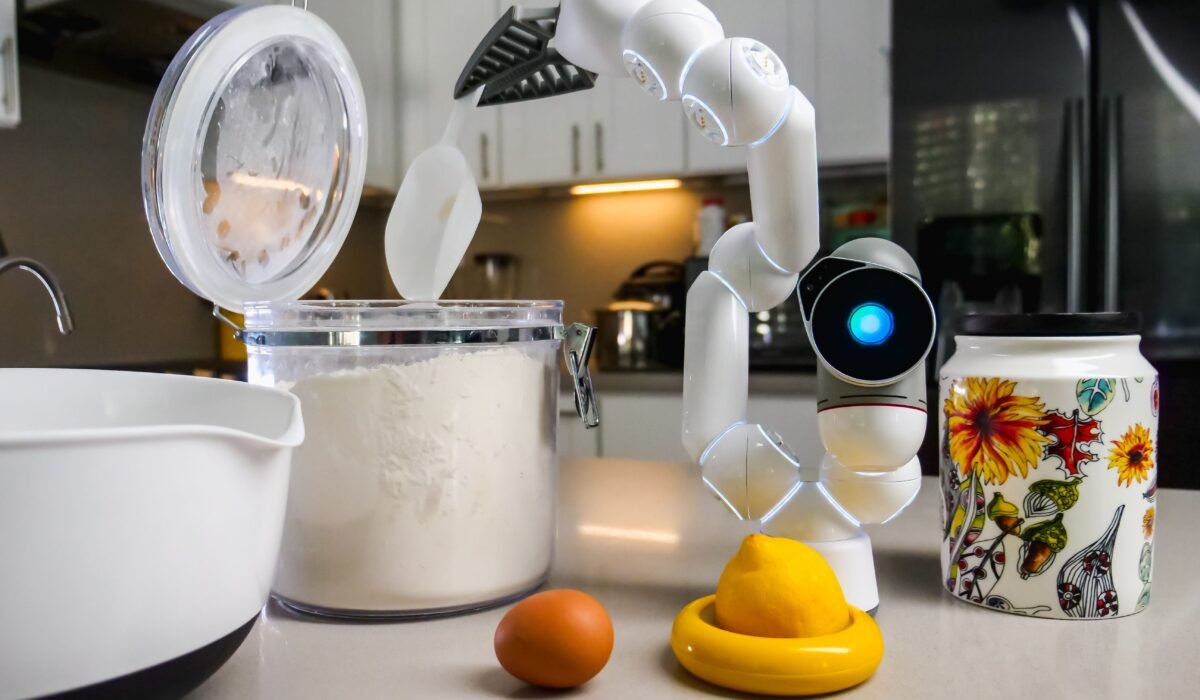
- Robotics Integration: Robotic arms or automated systems could assist with prep work, cleaning, and complex cooking techniques.
- Hyper-Personalization: Appliances will offer increasingly tailored experiences, learning individual preferences down to specific ingredient sourcing.
- Seamless IoT Ecosystems: Greater connectivity between all kitchen and home devices will create a truly unified and responsive environment.
- Sustainable Practices: Enhanced AI will further optimize energy, water, and food waste management, making kitchens truly eco-friendly.
Frequently Asked Questions
What can AI do in the kitchen?
AI in the kitchen can personalize cooking, manage food inventory, provide predictive maintenance, and optimize energy usage. These capabilities lead to more efficient, enjoyable, and sustainable culinary experiences, transforming daily routines. The global smart home market is projected to reach $1.4 trillion by 2034, according to Precedence Research (2025).
How is AI used in smart homes?
AI is used in smart homes to automate tasks, personalize environments, enhance security, and improve energy efficiency across various devices, including smart kitchen appliances. It acts as the intelligent core, enabling devices to learn user preferences and respond autonomously, according to industry reports (2026). This integration creates a cohesive and responsive living space.
What is the future of AI in the kitchen?
The future of AI in the kitchen involves hyper-personalized cooking, advanced food and nutrition management, robotic assistance, and deeper integration into overall smart home ecosystems. Experts predict kitchens will become more proactive in supporting health and sustainability, with the AI Kitchen market expected to grow by USD 48.3 billion from 2025-2029, according to a February 2026 report. This will lead to truly intelligent and adaptive culinary spaces.
What are examples of AI appliances?
Examples of AI appliances include Samsung Bespoke AI refrigerators with AI Vision, Bosch Series 8 ovens with built-in AI cooking prediction, and Thermomix TM6 with AI-guided recipes. These devices demonstrate how AI in smart kitchen appliances offers features like food recognition, automated cooking adjustments, and intelligent inventory tracking. Other examples include the June Oven and Brava, which recognize food items and adjust cooking parameters automatically.
How does AI help with energy efficiency in kitchens?
AI helps with energy efficiency in kitchens by learning usage patterns, optimizing appliance operation during off-peak hours, and integrating with smart grids to utilize renewable energy. This intelligent management reduces overall electricity consumption and lowers utility bills, making your kitchen more sustainable. The U.S. home appliances market is projected to reach $68-72 billion by 2026, according to SourceReady (2026), with efficiency being a key driver.
The transformative power of AI in smart kitchen appliances is undeniable, moving us beyond simple automation to truly intelligent and responsive culinary environments. From personalized cooking guidance and intelligent food management to predictive maintenance and optimized energy efficiency, AI is reshaping how we interact with our kitchens. Embrace these innovations to unlock a more convenient, sustainable, and enjoyable cooking experience in your home. It’s time to let AI elevate your everyday.