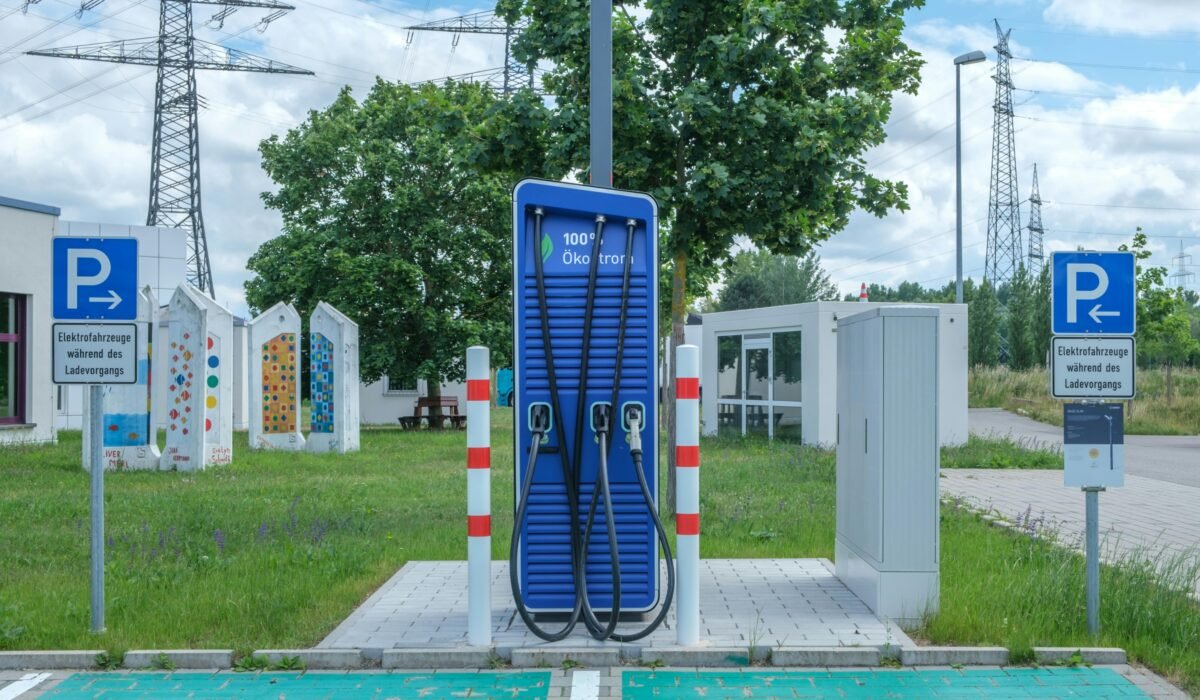
Are you wondering how we’ll power millions of electric vehicles without crashing the grid? The short answer is: by harnessing the power of artificial intelligence. AI optimizing EV charging networks is not just a futuristic concept; it’s the intelligent solution actively transforming how EVs are charged, managed, and integrated into our daily lives and energy infrastructure.
What is AI in EV Charging and Why Does it Matter?
AI in EV charging refers to the application of sophisticated algorithms and machine learning techniques to manage, predict, and optimize the entire electric vehicle charging ecosystem. This includes everything from individual charging stations to vast networks and their interaction with the broader electrical grid. Why does it matter? Because without it, the rapid growth of EVs would overwhelm existing infrastructure and create significant energy challenges.
As global EV sales hit 20.7 million units in 2025, comprising over 25% of all new cars sold worldwide, the demand for efficient charging solutions is immense. According to the International Energy Agency (IEA), the number of public chargers worldwide exceeded 5 million by the end of 2024, a 30% year-on-year increase. This explosive growth necessitates smart solutions to prevent grid strain and ensure seamless access for drivers.
What most people miss is that AI isn’t just about making charging faster; it’s about making it smarter, more affordable, and fundamentally more sustainable. It transforms a potential grid burden into an opportunity for greater energy efficiency and stability.
How Does AI Optimize EV Charging Networks?
AI provides the intelligence needed to tackle the complexities of EV charging by analyzing vast amounts of real-time data. This data includes everything from electricity prices and grid load to individual vehicle battery states and user preferences. By processing these inputs, AI makes informed decisions to streamline operations and enhance the charging experience.
Intelligent Load Balancing and Energy Management
One primary function of AI is to perform intelligent load balancing for EV charging. Imagine a busy charging hub where many vehicles plug in simultaneously; AI prevents overloading the local grid by distributing power efficiently among available chargers. This prevents costly infrastructure upgrades and ensures consistent service.
AI-enhanced load balancing can lead to 40% shorter wait times and 25% higher station utilization for operators. It dynamically allocates power based on factors like a vehicle’s immediate need, desired departure time, and overall grid capacity, ensuring optimal energy management EV charging.
Predictive Maintenance for Reliability
Charger reliability is a significant concern for EV drivers; Harvard research in 2024 indicated that public EV charge ports are only 78% reliable. This is where AI excels in predictive maintenance EV chargers. By continuously monitoring charger performance data, AI can anticipate potential failures before they occur.
Advanced AI algorithms can preemptively identify and fix 80% of charger-related issues remotely, significantly reducing costly site visits and downtime. This proactive approach ensures that chargers are operational when needed, boosting user confidence and operational efficiency.
Dynamic Pricing and Demand Response
AI enables sophisticated dynamic pricing EV charging strategies, where the cost of electricity fluctuates based on real-time grid conditions, demand, and renewable energy availability. This incentivizes drivers to charge during off-peak hours or when green energy is abundant, benefiting both consumers and the grid.
AI-powered dynamic pricing can boost utilization and shift demand to off-peak periods, with some studies showing a 40% price cut boosting utilization by 117%. This also supports demand response programs, where EV charging can be temporarily curtailed during peak grid stress, offering a powerful tool for grid operators.
Optimized Route Planning and Queue Management
For drivers, AI can integrate with navigation systems to recommend optimal charging stops based on real-time charger availability, wait times, and even predicted energy prices. This enhanced user experience minimizes range anxiety and streamlines journeys.
Gridserve’s research on the impact of AI on the EV charging user experience highlights its role in route planning and queue management, ensuring drivers find available chargers quickly and efficiently.
Key AI Technologies Powering Smart EV Charging
The intelligence behind AI smart charging solutions isn’t a single technology but a combination of advanced techniques. These technologies work in concert to deliver the benefits discussed.
- Machine Learning (ML) Algorithms: These are the backbone of AI in EV charging. They learn from historical data to identify patterns and make predictions. For instance, ML algorithms can forecast energy demand with over 90% accuracy up to 24 hours in advance, allowing operators to procure electricity during off-peak hours and achieve cost reductions of up to 30-40%.
- Reinforcement Learning (RL): RL agents learn by trial and error, making decisions to maximize a reward signal, such as minimizing charging costs or wait times. This is particularly useful for optimizing complex, real-time charging schedules.
- Neural Networks (NN) and Deep Learning: These advanced ML techniques are excellent for processing vast datasets, like predicting complex grid behavior or understanding nuanced driver preferences. They can identify subtle correlations that simpler algorithms might miss.
- Particle Swarm Optimization (PSO): As noted by Vincent Roberge from the Royal Military College of Canada, PSO algorithms are used to optimize charging schedules in large parking lots. His team developed an AI algorithm using PSO and NVIDIA CUDA-accelerated GPU parallel processing for this purpose, demonstrating its efficacy in reducing costs and environmental impact.
- Real-time Data Analytics: AI systems ingest and analyze live data from chargers, vehicles, and the grid. This allows for immediate adjustments to charging parameters, ensuring responsiveness to changing conditions.
These technologies form the core of EV charging optimization software, constantly learning and adapting to create a more efficient and responsive charging network.
AI’s Impact on EV Charging User Experience and Reliability
For the average EV driver, AI translates directly into a smoother, less stressful, and more predictable charging experience. The goal is to eliminate “charge anxiety” and make EV ownership even more appealing.
In 2025, failed charging sessions dropped to 14%, still representing a failure rate of one in seven attempts. AI is crucial in driving this number down further. By ensuring chargers are operational through predictive maintenance and intelligently managing queues, AI significantly improves the perceived reliability of public charging infrastructure. Bob Rogers, PhD, Harvard Data Scientist and CEO of Oii.ai, notes that “The biggest challenge with an EV… is there can be huge variations in the backlog,” and AI aims to solve this by optimizing station access and revenue for providers.
Furthermore, AI-driven optimization has been shown to reduce average charge completion time by 40%, improving driver satisfaction and station throughput. This means less time waiting and more time driving. Personalized recommendations for charging times and locations, based on your driving habits and energy preferences, further enhance convenience, creating a truly smart charging experience.
The Intelligent Grid: AI, V2G, and Grid Stability
Here’s the thing: electric vehicles aren’t just consumers of energy; they can also be powerful assets for the grid. This is the vision of the smart grid EV charging, where AI plays a pivotal role in integrating EVs as active participants in energy management.
Vehicle-to-Grid (V2G) AI Integration
Vehicle-to-grid (V2G) AI enables bidirectional energy flow, meaning your EV can not only draw power from the grid but also feed excess energy back into it. AI manages these complex interactions, deciding when to charge, when to discharge, and at what rate, based on grid demand, electricity prices, and your vehicle’s needs. This transforms individual EVs into a vast, distributed energy storage system.
By the 2040s, EVs will add up to over 30 TWh of installed battery storage capacity. AI can manage this immense potential for bidirectional energy flow (V2G) to stabilize the grid, acting as a buffer during peak demand or when renewable energy sources fluctuate. You can learn more about the underlying battery technology that makes this possible in our article on Next Generation EV Battery Technology.
Enhancing Grid Stability EV Charging
As Josh Brumberger, CEO of Utilidata, emphasizes, “As more people invest in electric vehicles, our electric grid needs to be ready to support the influx in energy demand.” AI is the key to ensuring this readiness. AI-managed charging can provide significant load-shifting, leading to a 42% reduction in peak household electricity use, with EV demand shifted to off-peak hours. This drastically reduces strain on the grid during critical times.
By accurately forecasting demand and supply, AI can coordinate charging activities across entire regions, preventing localized overloads and ensuring a stable and reliable power supply for everyone. This sophisticated orchestration is what makes the grid truly intelligent. The U.S. Department of Energy provides extensive data and analytics on how EV charging impacts the grid, underscoring the importance of such smart management. Learn more about EV charging data analytics.
Addressing Cybersecurity, Data Privacy, and Regulatory Challenges
While AI offers immense benefits, its reliance on vast amounts of data—including personal driving habits and location—raises important considerations. Addressing these challenges is paramount for the widespread adoption and trust in AI optimizing EV charging networks.
Cybersecurity EV Charging Risks
Interconnected charging networks, especially those employing V2G, present new cybersecurity vulnerabilities. A breach could lead to unauthorized access to vehicle data, disruption of charging services, or even manipulation of grid stability. Robust encryption, multi-factor authentication, and continuous threat monitoring are essential. Just as we protect our smart homes, safeguarding EV charging data is crucial. You can read more about protecting your data in our guide to AI Smart Home Privacy.
Data Privacy Concerns
The data collected by AI systems can be highly personal, detailing where and when you charge, your driving patterns, and even your battery health. Strict data anonymization, clear consent policies, and compliance with global privacy regulations (like GDPR) are critical to maintaining user trust. Transparency about data usage is not just good practice; it’s essential for ethical AI deployment.
Regulatory and Policy Implications
Governments and regulatory bodies are still catching up with the rapid pace of AI and EV technology. Standards like ISO 15118 for Plug & Charge facilitate seamless communication, but broader frameworks are needed for AI-driven energy management and V2G. Policies must encourage innovation while ensuring fair access, data protection, and grid reliability. Clear regulations can either accelerate or hinder the adoption of advanced AI solutions in charging infrastructure.
Real-World Examples: AI in EV Charging Success Stories
The theoretical benefits of AI are already being realized across the globe, with various companies demonstrating its transformative power in EV charging.
- Tesla Supercharger Network: Tesla leverages AI to optimize its vast Supercharger network, directing drivers to available stations and dynamically adjusting power delivery to minimize wait times and maximize throughput. This intelligent management is a core reason for their network’s efficiency.
- Noodoe’s Generative AI Advisor: Noodoe launched a generative AI solution in November 2024 to optimize pricing strategies for charging stations. Customers reported revenue increases of 10-25% by using this AI to recommend optimal pricing models, showcasing the power of AI in dynamic pricing.
- AQe Digital’s AI-Driven Ecosystem: This company built an AI-driven EV charging ecosystem that enabled 40% faster charging sessions by optimizing real-time session parameters. It also achieved 28% resource optimization and 60% workflow automation for a US-based smart mobility leader.
- Ampcontrol’s Software Solutions: Ampcontrol provides AI-powered charging management software used by various entities. For example, Revel uses Ampcontrol to reduce 45% of monthly demand charges for its Tesla fleet, while 7Gen achieves >99% charger uptime at last-mile delivery sites. This demonstrates AI for EV fleet charging’s tangible benefits.
- General Motors (GM): GM is utilizing AI, including predictive analytics and geospatial algorithms, to determine optimal locations for new EV chargers. This strategic deployment supports their collaboration with EVgo and Pilot Flying J to build thousands of new public charging stalls across the U.S., ensuring infrastructure aligns with demand.
These examples underscore that AI is not just a concept but a practical, revenue-generating, and efficiency-boosting reality for the EV charging industry.
The Future of AI Optimizing EV Charging Networks
The journey of AI optimizing EV charging networks is just beginning. As EV adoption accelerates and charging infrastructure expands, AI’s role will become even more critical and sophisticated. We can anticipate even deeper integration with renewable energy sources, transforming charging stations into active energy hubs that contribute to grid resilience.
The evolution of AI will lead to truly autonomous charging experiences, where your vehicle intelligently manages its charging schedule based on your calendar, energy prices, and personal preferences, requiring minimal human intervention. Imagine a future where your EV not only gets you from A to B but also plays a vital role in balancing the national energy grid.
Jussi Ahtikari, Chief AI Officer at Virta, aptly states, “You can have the deepest technological knowledge about AI, but without the EV charging knowledge… AI won’t deliver real value.” This highlights the crucial blend of domain expertise and technological prowess needed to unlock AI’s full potential in this dynamic sector. The future promises a seamlessly integrated, highly efficient, and sustainable electric mobility ecosystem, powered by advanced AI.
Frequently Asked Questions
How does AI help in EV charging?
AI helps in EV charging by optimizing various aspects like load balancing, dynamic pricing, and predictive maintenance. It processes real-time data to manage power distribution efficiently, reduce operational costs, and improve charger reliability, ultimately enhancing the user experience and supporting grid stability.
What is AI in EV charging?
AI in EV charging refers to the application of artificial intelligence and machine learning algorithms to intelligently manage and improve the electric vehicle charging process and infrastructure. This includes smart charging solutions that analyze factors like grid demand, energy prices, and vehicle needs to make optimal charging decisions.
What is smart charging for EV?
Smart charging for EVs uses communication technologies and AI to manage the charging process efficiently. Instead of simply plugging in, smart charging allows the vehicle and charger to communicate with the grid, enabling features like scheduled charging during off-peak hours, dynamic pricing, and load balancing to prevent grid overload.
How does AI affect electric vehicles?
AI significantly affects electric vehicles by improving their charging efficiency, reliability, and integration with the energy grid. For drivers, it means shorter wait times, optimized routes to chargers, and potentially lower charging costs. For the vehicles themselves, AI can manage battery health and enable advanced features like vehicle-to-grid (V2G) capabilities.
The integration of AI into EV charging networks is not merely an upgrade; it’s a fundamental shift towards a more intelligent, efficient, and sustainable future for electric mobility. By embracing these advancements, we can ensure that the rise of electric vehicles strengthens our energy infrastructure, rather than straining it. Explore how these smart solutions can benefit you, whether you’re an EV owner, fleet manager, or charging network operator, and contribute to the intelligent grid of tomorrow.