Key Takeaways
- AI enhances smart home comfort by learning user habits for personalized automation.
- The AI in smart home technology market is predicted to reach USD 126.06 billion by 2035, according to Grand View Research (2023).
- AI-powered smart homes can improve energy efficiency by 30% while enhancing user comfort through predictive automation, according to Future Data Stats (2026).
- Smart thermostats like Nest and Ecobee learn preferences to optimize climate, demonstrating how AI enhances smart home comfort.
- By 2029, the AI-integrated real estate market in the US is projected to exceed $1,335.89 billion, highlighting AI’s growing role in homes.
Are you tired of constantly adjusting your home’s temperature, lighting, or security settings? What if your home could anticipate your needs and adjust itself, making every moment more comfortable and effortless? The truth is, AI enhances smart home comfort by creating environments that adapt to you, offering a level of convenience and personalization previously unimaginable.
Quick Answer: AI enhances smart home comfort by learning user habits to personalize climate, lighting, and ambiance. It anticipates needs, automates routines, and optimizes energy for a more convenient and comfortable living space.
What is AI in a Smart Home?
AI in a smart home is the integration of artificial intelligence capabilities into connected devices and systems, enabling them to learn, adapt, and make decisions autonomously. This technology allows your home to go beyond simple automation, actively working to improve your living experience. When AI enhances smart home comfort, it means devices can understand patterns and preferences, moving from reactive commands to proactive assistance.
The core of AI in smart homes lies in its ability to process vast amounts of data from sensors and user interactions. This allows systems to recognize routines, predict needs, and optimize settings without explicit instruction. It’s this predictive power that truly differentiates AI-driven comfort from basic smart home features.
For instance, AI-powered smart homes improve energy efficiency by 30% while enhancing user comfort through predictive automation, according to Future Data Stats (2026). This statistic clearly illustrates how AI enhances smart home comfort by balancing efficiency with user satisfaction. The goal is to create an environment that is not only responsive but intuitively supportive of your lifestyle.
AI is rapidly becoming the technology that brings the entire smart home experience together, making it more intuitive and beneficial. – Consumer Technology Association (CTA)
By leveraging machine learning algorithms, AI enables devices to recognize individual user preferences over time. This means your home learns who you are and what you like, making it a truly personalized space. Ultimately, AI enhances smart home comfort by making your living environment more intelligent, efficient, and attuned to your daily life.
How AI Enhances Smart Home Comfort: 5 Key Areas
AI enhances smart home comfort by transforming how we interact with our living spaces across several critical domains. It moves beyond simple remote control to create an environment that is predictive, adaptive, and deeply personalized. Understanding these key areas reveals the profound impact AI has on daily living.
The most significant ways AI enhances smart home comfort are through optimized climate control, intelligent lighting and ambiance, enhanced security and convenience, personalized wellness, and seamless integration of all systems. Each of these contributes to a more harmonious and comfortable home.
Here are the five key areas where AI makes a tangible difference:
- Personalized Climate Control: AI learns your preferred temperatures and schedules, automatically adjusting HVAC for optimal comfort and energy savings.
- Intelligent Lighting & Ambiance: AI can adjust lighting based on time of day, activity, or even mood, creating the perfect atmosphere.
- Enhanced Security & Convenience: AI-powered systems can monitor, alert, and even automate tasks like locking doors or granting temporary access.
- Proactive Maintenance & Wellness: AI can monitor appliance health, air quality, and even sleep patterns to suggest improvements or preempt issues.
- Seamless System Integration: AI acts as the brain, coordinating various smart devices to work together harmoniously, which is crucial when AI enhances smart home comfort.
The smart home of 2026 is all about subtle sophistication that’s highly livable and practical, according to Tamara Mattox‑Kabat. This vision is precisely what AI is delivering, making homes more comfortable and responsive. When AI enhances smart home comfort, it’s not just about technology; it’s about enhancing your quality of life.
In practice, AI enhances smart home comfort by reducing the mental load of managing a home. Instead of issuing commands, your home anticipates what you need. This proactive approach is fundamental to achieving true, effortless comfort.
AI for Personalized Climate Control and Energy Savings
AI enhances smart home comfort significantly by revolutionizing climate control, making homes more energy-efficient and perfectly temperature-regulated. Smart thermostats equipped with AI capabilities learn your habits and preferences, ensuring your home is always at the ideal temperature without wasting energy.
AI-powered smart homes can improve energy efficiency by 30% while enhancing user comfort through predictive automation, according to Future Data Stats (2026). This dual benefit is a primary reason why AI enhances smart home comfort for so many users. Devices like the Nest and Ecobee thermostats are prime examples of this technology in action.
Nest thermostats use AI to learn your schedule and temperature preferences within the first week of installation. They then automatically create a personalized schedule, adjusting the temperature when you’re away to save energy and returning it to your preferred setting before you arrive home. This predictive learning is key to how AI enhances smart home comfort.
Similarly, Ecobee thermostats go a step further with features like eco+ software. This system fine-tunes temperature settings based on occupancy, electricity pricing, and even the cleanliness of the energy source. This intelligent management ensures that AI enhances smart home comfort by aligning with both personal needs and environmental consciousness.
AI in home climate control systems analyzes external weather data, historical usage patterns, and real-time occupancy sensors to make micro-adjustments. These adjustments are subtle but crucial for maintaining consistent comfort levels. This level of sophisticated control is a hallmark of how AI enhances smart home comfort.
Smart thermostats equipped with AI learn your routines to optimize heating and cooling, significantly reducing energy waste while maintaining ideal indoor temperatures.
By integrating AI, smart thermostats move beyond simple scheduling. They become proactive comfort managers, reducing the need for constant manual overrides. This intelligent adaptation is central to how AI enhances smart home comfort, providing a seamless and efficient living experience.
Data shows that the global smart home market size was valued at USD 162.8 billion in 2025 and is projected to grow to USD 887.4 billion by 2033, with a CAGR of 23.1% from 2026 to 2033, according to Fortune Business Insights (2023). This growth is fueled by the demand for AI-driven solutions that enhance comfort and efficiency.
Intelligent Lighting and Ambiance with AI
AI enhances smart home comfort by creating dynamic and responsive lighting environments that adapt to your lifestyle and mood. Intelligent lighting systems powered by AI learn your daily routines, preferences, and even respond to external cues to provide the perfect illumination at any given moment.
This technology goes beyond basic dimming or color changes; AI can orchestrate complex lighting scenes that complement activities, from focused work to relaxation. The ability to automate these adjustments is a core component of how AI enhances smart home comfort.
AI-powered home comfort systems use sensors and machine learning to understand occupancy patterns and the natural light available. For example, as the sun sets, AI can gradually increase indoor lighting to match the diminishing daylight, preventing a sudden shift that can be jarring. This seamless transition is a key benefit that AI enhances smart home comfort.
Consider how AI enhances smart lighting: systems can learn that you prefer brighter, cooler light for morning routines and warmer, dimmer light in the evenings. It can also adjust lighting based on detected activities, such as dimming lights and changing color temperature when a movie is detected playing via integrated entertainment systems.
Personalized smart home experiences with AI are particularly evident in lighting. Instead of manually setting scenes for different moods, AI can infer your desired ambiance. This predictive capability means AI enhances smart home comfort by creating an environment that feels intuitively right, without you having to lift a finger.
AI-driven lighting systems learn user schedules and preferences, automatically adjusting brightness and color temperature to create optimal ambiance for any activity or time of day.
The integration of AI with lighting control systems allows for sophisticated energy management as well. Lights can be automatically turned off in unoccupied rooms, and brightness levels can be optimized based on available natural light. This efficiency further contributes to the overall value proposition that AI enhances smart home comfort.
The AI in smart home technology market was valued at USD 18.47 billion in 2025 and is predicted to reach USD 126.06 billion by 2035, with a CAGR of 21.30% during the forecast period of 2026 to 2035, according to Grand View Research (2023). This rapid growth underscores the increasing demand for AI-driven features that improve living spaces.
AI-Powered Security and Convenience for Home Comfort
AI enhances smart home comfort not just through environmental controls but also by bolstering security and streamlining daily conveniences. Intelligent security systems and AI-driven assistants work together to create a safer, more manageable, and ultimately more comfortable living environment.
AI smart home security benefits include predictive threat detection, personalized alerts, and automated responses that provide peace of mind. For example, AI can distinguish between a pet and a potential intruder, reducing false alarms and ensuring you’re notified only of genuine security events. This intelligent filtering is a critical aspect of how AI enhances smart home comfort.
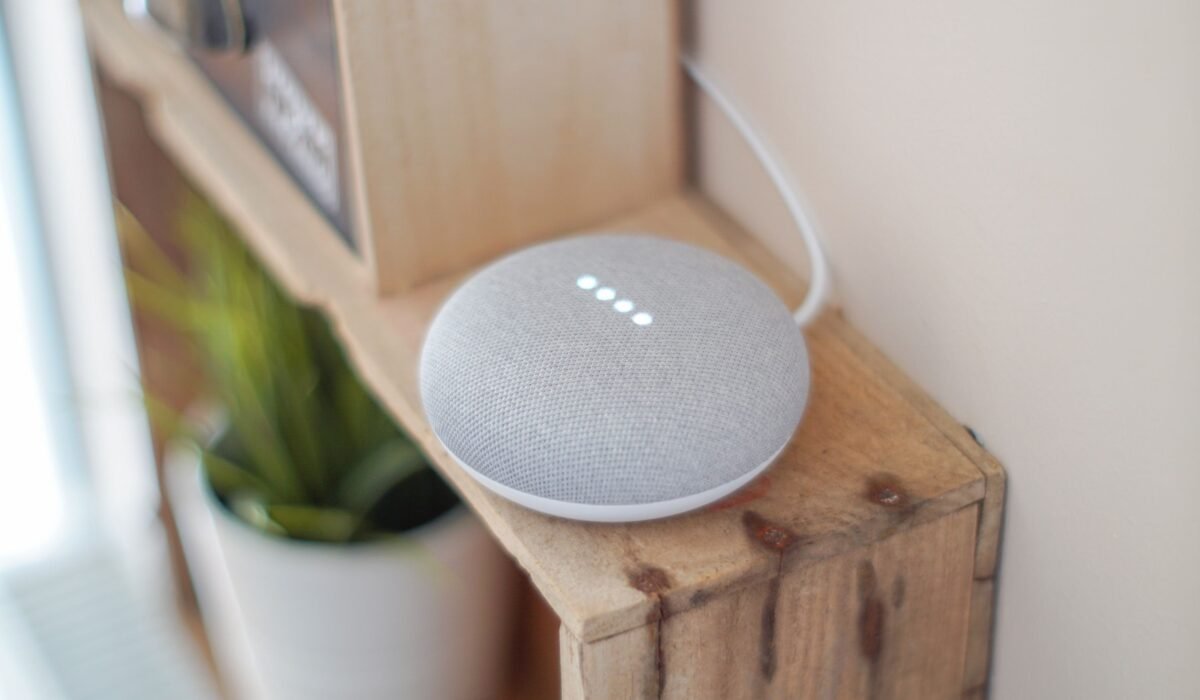
Amazon Alexa and Google Assistant are prime examples of AI acting as a central hub for convenience. These voice assistants can control a myriad of smart devices with simple voice commands, from locking doors and arming security systems to adjusting thermostats and turning on lights. This hands-free operation significantly contributes to how AI enhances smart home comfort.
Lennar Corporation, a major homebuilder, integrates AI-powered home automation systems into their properties, equipping them with devices like Ring video doorbells and Schlage smart locks, often with Amazon Alexa integration. This proactive approach ensures that new homes are built with convenience and security at their core, demonstrating how AI enhances smart home comfort from the ground up.
When AI enhances smart home comfort, it means systems are working intelligently in the background. For instance, an AI-powered smart lock might learn your typical arrival times and automatically unlock the door as you approach, or it might send an alert if it detects unusual activity. These conveniences, coupled with robust security, make daily life smoother and more secure.
| Smart Home Feature | AI Enhancement | Benefit for Comfort |
|---|---|---|
| Smart Locks | AI learns access patterns, detects anomalies, enables remote access control. | Peace of mind, convenient entry/exit. |
| Video Doorbells | AI-powered facial recognition, package detection, person identification. | Know who is at your door without opening it, alerts for important visitors. |
| Voice Assistants | Natural language processing, contextual understanding, task automation. | Hands-free control of multiple devices, easy access to information. |
| Automated Routines | AI orchestrates sequences based on time, occupancy, or user commands. | Streamlined daily tasks (e.g., “good morning” scene turns on lights, adjusts thermostat, plays news). |
The AI-integrated real estate market in the US is projected to cross $1,335.89 billion by 2029, according to Statista (2024). This massive market growth is driven by the demand for homes where AI enhances smart home comfort, security, and overall living experience.
AI-powered smart home security systems offer advanced threat detection and personalized alerts, significantly reducing false alarms and increasing peace of mind.
The convenience offered by AI extends beyond security. Imagine AI managing your grocery lists based on refrigerator contents or scheduling appliance maintenance before a breakdown occurs. These are the tangible ways AI enhances smart home comfort, simplifying the complexities of modern living.
The Future of AI in Smart Home Comfort
The future of AI in smart homes promises an even deeper integration, where AI enhances smart home comfort by becoming almost invisible, anticipating needs with uncanny accuracy. We are moving towards homes that are not just connected but truly intelligent ecosystems, learning and adapting to residents on a profound level.
Experts predict that smart homes are becoming predictive, meaning they can anticipate needs and automate actions without requiring constant manual input, according to jiSECURE (2026). This predictive capability is the ultimate expression of how AI enhances smart home comfort, creating environments that proactively support well-being and convenience.
We can expect AI to play a larger role in personalized wellness within the home. AI-enabled systems might monitor sleep quality, air purity, and even stress levels, making subtle adjustments to lighting, temperature, and sound to promote better health and relaxation. This holistic approach is a significant evolution in how AI enhances smart home comfort.
The convergence of AI with other emerging technologies like the Internet of Things (IoT) and advanced sensor networks will unlock new possibilities. AI will orchestrate these interconnected devices to create hyper-personalized experiences, further solidifying its role in making homes more comfortable. The continuous learning aspect ensures that as your life changes, your home adapts, proving that AI enhances smart home comfort over the long term.
For example, AI might learn that a particular resident experiences seasonal allergies and proactively adjust air filtration and humidity levels. It could also integrate with wearable health trackers to optimize the home environment for recovery or peak performance. These are sophisticated ways AI enhances smart home comfort, moving beyond basic automation to personalized care.
The future smart home, powered by AI, will be characterized by predictive capabilities that anticipate user needs, automating actions for seamless living. – jiSECURE (2026)
Furthermore, AI will drive greater energy efficiency and sustainability. By optimizing energy consumption across all devices based on real-time demand, grid conditions, and user behavior, AI will make homes not only more comfortable but also more environmentally responsible. The continuous innovation in AI ensures that its capacity to enhance smart home comfort will only grow.
The AI in smart home technology market is set for explosive growth, with forecasts pointing to a valuation of USD 126.06 billion by 2035, according to Grand View Research (2023). This trajectory indicates that AI is not just a feature but the foundational technology shaping the future of home living and how AI enhances smart home comfort.
Frequently Asked Questions
What are the benefits of AI in smart homes?
AI in smart homes offers numerous benefits, primarily enhancing user comfort through personalized automation and predictive capabilities. AI-powered smart homes can improve energy efficiency by 30% while enhancing user comfort through predictive automation, according to Future Data Stats (2026). This leads to a more convenient, secure, and efficient living experience.
What is an AI smart home?
An AI smart home is a residence where artificial intelligence capabilities are integrated into connected devices and systems to learn, adapt, and make autonomous decisions. This allows the home to proactively anticipate user needs and optimize settings for comfort and efficiency. The core principle is that AI enhances smart home comfort by making the environment intuitive and responsive.
How does AI work with smart homes?
AI works with smart homes by processing data from connected devices, learning user patterns, and making intelligent decisions. For instance, smart thermostats like Nest use AI to learn your schedule and adjust temperatures automatically. This learning capability is fundamental to how AI enhances smart home comfort by creating personalized environments.
What are the main applications of AI in smart homes?
The main applications of AI in smart homes include climate control (smart thermostats), intelligent lighting, enhanced security systems, voice assistants like Amazon Alexa and Google Assistant, and predictive maintenance for appliances. These applications collectively ensure that AI enhances smart home comfort by automating tasks and personalizing the living space.
What are the future trends of AI in smart homes?
Future trends for AI in smart homes point towards hyper-personalization, predictive wellness monitoring, and seamless integration across all devices, making homes more anticipatory. Experts suggest smart homes will become predictive, anticipating needs and automating actions without constant user input, according to jiSECURE (2026). This evolution will further deepen how AI enhances smart home comfort.
AI enhances smart home comfort by learning user habits to personalize climate, lighting, and ambiance. It anticipates needs, automates routines, and optimizes energy for a more convenient and comfortable living space.