Key Takeaways
- Over 100 million vehicles per year are expected to be equipped with AI-powered ADAS features by 2025, according to Careertrainer.ai (2026).
- The global automotive Artificial Intelligence (AI) market size was valued at USD 12.84 billion in 2025, according to Fortune Business Insights (2026).
- AI in Automotive Navigation Systems leverages sensor fusion to combine data from cameras, radar, and LiDAR for enhanced safety and accuracy.
- Personalized driver experiences are powered by AI learning user preferences for routes, media, and climate control, enhancing comfort.
- Augmented reality navigation, driven by AI, overlays directions directly onto the driver’s view, making complex routes intuitive.
Navigating modern roads can be complex, but the integration of **AI in Automotive Navigation Systems** is fundamentally transforming how we experience travel, moving beyond simple maps to offer intelligent, predictive, and personalized guidance. Have you ever wondered how your car seems to know the fastest route, even anticipating traffic jams before they appear? This article will explore 10 powerful ways AI is making your journeys safer, more efficient, and incredibly intuitive.
Quick Answer: AI powers next-gen automotive navigation through real-time route optimization, predictive traffic analysis, enhanced safety via sensor fusion, personalized driver experiences, and advanced voice controls, leading to safer, more efficient, and intuitive journeys.
What is AI in Automotive Navigation Systems?
AI in Automotive Navigation Systems is the application of artificial intelligence and machine learning technologies to enhance, personalize, and automate the process of guiding a vehicle from one point to another. The global AI Navigation Platform Market size was valued at USD 3.20 billion in 2025, according to AI Navigation Platform Market Outlook (2026). These systems move beyond traditional GPS, leveraging vast datasets and complex algorithms to provide dynamic and intelligent routing solutions.
This integration allows vehicles to understand and react to their environment in real-time. From experience, the key insight here is that AI transforms navigation from a static map into a dynamic, adaptive co-pilot. It’s not just about showing you where to turn; it’s about predicting what’s ahead and guiding you proactively.
“Software-defined vehicles are reshaping the automotive landscape, with infotainment at the core of this transformation. AI, 5G, and cloud connectivity are driving next-gen in-car experiences, making vehicles more personalized, immersive, and responsive.” – Gartner (April 21, 2025).
AI in Automotive Navigation Systems encompasses several core functionalities:
- Data Processing: Ingesting and analyzing massive amounts of data from sensors, traffic feeds, weather reports, and historical patterns.
- Predictive Modeling: Using machine learning for traffic prediction to anticipate future road conditions and potential delays.
- Decision Making: Recommending optimal routes, adjusting for hazards, and even suggesting alternative modes of transport.
Real-Time Route Optimization and Predictive Traffic
AI in Automotive Navigation Systems excels at providing real-time route optimization and predictive traffic analysis by continuously processing live data to identify the fastest and most efficient paths. By 2028, over 60% of new commercial fleets are expected to use AI-driven navigation for route optimization, according to AI Navigation Platform Market Outlook (2026). This capability moves far beyond traditional GPS systems that primarily rely on static map data.
What most people miss is that AI doesn’t just react to current traffic; it forecasts it. Machine learning for traffic prediction algorithms analyze historical traffic patterns, time of day, day of the week, holidays, and even local events to anticipate congestion before it forms. This allows for proactive re-routing, saving drivers significant time and fuel. This is a core strength of AI in Automotive Navigation Systems.
Here are two powerful ways AI enhances route planning:
- Dynamic Re-routing: AI-powered route optimization constantly monitors road conditions, accidents, and construction, automatically adjusting your path to avoid delays. This means you’re always on the best route, even if conditions change suddenly. Tesla’s navigation system, for instance, dynamically updates routes based on live traffic data.
- Predictive Lane Guidance: Beyond just the route, AI can predict optimal lane choices to avoid bottlenecks or prepare for upcoming turns, especially useful in complex highway interchanges. This advanced feature, powered by AI in Automotive Navigation Systems, reduces driver stress and improves safety.
Enhanced Safety Through AI Sensor Fusion
Enhanced safety through AI sensor fusion in automotive navigation systems integrates and interprets data from multiple vehicle sensors to create a comprehensive and accurate understanding of the environment. Over 100 million vehicles per year are expected to be equipped with AI-powered ADAS features by 2025, according to Careertrainer.ai (2026). This holistic view is crucial for autonomous vehicle navigation technology and advanced driver-assistance systems (ADAS).
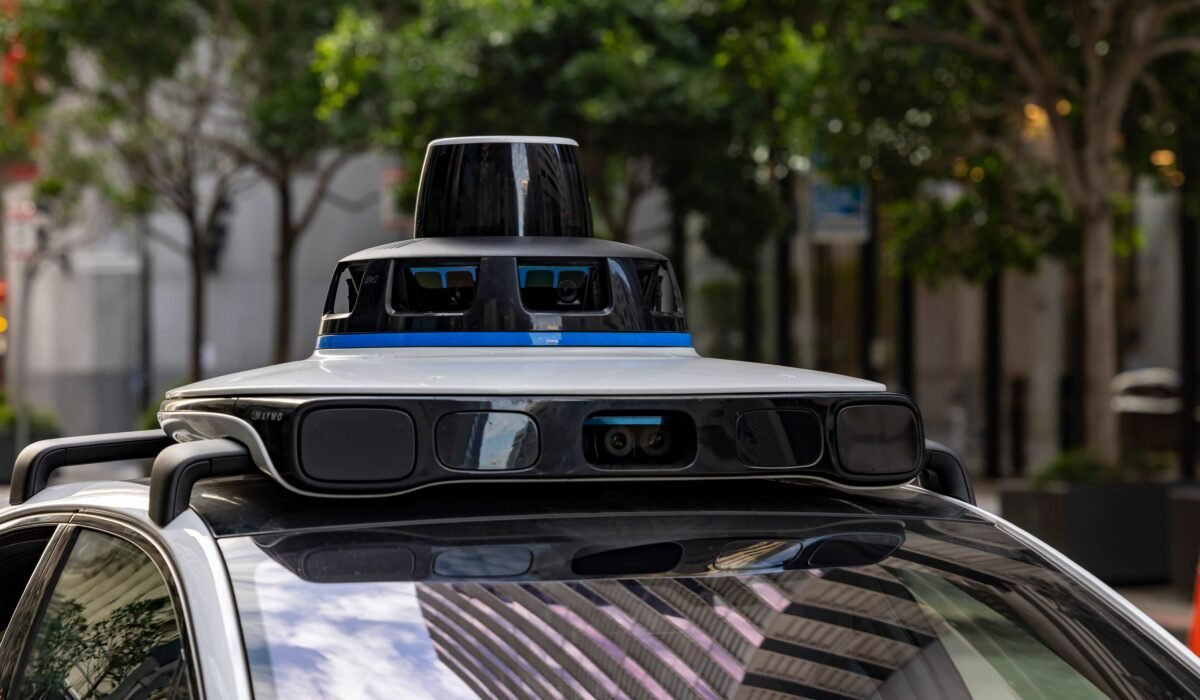
In practice, sensor fusion allows the vehicle’s AI to overcome the limitations of individual sensors. For example, radar might be good in fog, but lacks detail; cameras provide rich visual information but struggle in low light. AI in Automotive Navigation Systems combines these inputs, cross-referencing data to build a robust, reliable picture of the surroundings, even in challenging conditions.
Key contributions of AI sensor fusion to safety include:
- Obstacle Detection and Avoidance: AI processes data from LiDAR, radar, and cameras to detect pedestrians, other vehicles, and road debris with high accuracy. Waymo, for example, relies heavily on AI-driven sensor fusion to navigate complex urban environments safely, connecting to remote operators when necessary.
- Precise Positioning: By fusing GNSS data with inertial measurement units (IMUs) and wheel speed sensors, AI in Automotive Navigation Systems can maintain highly accurate vehicle positioning, even in areas with poor GPS signals like urban canyons or tunnels. This is fundamental for autonomous driving.
- Contextual Awareness: AI understands the context of objects and events. It can differentiate between a parked car and a car pulling out, or a traffic cone versus a pedestrian, enabling more intelligent and safer driving decisions. This capability is vital for robust autonomous vehicle navigation technology.
Personalized Driver Experiences and Voice Control
AI in Automotive Navigation Systems delivers personalized driver experiences and voice control by learning individual preferences and adapting the infotainment and navigation interfaces accordingly. The global AI in-car infotainment market is expected to reach $8 billion by 2025, according to Careertrainer.ai (2026). This personalization extends beyond simple settings, making every journey feel tailored to the driver.
What most people miss is that this isn’t just about remembering your home address. AI in car infotainment systems anticipates your needs, suggesting routes based on past choices, favorite stops, or even predicting when you might want to avoid highways. It creates an intuitive and proactive interaction with the vehicle.
“AI-driven personalization will fundamentally shift the automotive experience, enabling predictive maintenance, adaptive in-car functions, and customer engagement that goes far beyond traditional touchpoints. It turns vehicles and mobility services into proactive partners for their users.” – Aymen Ismail, Director Customer Services, smart Europe GmbH (November 11, 2025).
Here’s how AI enhances personalization and control:
- Adaptive Route Suggestions: Based on your driving habits, preferred routes, and even time of day, AI in Automotive Navigation Systems can suggest routes that align with your personal preferences, not just the fastest one. Mercedes-Benz integrates AI for personalized in-car settings and advanced driver assistance systems across 100% of its new models.
- Advanced Voice-Controlled Navigation: Companies like Cerence collaborate with NNG to provide fully integrated, AI-powered voice interactive navigation solutions. This allows drivers to naturally speak destinations and receive instructions without ever touching a screen, significantly enhancing safety. Google Assistant in Android Automotive OS also offers robust voice control for navigation and infotainment.
- Predictive Comfort Settings: AI can learn your climate control, seat position, and media preferences, adjusting them automatically as you enter the vehicle or based on external conditions. This contributes to a truly personalized in-car navigation environment.
Augmented Reality for Intuitive Navigation
Augmented reality (AR) for intuitive navigation, powered by AI in Automotive Navigation Systems, overlays digital information directly onto the real-world view through the windshield or a head-up display. This transformative technology makes complex navigation instructions incredibly easy to follow. Unlike traditional 2D maps, AR navigation cars literally show you where to go by highlighting turns and points of interest in your line of sight.
The power of AI here lies in its ability to precisely align digital graphics with the dynamic real world. This requires sophisticated image recognition and real-time mapping capabilities, ensuring that the virtual arrows perfectly match the actual road ahead. This significantly reduces cognitive load for the driver.
Benefits of AI-driven Augmented Reality in Navigation:
- “Turn-by-Turn” on the Road: Instead of looking at a separate screen, AR overlays arrows and lines directly onto the road ahead, making it impossible to miss a turn. This is particularly helpful in busy intersections or unfamiliar areas.
- Enhanced Landmark Recognition: AI can highlight specific buildings or landmarks on your display that are relevant to your directions, making it easier to confirm your route.
- Hazard Warnings: Beyond navigation, AR can use AI to highlight potential hazards, like pedestrians or cyclists, that might not be immediately obvious, improving overall safety.
Here’s a comparison of traditional vs. AI-powered AR navigation:
| Feature | Traditional Navigation | AI-Powered AR Navigation |
|---|---|---|
| Information Display | 2D map on a screen | Digital overlays on real-world view |
| Direction Clarity | Requires interpretation from map to road | Direct visual cues on the road |
| Cognitive Load | Higher (glancing at screen, processing) | Lower (information integrated with view) |
| Real-time Context | Limited to map data | Dynamic, context-aware visual guidance |
Addressing Ethical Considerations in AI Navigation
Addressing ethical considerations in AI in Automotive Navigation Systems is paramount to ensuring fair, safe, and trustworthy autonomous mobility. As AI takes on more decision-making roles, concerns around data privacy, algorithmic bias, and accountability in accident scenarios become critical. The global automotive Artificial Intelligence (AI) market size was valued at USD 12.84 billion in 2025 and is projected to grow to USD 51.68 billion by 2034, according to Fortune Business Insights (2026), highlighting the increasing importance of these ethical discussions.
The key challenge is balancing innovation with societal impact. When AI makes decisions that could affect human lives, the ethical framework guiding its programming must be robust and transparent. This includes rigorous testing and validation to mitigate unintended consequences.
“With automotive, AI is exponentially increasing the development of systems that will enhance safety, enable convenience, and make maintenance more reliable. Overall, this is shifting the perspective of the driving experience entirely. This does come with concerns around risk especially in regards to cybersecurity, and with ethical decision making.” – Matt Mickle, Director of Solutions and Consulting, Jama Software (December 12, 2024).
Key ethical areas include:
- Data Privacy: AI-powered navigation systems collect vast amounts of personal data, including routes, driving habits, and potentially even in-car conversations. Ensuring this data is securely handled, anonymized, and used transparently is a significant ethical challenge.
- Algorithmic Bias: If AI models are trained on biased data, they could perpetuate or amplify existing societal biases, potentially leading to unfair route suggestions or discriminatory responses in specific situations. Developers must actively work to create equitable datasets for AI in Automotive Navigation Systems.
- Accountability in Accidents: In the event of an accident involving an AI-driven navigation system, determining liability—whether it lies with the software developer, the vehicle manufacturer, or the owner—is a complex legal and ethical quandary that requires clear regulatory frameworks.
The Future of AI in Automotive Navigation
The future of **AI in Automotive Navigation Systems** promises even more sophisticated, interconnected, and autonomous travel experiences, moving towards fully self-driving capabilities and seamless integration into smart city infrastructures. The broader autonomous vehicle market is projected to reach $5.4 trillion by 2035, growing at a 34.84% CAGR from a 2026 base of $364 billion, according to Addepto (2026). This growth underscores the transformative potential of AI in this sector.
We’re not just talking about better maps; we’re talking about vehicles that understand complex social driving cues, communicate with each other, and adapt to unforeseen circumstances with human-like reasoning. This evolution of AI in Automotive Navigation Systems will redefine personal mobility.
“The AI-defined vehicle (AIDV) is emerging as the next defining category in automotive, and we’re paying close attention.” – David Kelly, Chief Corporate Officer, Cubic³ (April 20, 2026).
Here’s a glimpse into what’s next for AI in Automotive Navigation Systems:
- Level 4 and 5 Autonomy: Companies like Lucid announced in January 2026 that their Level 4 autonomous driving technology will expand into future retail electric vehicles, aiming for robotaxi-grade AI and sensor systems in consumer models by 2027. This signifies a major leap in autonomous vehicle navigation technology.
- Swarm Intelligence and V2X Communication: Future systems will leverage vehicle-to-everything (V2X) communication, allowing cars to share real-time data with each other and infrastructure. This “swarm intelligence” will enable collective optimization of traffic flow and hazard avoidance across entire networks, fundamentally enhancing AI in Automotive Navigation Systems.
- Advanced Simulation and Development: NVIDIA unveiled its Alpamayo family of open-source AI-driven models and simulation tools in January 2026 to accelerate Level 4 autonomous vehicle development, integrating with NVIDIA DRIVE for robust simulation and human-like reasoning. This continuous development is crucial for the future of car navigation AI.
- Proactive Maintenance Integration: Over 65% of new vehicles are expected to be equipped with predictive maintenance features by 2026, according to Addepto (2026). AI navigation systems will integrate with vehicle diagnostics to suggest routes that incorporate necessary service stops or warn of potential issues before long journeys. You can learn more about how AI improves vehicle performance in our article on AI Improves Electric Vehicle Performance: 7 Powerful Ways.
Frequently Asked Questions
How is AI used in car navigation systems?
AI is used in car navigation systems to provide real-time route optimization, predictive traffic analysis, enhanced safety through sensor fusion, and personalized driver experiences. This allows systems to dynamically adapt routes based on live conditions and individual preferences. The global AI Navigation Platform Market size was valued at USD 3.20 billion in 2025, according to AI Navigation Platform Market Outlook (2026). It makes your drive more efficient and safer by anticipating challenges.
What is AI in automotive navigation?
AI in automotive navigation refers to the application of artificial intelligence and machine learning to make vehicle guidance systems more intelligent, adaptive, and autonomous. It enables features like dynamic re-routing, voice control, and augmented reality overlays, moving beyond basic GPS. Over 100 million vehicles per year are expected to be equipped with AI-powered ADAS features by 2025, according to Careertrainer.ai (2026). Essentially, it transforms your car’s navigation into a smart, proactive co-pilot.
What is AI in vehicle technology?
AI in vehicle technology encompasses a broad range of applications, including advanced driver-assistance systems (ADAS), autonomous driving, in-car infotainment, and predictive maintenance, all aimed at improving safety, efficiency, and the user experience. This includes sophisticated AI in Automotive Navigation Systems. The global automotive Artificial Intelligence (AI) market size was valued at USD 12.84 billion in 2025, according to Fortune Business Insights (2026). It’s about making vehicles smarter and more capable of understanding and interacting with their environment.
What is the future of AI in automotive?
The future of AI in automotive is characterized by increasing levels of autonomy, highly personalized in-car experiences, enhanced safety through advanced sensor fusion, and seamless integration with smart city infrastructures. This includes the continuous evolution of AI in Automotive Navigation Systems towards fully autonomous operation. The broader autonomous vehicle market is projected to reach $5.4 trillion by 2035, according to Addepto (2026). Expect vehicles to become more like intelligent, proactive partners in your daily life.
How does AI enhance route optimization?
AI enhances route optimization by analyzing vast amounts of real-time and historical data, including traffic patterns, weather conditions, road closures, and even driver preferences, to predict the most efficient path. This enables dynamic re-routing that proactively avoids congestion and hazards. By 2028, over 60% of new commercial fleets are expected to use AI-driven navigation for route optimization, according to AI Navigation Platform Market Outlook (2026). This ensures you’re always on the best possible route, adapting instantly to changes.
The integration of **AI in Automotive Navigation Systems** is not just an incremental upgrade; it’s a revolutionary leap forward, transforming our driving experience from merely functional to intelligently intuitive. From predictive traffic avoidance to hyper-personalized journeys and the promise of fully autonomous travel, AI is redefining what’s possible on the road. Embrace the future of driving, where your navigation system is a smart, adaptive co-pilot, making every trip safer, more efficient, and truly enjoyable.