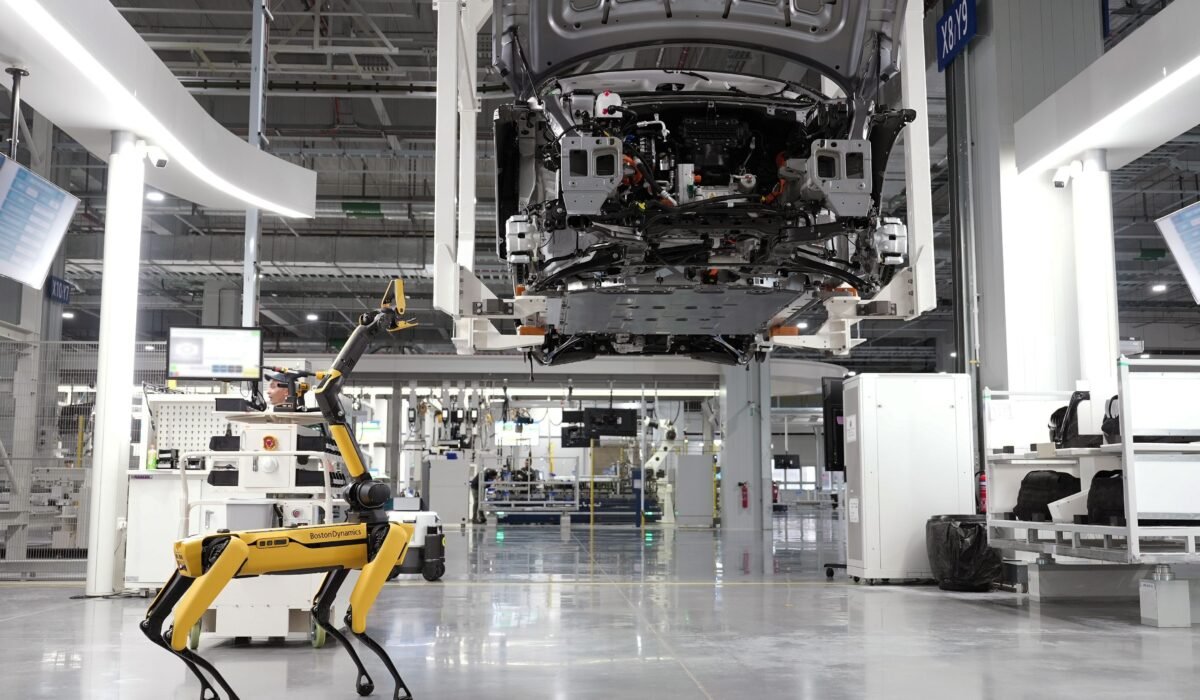
Key Takeaways
- AI transforms automotive manufacturing by enabling predictive maintenance, reducing unplanned downtime by 30-50%, according to Addepto (2026).
- The market for AI in automotive manufacturing is forecast to grow to $4.5 billion by 2027, as reported by Careertrainer.ai (2026).
- AI-driven quality control systems achieve 90% defect detection accuracy, improving product quality by 35%, states Motherson Technology Services (2025).
- Generative AI in automotive was estimated at $662.7 million in 2025 and is projected to grow to $245.73 billion by 2035, according to SNS Insider via Addepto (2026).
- Automakers like Tesla and Toyota leverage AI to optimize complex supply chains and enhance production flexibility on assembly lines.
Ever wondered how the cars of tomorrow are being built today? AI transforms automotive manufacturing by revolutionizing every stage of production, from initial design to final assembly and logistics. This article will unpack 7 powerful ways artificial intelligence is reshaping the automotive industry, helping you understand the profound impact of these technological advancements.
Quick Answer: AI transforms automotive manufacturing by optimizing production, enhancing quality, enabling predictive maintenance, and streamlining supply chains. It boosts efficiency, reduces costs, improves product quality, and accelerates time-to-market, creating smarter factories and advanced vehicles.
How is AI used in automotive manufacturing?
AI is used in automotive manufacturing to enhance efficiency, quality, and adaptability across various processes, fundamentally changing how vehicles are made. One in four vehicles manufactured today is already equipped with AI features, demonstrating AI’s widespread integration, according to Addepto (2026). The key insight here is that AI is not just an add-on; it’s becoming the central nervous system for modern automotive plants.
From experience, integrating AI means moving beyond traditional automation to truly intelligent systems. These systems can learn, adapt, and make decisions, significantly improving complex operations. This is how AI transforms automotive manufacturing, making factories smarter and more responsive.
Key AI Applications in Smart Factories
AI applications in smart factories are diverse, ranging from advanced robotics to sophisticated data analytics. These technologies work in concert to create highly optimized production environments.
- Robotics and AI in automotive production lines: AI enhances robotic precision and flexibility, allowing robots to perform complex tasks and adapt to variations in materials or designs. This capability is crucial for high-volume, high-precision manufacturing.
- Predictive maintenance in car manufacturing: AI algorithms analyze sensor data from machinery to predict potential failures, scheduling maintenance proactively to avoid costly downtime. Unplanned equipment downtime inflicts an estimated $50 billion annual cost across global manufacturing, according to Deloitte via Addepto (2026).
- AI-powered quality control: Vision systems powered by AI can detect microscopic defects faster and more accurately than human inspectors, ensuring consistent product quality. This is a significant aspect of how AI transforms automotive manufacturing.
- Supply chain optimization: AI algorithms forecast demand, manage inventory, and optimize logistics, minimizing disruptions and reducing costs throughout the supply chain.
Companies like Toyota exemplify this integration with their K-flex transformation at Georgetown, Kentucky, utilizing autonomous material movement and AI-assisted choreography to build various vehicle types on a single flexible line. This approach highlights the power of AI to create adaptable and efficient production systems.
What are the benefits of AI in the automotive industry?
The benefits of AI in the automotive industry are extensive, leading to significant improvements in efficiency, cost reduction, and product quality. The total market opportunity for in-vehicle artificial intelligence is expected to grow from $43 billion in 2025 to $238 billion in 2030, according to Careertrainer.ai (2026). This staggering growth underscores the profound impact AI is having across the sector.
What most people miss is that these benefits extend beyond the factory floor, influencing everything from customer experience to environmental sustainability. AI transforms automotive manufacturing by creating a ripple effect of positive changes throughout the entire business ecosystem.
Tangible Advantages of AI Adoption
Automakers adopting AI are seeing concrete results that strengthen their competitive edge. These advantages are reshaping the industry landscape.
- Increased Efficiency and Throughput: AI optimizes production schedules, robot movements, and material flow, significantly speeding up manufacturing processes. This leads to higher output with fewer bottlenecks.
- Reduced Operational Costs: By minimizing waste, predicting equipment failures, and optimizing energy consumption, AI helps manufacturers save substantial amounts of money. Transitioning to continuous AI-driven telemetry monitoring reduces unplanned downtime by an average of 30–50%, according to Addepto (2026).
- Enhanced Product Quality: AI-powered inspection systems catch defects early, ensuring that only high-quality components and vehicles reach the market. AI achieves 90% defect detection accuracy and improves product quality by 35%, as stated by Motherson Technology Services (2025).
- Faster Time-to-Market: Generative AI accelerates design cycles and prototyping, allowing new vehicle models to move from concept to production much quicker.
Leading companies like General Motors (GM) integrate predictive analytics through their AI-powered platforms to optimize vehicle diagnostics and production planning, showcasing the real-world application of these benefits. This holistic approach is why AI transforms automotive manufacturing into a more agile and profitable venture.
How does AI transform automotive manufacturing processes?
AI transforms automotive manufacturing processes by introducing unprecedented levels of automation, precision, and data-driven decision-making across the entire production lifecycle. Ron Schmelzer, Contributor at Forbes, states that “AI is taking much more of a front seat in changing the automotive industry as a whole, driving innovations in vehicle safety, manufacturing, and customer experience” (2025). This integration moves beyond simple automation to truly intelligent systems.
In practice, this means factories are becoming “smart factories,” where every machine, sensor, and system communicates and learns. This interconnectedness allows for continuous optimization and adaptation. This is the core reason why AI transforms automotive manufacturing at such a fundamental level.
Specific Areas of Transformation
The transformation is evident in several key areas, each contributing to a more advanced and efficient manufacturing ecosystem.
- Automated Assembly Lines with Enhanced Robotics: AI enables robots to perform more intricate tasks, such as precise component placement and complex welding. These AI-driven robots can adjust to minor variations, reducing errors and increasing throughput.
- Predictive Maintenance and Anomaly Detection: Sensors collect vast amounts of data from machinery, which AI analyzes to predict equipment failures before they occur. The predictive maintenance market itself reached $14.93 billion in 2025 and is projected to grow at a 32.32% CAGR to reach $245.73 billion by 2035, according to SNS Insider via Addepto (2026). This proactive approach minimizes downtime and extends equipment lifespan.
- Real-time Quality Control and Inspection: AI-powered vision systems can inspect hundreds of components per second, identifying defects that human eyes might miss. Ford, for example, employs AI-led quality control systems to streamline manufacturing and detect defects efficiently.
- Optimized Resource Allocation: AI algorithms can manage energy consumption, material usage, and workforce deployment to maximize efficiency and reduce waste. This is crucial for lean automotive manufacturing and sustainability goals.
- Personalized Manufacturing: AI enables greater flexibility on production lines, allowing for the efficient customization of vehicles to meet individual customer demands without significantly impacting production costs.
- Supply Chain Resilience: By analyzing vast datasets, AI can predict potential disruptions in the supply chain, such as material shortages or logistical delays, and recommend alternative strategies. Volkswagen Group utilizes AI to improve logistics operations by analyzing supply chain network data to predict disruptions and reroute shipments.
- Feedback Loops for Continuous Improvement: Data from vehicles in use, including performance and maintenance records, can be fed back into the manufacturing process, allowing AI to suggest design or production adjustments for future models. This continuous learning cycle is how AI transforms automotive manufacturing into a self-optimizing system.
These applications underscore how AI is not just improving existing processes but fundamentally reshaping the entire manufacturing paradigm, making it more intelligent and adaptive. The market for AI in automotive manufacturing is forecast to grow to $4.5 billion by 2027, according to Careertrainer.ai (2026), indicating a strong future for these technologies.
AI-Powered Quality Control and Inspection
AI-powered quality control and inspection systems are revolutionizing the automotive industry by providing unparalleled accuracy and speed in identifying manufacturing defects. These systems are projected to be used by 50% of manufacturers by 2025, according to Frost & Sullivan via Addepto (2026). This widespread adoption highlights the critical role AI plays in ensuring product excellence.
The precision offered by AI far surpasses traditional human inspection, leading to a significant reduction in faulty products reaching consumers. This is a critical area where AI transforms automotive manufacturing, enhancing brand reputation and customer satisfaction.
How AI Elevates Quality Standards
Integrating AI into quality control processes brings numerous advantages, from identifying microscopic flaws to ensuring consistency across millions of parts.
- Vision Systems for Defect Detection: AI-driven cameras can inspect surfaces, welds, and assemblies for minute imperfections at high speeds. These systems can learn from vast datasets of acceptable and defective parts, becoming increasingly accurate over time.
- Predictive Quality Analytics: AI can analyze production data to identify patterns that lead to defects, allowing manufacturers to adjust processes proactively. This shifts quality control from reactive detection to proactive prevention.
- Robotic Inspection: Robots equipped with AI and advanced sensors can perform repetitive and precise inspections in challenging environments, ensuring thorough coverage and consistency.
For example, BMW employs real-time data analysis to predict potential bottlenecks in manufacturing and take proactive measures, which directly contributes to maintaining high quality. AI achieves 90% defect detection accuracy and improves product quality by 35%, ensuring consistent manufacturing standards, as stated by Motherson Technology Services (2025). This level of precision is why AI transforms automotive manufacturing into a benchmark for quality.
Optimizing Supply Chains with AI
Optimizing supply chains with AI provides automotive manufacturers with enhanced visibility, predictability, and resilience against disruptions. This capability is vital in an industry characterized by complex global networks and just-in-time delivery requirements. The impact of AI on automotive supply chain management is profound, leading to more robust and efficient operations.
What’s truly powerful here is AI’s ability to process massive amounts of data from various sources, identifying trends and potential issues long before they become critical. This proactive management is a cornerstone of how AI transforms automotive manufacturing logistics.
AI’s Role in a Resilient Supply Chain
AI algorithms are deployed to tackle some of the most persistent challenges in automotive supply chains.
| AI Application | Impact on Supply Chain | Example Automaker |
|---|---|---|
| Demand Forecasting | More accurate predictions, reducing overstocking/understocking. | Tesla harnesses AI to manage its complex supply chain, forecasting demand. |
| Logistics Optimization | Efficient routing, reduced transit times, lower fuel costs. | Volkswagen Group utilizes AI to improve logistics operations. |
| Risk Management | Identifies potential disruptions (e.g., natural disasters, geopolitical events). | Ford has leveraged AI-powered predictive analytics to streamline its supply chain, minimizing disruptions. |
| Inventory Management | Optimizes stock levels, reducing carrying costs and waste. | Toyota uses AI to optimize supply chain operations and enhance sustainability. |
The ability to predict parts shortages or shipping delays allows companies to reroute or find alternative suppliers, ensuring continuous production. Our Predictive AI Automotive Supply Chain 2026: Ultimate Guide offers a deeper dive into these strategies. This strategic foresight is a clear demonstration of how AI transforms automotive manufacturing by building more resilient and responsive supply networks.
Accelerating Vehicle Design with Generative AI
Accelerating vehicle design with Generative AI allows automakers to explore vast design possibilities, optimize performance, and significantly shorten development cycles. Generative AI in automotive was estimated at $662.7 million in 2025, growing at a 27.3% CAGR through 2035, according to SNS Insider via Addepto (2026). This technology is fundamentally changing how cars are conceptualized and engineered.
The real power of Generative AI lies in its ability to create novel designs that human engineers might not conceive, pushing the boundaries of innovation. This is a crucial way AI transforms automotive manufacturing, fostering creativity and efficiency in the earliest stages.
Generative AI’s Impact on Automotive Design
Generative AI tools are becoming indispensable for design and engineering teams.
- Automated Concept Generation: AI can rapidly generate thousands of design iterations based on specified parameters like aerodynamics, weight, or material properties. This expands the design space exponentially.
- Performance Optimization: Engineers can use Generative AI to optimize components for strength, weight, or thermal management, leading to more efficient and safer vehicles. For instance, creating lighter chassis designs without compromising structural integrity.
- Virtual Prototyping and Simulation: Generative AI integrates with simulation tools to test designs virtually, reducing the need for expensive physical prototypes. The global automotive AI market for simulation and testing is expected to grow at a CAGR of 28% from 2023-2028, according to Addepto (2026).
- Personalized Design Elements: As vehicles become more customizable, Generative AI can assist in creating unique interior or exterior elements that cater to individual customer preferences, directly influencing vehicle sales.
BMW, for instance, employs generative AI to design vehicle prototypes and enhance production workflows, showcasing a practical application of this cutting-edge technology. Lumenalta (2025) notes that “Generative AI enables automakers to streamline processes and scale innovations through tools like predictive maintenance, virtual assistants, and advanced design platforms.” This highlights how AI transforms automotive manufacturing by bringing innovation to the forefront of design.
What are the future trends of AI in the automotive industry?
The future trends of AI in the automotive industry point towards even deeper integration, creating fully autonomous manufacturing ecosystems and highly personalized vehicles. Over 100 million vehicles per year are expected to be equipped with AI-powered ADAS features by 2025, according to Careertrainer.ai (2026), indicating a swift evolution. We are moving towards a future where factories are not just automated but truly intelligent.
The trajectory suggests a closed-loop system where data from vehicles on the road continuously informs and refines manufacturing processes. This continuous feedback loop is a defining characteristic of how AI transforms automotive manufacturing into a self-optimizing industry.
Emerging AI Innovations
Several exciting trends are on the horizon, promising to further reshape the automotive landscape.
- Hyper-Personalization and Mass Customization: AI will enable manufacturers to produce vehicles tailored to individual customer specifications on a mass scale, impacting everything from interior layouts to performance characteristics.
- Advanced Predictive Maintenance and Digital Twins: Digital twins, virtual replicas of physical assets, will be powered by AI to simulate real-world conditions, predicting failures with even greater accuracy and optimizing maintenance schedules. Over 65% of new vehicles are expected to be equipped with predictive maintenance features by 2026, according to Addepto (2026).
- AI-Driven Circular Economy: AI will play a critical role in optimizing recycling, remanufacturing, and end-of-life vehicle processes, contributing to more sustainable automotive production.
- Human-AI Collaboration: Instead of replacing humans, AI will increasingly work alongside them, augmenting human capabilities in complex tasks and decision-making on the factory floor.
- Enhanced Supply Chain Transparency and Traceability: AI combined with blockchain technology will provide unparalleled transparency across the supply chain, ensuring ethical sourcing and efficient material flow.
Companies like Tesla continue to push boundaries with AI in their Full Self-Driving (FSD) capabilities, leveraging neural networks to analyze real-time data for improved vehicle safety, which in turn influences manufacturing insights. Jabil (2026) emphasizes this, stating, “AI is strengthening the link between engineering, manufacturing, supply chain, and the driver experience by leveraging real-time data to drive higher quality and dependability from the very first build.” This holistic approach ensures that AI transforms automotive manufacturing into a continuously evolving, highly intelligent system.
Frequently Asked Questions
How is AI used in car production?
AI is used in car production to automate tasks, optimize processes, and enhance quality control, leading to more efficient and precise manufacturing. For instance, AI-powered vision systems achieve 90% defect detection accuracy, according to Motherson Technology Services (2025). This integration helps streamline operations from raw material handling to final assembly.
What is the role of AI in the automotive industry?
The role of AI in the automotive industry is to drive innovation across design, manufacturing, supply chain, and in-vehicle experiences, making processes smarter and more efficient. The total market opportunity for in-vehicle artificial intelligence is expected to grow from $43 billion in 2025 to $238 billion in 2030, as reported by Careertrainer.ai (2026). AI enables automakers to produce safer, higher-quality, and more technologically advanced vehicles.
What are the future trends of AI in automotive industry?
Future trends of AI in the automotive industry include hyper-personalization, advanced predictive maintenance using digital twins, AI-driven circular economy initiatives, and enhanced human-AI collaboration on the factory floor. Over 65% of new vehicles are expected to be equipped with predictive maintenance features by 2026, according to Addepto (2026). These trends will lead to more adaptive, sustainable, and intelligent manufacturing systems.
What are the benefits of AI in lean automotive manufacturing?
The benefits of AI in lean automotive manufacturing include reduced waste, optimized resource allocation, improved efficiency, and enhanced flexibility to meet changing demands. AI helps identify bottlenecks and inefficiencies, ensuring that every step of the production process adds maximum value. This directly aligns with lean principles of waste reduction and continuous improvement.
How does AI help in robotics and automation in automotive production lines?
AI helps in robotics and automation in automotive production lines by enabling robots to perform complex tasks with greater precision, adapt to new scenarios, and collaborate effectively with humans. AI-driven robots can adjust to variations in materials or designs, significantly improving flexibility and reducing errors in assembly. This advanced capability is a cornerstone of modern smart factories.
The integration of AI into automotive manufacturing is not just an incremental change; it’s a fundamental transformation reshaping the entire industry. As we’ve seen, AI transforms automotive manufacturing by optimizing everything from design and production to quality control and supply chain management. The future of car manufacturing is undeniably intelligent, driven by AI’s ability to create more efficient, sustainable, and innovative processes. Embrace these changes, as they are paving the way for the next generation of vehicles and production paradigms.