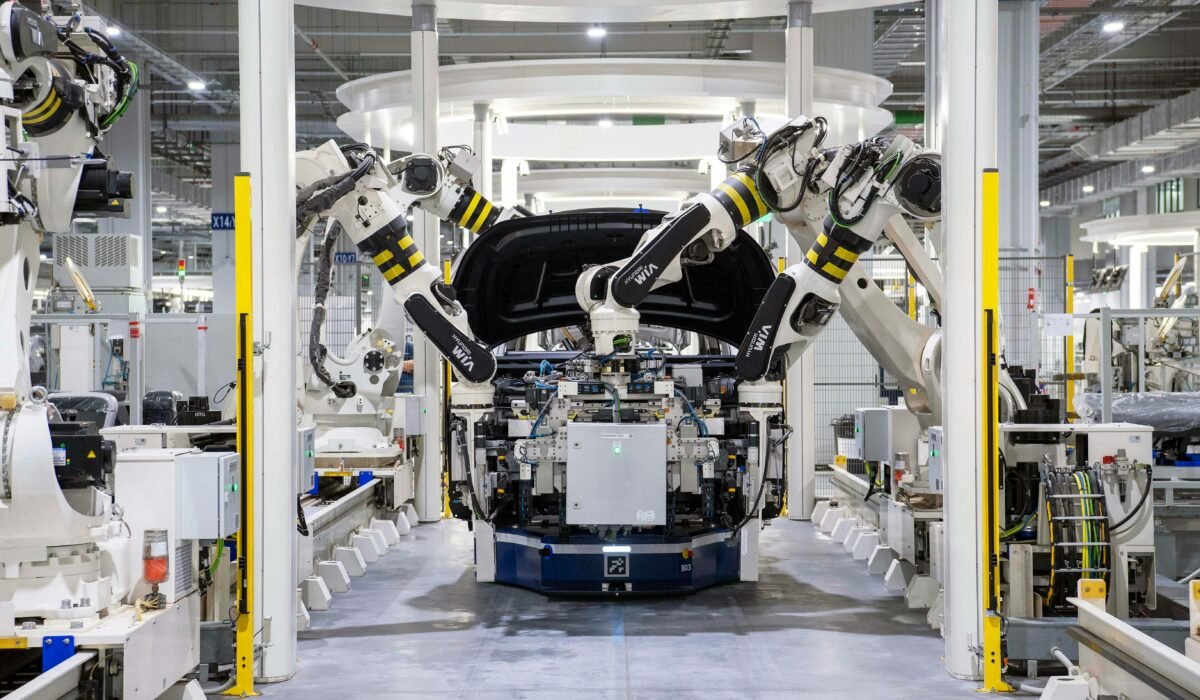
Are you wondering how car manufacturing is rapidly evolving, and what role cutting-edge technology plays in this transformation? The answer lies squarely in the widespread adoption of AI in automotive smart factories. These intelligent ecosystems are fundamentally changing how vehicles are designed, produced, and delivered, promising unprecedented efficiency and innovation. This article will demystify the core concepts, explore practical applications, and unveil the strategic advantages of integrating artificial intelligence into the heart of automotive production.
What is the role of AI in automotive manufacturing?
The role of AI in automotive manufacturing is to inject intelligence and adaptability into every stage of vehicle production, moving beyond traditional automation. This means AI isn’t just about robots doing repetitive tasks; it’s about systems that can learn, predict, and optimize processes autonomously. Essentially, automotive manufacturing AI enables factories to become more responsive, efficient, and capable of producing higher quality vehicles.
What most people miss is that AI transforms raw data into actionable insights, driving continuous improvement. For example, automotive companies leveraging AI in manufacturing have reported an increase of up to 20% in production efficiency, according to McKinsey & Company. This significant boost comes from AI’s ability to analyze vast datasets faster and more accurately than humans, identifying patterns and opportunities for optimization.
How is AI transforming automotive smart factories?
AI is fundamentally reshaping automotive smart factories by creating interconnected, self-optimizing intelligent ecosystems. Instead of isolated machines, we now see entire production lines communicating and collaborating, orchestrated by advanced AI algorithms. This shift is a cornerstone of Industry 4.0 automotive, where digital and physical systems merge seamlessly.
The short answer is that AI empowers smart factory technology to go beyond mere automation to genuine intelligence. It allows these factories to perform tasks like real-time problem-solving, dynamic resource allocation, and predictive decision-making. These capabilities translate into tangible smart factory benefits automotive businesses can leverage, such as reduced downtime and increased throughput.
Key AI applications in automotive production
Artificial intelligence is being deployed across the automotive production lifecycle, from the initial design phase to final assembly and quality checks. These industrial AI applications are delivering measurable improvements in efficiency, cost reduction, and product quality. Here’s a look at some of the most impactful areas:
Predictive Maintenance
One of the most significant applications is AI for automotive predictive maintenance. By continuously monitoring equipment performance data, machine learning algorithms can predict potential failures before they occur. This allows factories to schedule maintenance proactively, minimizing unexpected downtime and costly disruptions to the production line. McKinsey & Company highlights that this approach can prevent up to 90% of equipment failures.
AI Quality Control Manufacturing
AI-powered visual inspection systems are revolutionizing quality control. These systems use computer vision and deep learning to detect even the most minute defects on parts and assembled vehicles with incredible precision. AI-based machines are capable of detecting defects with up to 90% greater accuracy than human inspectors, leading to productivity increases in visual quality inspection of up to 50%, as reported by McKinsey & Company. Körber Digital predicts that over 50% of manufacturing companies will integrate AI into their quality control processes by 2025, resulting in a 30% improvement in defect detection rates.
Supply Chain Optimization
Supply chain AI solutions leverage AI to analyze vast amounts of data, including market demand, supplier performance, and logistics. This enables manufacturers to optimize inventory levels, forecast demand more accurately, and identify potential bottlenecks or disruptions before they impact production. The result is a more resilient and cost-effective supply chain.
Generative AI in Design & Engineering
The emergence of generative AI automotive manufacturing applications is transforming the design and engineering phases. AI can rapidly generate and optimize new design iterations for components or entire vehicle architectures based on specified parameters. This dramatically accelerates the product development cycle and allows engineers to explore a wider range of innovative solutions, pushing the boundaries of what’s possible in car production.
Navigating data architecture for AI in smart factories
Implementing effective AI in automotive smart factories heavily relies on a robust and intelligent data architecture. The sheer volume, velocity, and variety of data generated by sensors, robots, and IoT devices in a modern factory are immense. What most people overlook is that without a well-planned data infrastructure, even the most advanced AI models are useless.
The challenge lies in collecting, processing, and storing this data in a way that makes it accessible and valuable for AI. This often involves a hybrid approach, combining edge computing for real-time processing at the source with cloud-based platforms for long-term storage and complex analytics. Rajeev Kalamdani, Manager of IIoT Analytics at Ford, emphasizes this, stating, “We have a data engineering team responsible for creating data products by combining multiple data sources. This ensures that any data about a product or process is accessible in one place.” For more on local processing, check out our Edge Computing Beginner’s Guide.
Key considerations for data architecture smart factories include:
- Data Governance: Establishing clear rules for data collection, usage, and security.
- Interoperability: Ensuring different systems and machines can seamlessly exchange data, often a hurdle with legacy equipment.
- Scalability: Designing systems that can handle increasing data volumes as the factory evolves.
- Data Quality: Implementing processes to ensure data is clean, accurate, and reliable for AI training.
Workforce transformation: Human-AI collaboration in automotive
The rise of AI in manufacturing doesn’t mean humans are out of the picture; rather, it signifies a profound transformation of roles and responsibilities. The future of the factory floor hinges on effective human-AI collaboration factory models, where AI augments human capabilities instead of replacing them entirely. Mary Barra, CEO of General Motors (GM), captures this sentiment: “AI not only optimizes manufacturing processes and accelerates virtual testing but also helps us build smarter vehicles while empowering our workforce to focus on craftsmanship. By merging technology with human ingenuity, we unlock new levels of innovation in vehicle manufacturing and beyond.”
This shift necessitates significant investment in workforce upskilling and reskilling programs. Factory workers are evolving from purely manual operators to supervisors of AI systems, data analysts, and robotics technicians. Training initiatives focus on areas like:
- AI Literacy: Understanding how AI systems work and how to interact with them.
- Data Interpretation: Learning to analyze data insights provided by AI to make informed decisions.
- Robotics Programming & Maintenance: Developing skills to manage and troubleshoot advanced robotic systems.
- Problem-Solving & Critical Thinking: Focusing on complex issues that require human creativity and judgment, which AI currently cannot replicate.
The goal is to create a symbiotic relationship where repetitive or hazardous tasks are handled by AI, freeing humans to focus on higher-value activities, innovation, and complex problem-solving. This ensures a more engaging and safer work environment while leveraging the unique strengths of both humans and machines.
Regulatory landscape and standardization challenges
As AI adoption accelerates in smart factories, new regulatory, ethical, and standardization challenges inevitably arise. The rapid pace of technological innovation often outstrips the development of cohesive policies, creating a complex environment for manufacturers. One key concern is data privacy, especially with the vast amounts of operational data collected. Ensuring compliance with regulations like GDPR or CCPA, even for industrial data, becomes crucial.
Another significant hurdle is liability for AI-driven errors. If an AI system makes a mistake that leads to a production fault or safety issue, who is accountable? Is it the AI developer, the system integrator, or the factory operator? Clear legal frameworks are still emerging to address these complex questions. Furthermore, the lack of universal industry standards for AI integration, data formats, and communication protocols can hinder interoperability and slow down widespread adoption across different vendors and systems.
In practice, navigating this evolving landscape requires proactive engagement from automotive manufacturers, technology providers, and government bodies to establish clear guidelines that foster innovation while ensuring safety, ethics, and fair competition.
What is the future of AI in the automotive industry?
The future of AI in the automotive industry is undeniably bright and transformative, extending far beyond the factory floor into every aspect of vehicle development and operation. We’re witnessing a rapid expansion of automotive industry AI trends that promise even more intelligent, efficient, and personalized mobility solutions. The overall automotive AI market is expected to grow from $17.51 billion in 2025 to $149.04 billion by 2030, exhibiting a robust CAGR of 53.3%, which speaks volumes about the anticipated impact.
The global automotive smart factory market size itself was valued at USD 109.89 billion in 2025 and is projected to reach USD 254.07 billion by 2034, growing at a CAGR of 9.76% from 2026 to 2034. This indicates a sustained, long-term commitment to integrating AI into manufacturing processes. A significant 83.8% of AI leaders in manufacturing are currently increasing their AI investment, reflecting strong confidence in early operational successes. This trend underscores a future where AI is not just an add-on but a core strategic enabler for the entire automotive ecosystem, profoundly shaping the future of automotive manufacturing.
Leading companies leveraging AI in automotive manufacturing
Many industry giants are already at the forefront of integrating AI into their manufacturing processes, setting benchmarks for the rest of the sector. These companies demonstrate how strategic investment in AI can lead to significant competitive advantages and operational excellence.
One prominent example is Tesla’s Gigafactories, which are renowned for their high degree of automation and utilization of AI-powered robots. Particularly in the assembly of battery packs and electric drivetrains, Tesla leverages advanced automation and software-driven processes to achieve ambitious production targets. The Berlin Gigafactory, for instance, aims to produce 500,000 units annually, showcasing the potential of intelligent manufacturing.
Beyond Tesla, companies like Ford and General Motors (GM) are also making substantial investments. Ford, as highlighted by Rajeev Kalamdani, is building robust data engineering teams to support AI initiatives. GM, under Mary Barra’s leadership, actively champions AI for process optimization and empowering its workforce. These companies, among others, are not just adopting AI; they are strategically embedding it directly into operational workflows, covering engineering, intelligent manufacturing, and customer experience optimization, with an overwhelming 93.2% of AI leaders doing so.
Frequently Asked Questions
What is AI in the automotive industry?
AI in the automotive industry refers to the application of artificial intelligence technologies across all stages of vehicle lifecycle, from design and manufacturing to in-car systems and autonomous driving. In manufacturing, it encompasses intelligent automation, predictive analytics, and process optimization within smart factories. This integration leads to enhanced efficiency, quality, and innovation in vehicle production.
How is AI used in smart manufacturing?
AI is used in smart manufacturing to create intelligent, interconnected production environments that can learn and adapt. This includes applications like predictive maintenance for machinery, AI-driven quality control for defect detection, optimizing supply chain logistics, and enhancing human-robot collaboration. Essentially, AI enables factories to be more autonomous, efficient, and responsive to changing demands.
What is the role of AI in smart factory?
The role of AI in a smart factory is to serve as the brain, enabling systems to make intelligent decisions autonomously. It processes vast amounts of data from IoT devices and sensors to optimize production schedules, identify potential issues before they occur, and ensure consistent product quality. AI transforms a smart factory from merely automated to truly intelligent and self-optimizing.
What is the future of AI in the automotive industry?
The future of AI in the automotive industry is characterized by exponential growth and deeper integration, moving towards fully intelligent ecosystems. This includes more sophisticated autonomous manufacturing, advanced vehicle design through generative AI, hyper-personalized in-car experiences, and highly optimized supply chains. AI will be a foundational technology driving innovation and efficiency across the entire automotive value chain.
The journey into AI in automotive smart factories is not merely an upgrade; it’s a fundamental redefinition of how cars are made. By embracing intelligent ecosystems and fostering human-AI collaboration, manufacturers are unlocking unprecedented levels of efficiency, quality, and innovation. The path forward involves navigating complex data architectures and evolving regulatory landscapes, but the benefits for the automotive industry are undeniable.
To stay competitive and thrive in this intelligent era, automotive companies must continue to invest in AI, upskill their workforce, and strategically integrate these powerful technologies. The future of mobility is being built today, one intelligent factory at a time. Are you ready to drive this transformation?