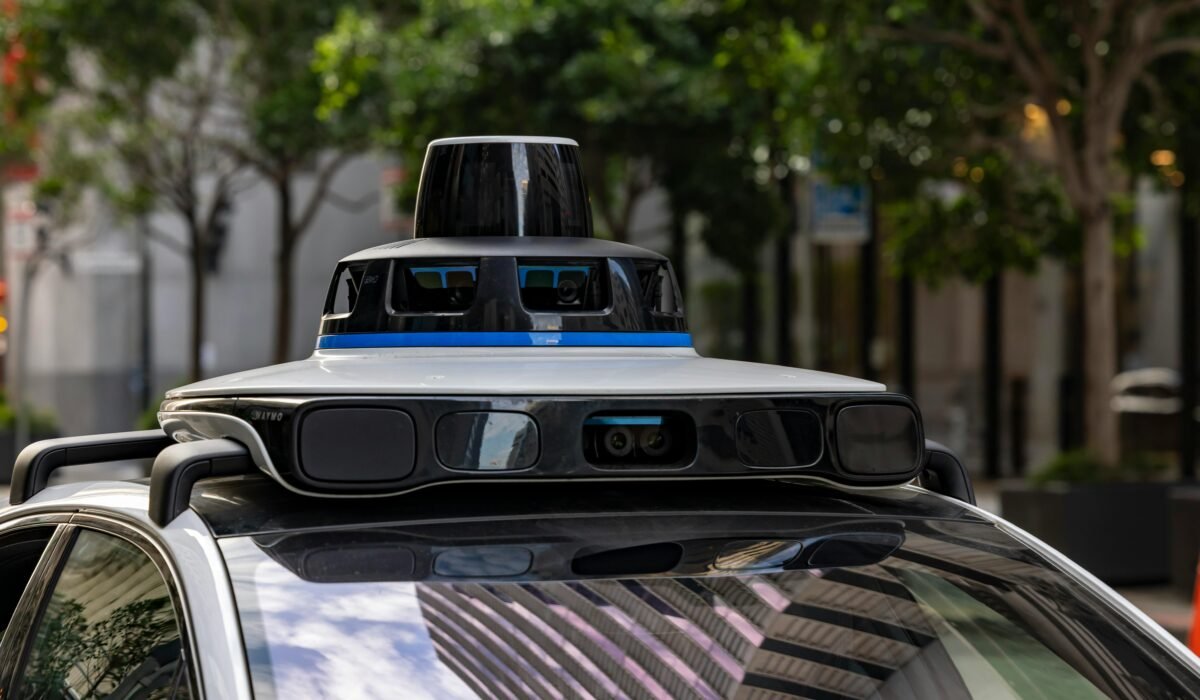
Ever wondered how self-driving cars “see” the world around them? Unraveling the complexities of how autonomous vehicle Lidar Radar explained is key to understanding the future of transportation. This guide will demystify the core technologies that allow self-driving cars to navigate safely, highlighting their individual strengths, limitations, and how they work together to create a robust perception system.
What Are the Core Autonomous Vehicle Sensors?
Self-driving cars rely on a sophisticated array of sensors to perceive their surroundings, much like our own eyes, ears, and touch. These “eyes” and “ears” of the car form its perception system, crucial for navigating roads, detecting obstacles, and ensuring safety.
The primary types of autonomous vehicle sensors you’ll encounter are cameras, Lidar, Radar, and sometimes ultrasonic sensors. Each brings unique capabilities to the table, and no single sensor can provide all the necessary information in every condition. This is why a comprehensive sensor suite is essential for advanced autonomous driving, particularly for higher SAE autonomous levels.
A Brief Overview of Sensor Types
To truly understand how autonomous vehicles operate, you need to grasp the fundamental roles of these different technologies. Here’s a quick rundown of the main players:
- Cameras: Similar to human eyes, they capture visual information, recognizing traffic lights, lane markings, and pedestrians.
- Lidar (Light Detection and Ranging): Uses pulsed lasers to measure distances, creating highly detailed 3D maps of the environment.
- Radar (Radio Detection and Ranging): Emits radio waves to detect objects, measure their speed, and track their movement, excelling in adverse weather.
- Ultrasonic Sensors: Emit sound waves to detect nearby objects, primarily used for low-speed maneuvers like parking.
These self-driving car sensors work in concert, providing redundant and complementary data points that build a complete picture of the vehicle’s operational domain.
How Does Lidar Work in Self-Driving Cars?
Lidar technology explained in simple terms involves light. Imagine a spinning laser pointer that constantly measures how long it takes for its light pulses to bounce off objects and return. That’s essentially Lidar.
The sensor emits millions of tiny laser pulses per second. When these pulses hit an object, they reflect back to the Lidar receiver. By precisely timing the return trip of each pulse, the system calculates the distance to the object. As the Lidar unit rotates, it builds a vast collection of these distance measurements, known as a point cloud. This point cloud is a highly accurate, three-dimensional representation of the surrounding environment, showing the shape, size, and precise location of everything from other vehicles and pedestrians to curbs and trees.
One genuine insight here: what most people miss is that Lidar doesn’t just see objects; it creates a dynamic, real-time 3D map. This map is incredibly rich in detail, allowing autonomous vehicles to differentiate between a parked car, a moving cyclist, and even subtle changes in road elevation. This precision makes Lidar a cornerstone for many advanced perception systems autonomous driving.
Demystifying Radar: How it Detects Obstacles in All Conditions
While Lidar uses light, Radar employs radio waves. The Radar sensor working principle is based on sending out electromagnetic waves and listening for their echoes. When these waves encounter an object, a portion of the energy is reflected back to the sensor.
Radar systems measure two critical things: the time it takes for the wave to return (indicating distance) and the change in frequency of the returned wave (known as the Doppler effect, which reveals the object’s speed). This makes Radar exceptionally good at detecting the velocity of other vehicles and obstacles. Its longer wavelengths allow radio waves to penetrate through environmental obscurants like rain, fog, and snow far better than light, making Radar for bad weather driving an indispensable component of any robust autonomous system.
In practice, Radar’s ability to “see” through adverse conditions provides a vital safety net when cameras or Lidar might be compromised. Continental, a leading automotive supplier, has produced 200 million radar sensors by May 2025, underscoring its widespread adoption and critical role in both assisted and autonomous driving functionalities. Dr. Markus Jüngst, Head of Concept Development Radar at Continental, highlighted in January 2025 that “Radar is an essential sensor in next-generation automotive solutions,” emphasizing its importance for safer driving.
Lidar vs. Radar: Key Differences and Complementary Strengths
When you look at autonomous vehicle Lidar Radar explained, it’s clear they are distinct technologies, each with unique advantages and disadvantages. This isn’t a competition to find a “best” sensor, but rather an exercise in understanding their complementary roles.
Lidar vs. Radar Comparison at a Glance
Here’s a straightforward comparison to highlight their core differences:
- Medium Used: Lidar uses light (lasers); Radar uses radio waves.
- Resolution & Accuracy: Lidar offers incredibly high spatial resolution, creating detailed 3D maps. Radar generally has lower resolution but excels at precise velocity measurement.
- Environmental Robustness: Radar performs exceptionally well in rain, fog, snow, and darkness. Lidar can be affected by heavy precipitation, dust, or direct sunlight.
- Cost: Historically, Lidar has been more expensive, though prices are rapidly decreasing. Radar is generally more cost-effective.
- Detection Strengths: Lidar excels at object classification and precise positioning. Radar is superior for long-range detection and tracking object speed.
The short answer is that Lidar provides the intricate details for mapping and object identification, while Radar offers reliable detection and velocity tracking, especially when visibility is poor. Neither is perfect on its own, which brings us to the crucial concept of sensor fusion.
Overcoming Limitations: The Power of Autonomous Vehicle Sensor Fusion
Every sensor has its blind spots and limitations. Lidar, for example, can struggle in heavy rain or dense fog where laser light scatters, reducing its effective range and clarity. Radar, while great in bad weather, can sometimes struggle to distinguish small, stationary objects from “clutter” (like guardrails or manholes) and typically provides less granular detail about an object’s shape. Cameras are excellent for classification but are highly susceptible to changes in light, glare, or visual occlusions.
This is where autonomous vehicle sensor fusion becomes a game-changer. Instead of relying on a single sensor, sensor fusion combines data from multiple types of sensors (Lidar, Radar, cameras, ultrasonic) to create a more complete, robust, and reliable understanding of the environment. Think of it like combining your sight, hearing, and touch to fully grasp what’s happening around you. This integrated approach significantly mitigates the individual sensor limitations autonomous vehicles face.
A key insight: self-driving car sensor fusion isn’t just about adding more sensors; it’s about intelligently processing and combining their data. For beginners, imagine a car approaching an intersection. Lidar maps the intersection’s geometry and identifies pedestrians with high precision. Radar detects the speed of cross-traffic even if it’s foggy. Cameras read the traffic light and identify road signs. All this data is fed into the car’s central processing unit, which uses advanced algorithms and AI (you can learn more about how AI in Self-Driving Cars plays a role) to build a unified, high-confidence model of the world. This comprehensive view allows the vehicle to make informed decisions, ensuring safety and efficiency, much like how connected cars enhance driving through integrated technologies.
Real-World Applications: Who Uses What Sensors?
The choices autonomous vehicle companies make about their sensor suites offer real-world insights into the practical application of Lidar and Radar. There isn’t a one-size-fits-all solution; strategies vary based on the desired level of autonomy and operational domain.
Waymo Driver’s Sensor Suite: Waymo, a leader in autonomous driving, exemplifies a comprehensive approach. Their 6th-generation Driver system, optimized for 2024, integrates 13 cameras, 4 Lidar units, and 6 Radar units. This extensive setup provides overlapping fields of view up to 500 meters, ensuring redundancy and robustness. Waymo emphasizes that “No one type of sensor on its own can provide that level of detail in all operating conditions,” validating the need for sensor fusion.
Continental’s Radar Dominance: Continental is a major supplier of automotive sensors. Their success, with 200 million radar sensors produced by May 2025, highlights Radar’s foundational role. Their advanced radar systems, like the ARS620 front radar, can independently meet stringent safety standards, showcasing Radar’s capability beyond just bad weather detection.
Luminar Technologies’ Lidar Integration: Luminar is at the forefront of Lidar technology, with its Iris Lidar System being integrated into production vehicles by manufacturers like Volvo Cars (e.g., in the EX90 and ES90) and Mercedes-Benz. Luminar’s 1550nm laser technology is specifically noted for its strong performance in adverse weather, pushing the boundaries of Lidar’s traditional limitations.
Tesla’s Camera-Centric Approach: Tesla has famously pursued a strategy heavily reliant on “Tesla Vision,” their camera-based Autopilot system, moving away from radar and ultrasonic sensors in many models. While this approach has distinct advantages in terms of cost and scalability, it also emphasizes the intense computational power and sophisticated AI required to extract rich environmental understanding solely from visual data.
The Future of Autonomous Vehicle Sensor Technology
The autonomous driving sensor market is experiencing explosive growth, reflecting the rapid advancements in this field. The global autonomous vehicle sensors market size was estimated at USD 9.95 billion in 2024 and is predicted to increase to approximately USD 32.29 billion by 2034, according to one report, expanding at a Compound Annual Growth Rate (CAGR) of 12.49%.
Looking ahead, we can expect continued innovation across all sensor types. Lidar will become even more compact, affordable, and robust, with improved performance in challenging conditions. Radar technology will see higher resolution capabilities, allowing it to provide more detailed object classification. Cameras will benefit from advancements in AI and computer vision, enabling even more sophisticated real-time analysis.
The trend is clear: the future lies in even more intelligent and tightly integrated sensor fusion systems. The goal is to create perception systems that are not only highly accurate but also incredibly redundant and resilient, capable of operating safely in virtually any scenario. This continuous evolution in sensing technology is what will ultimately enable the widespread adoption of truly autonomous vehicles.
Frequently Asked Questions
What sensors are commonly used in autonomous vehicles?
Autonomous vehicles commonly use a suite of sensors including Lidar (Light Detection and Ranging), Radar (Radio Detection and Ranging), cameras, and ultrasonic sensors. Each sensor type offers unique capabilities, such as Lidar’s high-resolution 3D mapping, Radar’s all-weather detection, and cameras’ visual object recognition, which are then combined through sensor fusion for a comprehensive environmental understanding.
What is a LiDAR sensor used in autonomous cars?
A Lidar sensor in autonomous cars is used to create a precise, real-time 3D map of the vehicle’s surroundings. It emits laser pulses and measures the time it takes for them to return after reflecting off objects, allowing it to calculate distances and build a detailed “point cloud” that accurately represents the environment. This enables highly accurate object detection, tracking, and mapping for navigation.
How does RADAR help detect obstacles in all weather conditions?
Radar helps detect obstacles in all weather conditions by emitting radio waves, which are less susceptible to scattering by rain, fog, or snow compared to light waves used by cameras and Lidar. The radio waves can penetrate these environmental obscurants, reflect off objects, and return to the sensor, allowing Radar to reliably measure distance and velocity even when visibility is poor.
What are the limitations of LiDAR in autonomous vehicles?
While highly accurate, Lidar in autonomous vehicles has limitations, primarily its performance in adverse weather conditions like heavy rain, dense fog, or snow, where laser light can scatter and reduce its effectiveness. Additionally, Lidar units have historically been more expensive and can sometimes struggle with direct sunlight or distinguishing certain materials, though ongoing technological advancements are addressing these challenges.
Understanding how autonomous vehicle Lidar Radar explained helps you appreciate the complex engineering behind self-driving technology. These sensors, working in harmony through advanced fusion techniques, are the unseen eyes making the autonomous future a reality. As technology continues to evolve, these sophisticated perception systems will only become more robust, paving the way for safer and more efficient transportation for everyone.