Key Takeaways
- AI is projected to boost automotive productivity by 40%, adding $150-$250 billion in value by 2030, according to Gitnux (2026).
- 72% of automakers leverage AI for predictive maintenance, cutting downtime by 30% on average, according to Gitnux (2026).
- AI-powered machines achieve defect detection accuracy up to 90% higher than human inspectors, according to McKinsey (2025).
- 85% of automotive companies are adopting or planning AI integration within two years, according to Gitnux (2026).
- AI optimizing car manufacturing leads to significant gains, with companies reporting up to 20% increased production efficiency, according to Hitachi (2026).
The question burning in the minds of automotive leaders today is: how can we navigate escalating demands for efficiency, quality, and innovation in a rapidly evolving global market? The answer lies in leveraging advanced technology, and specifically, in **AI optimizing car manufacturing** processes. This isn’t just about adopting new tools; it’s about fundamentally transforming how vehicles are conceived, built, and delivered, ensuring competitiveness and future-proofing operations.
Quick Answer: AI optimizes car manufacturing through predictive maintenance, enhanced quality control via computer vision, intelligent robotics, streamlined supply chains, generative design, digital twins for simulation, and data-driven process improvements, leading to increased efficiency and reduced costs.
What are the key AI applications in car manufacturing?
AI optimizing car manufacturing encompasses a broad spectrum of applications designed to enhance every stage of the production lifecycle. These technologies are revolutionizing assembly lines, design studios, and logistical networks. The core goal is to imbue manufacturing processes with intelligence, enabling them to adapt, learn, and perform with unprecedented precision and speed.
The primary applications of AI in automotive manufacturing include predictive maintenance, advanced quality control, intelligent robotics, supply chain optimization, generative design, and the creation of digital twins. These AI applications in automotive manufacturing are not isolated; they often work in synergy to create a more robust and responsive production ecosystem.
For instance, 85% of automotive companies are currently using or planning to implement AI within the next two years, according to Gitnux (2026). This widespread adoption underscores the perceived value and necessity of AI optimizing car manufacturing for future success.
AI applications in automotive manufacturing are transforming operations from initial design to final inspection, driving significant efficiency and quality improvements.
What most people miss is that AI optimizing car manufacturing isn’t just about automation; it’s about augmenting human capabilities and making data-driven decisions at scale. This intelligent approach allows for greater customization, faster product development cycles, and a more resilient manufacturing infrastructure.
How does AI improve efficiency in car production?
AI improves efficiency in car production by automating complex tasks, minimizing errors, and optimizing resource allocation across the entire manufacturing floor. By analyzing vast datasets from production lines, AI algorithms can identify bottlenecks, predict potential failures, and suggest real-time adjustments to keep operations running smoothly. This results in faster throughput and reduced waste.
AI optimizing car manufacturing directly contributes to increased productivity. Manufacturers report average productivity gains of 20% after implementing AI solutions, according to Hitachi (2026). This efficiency boost is crucial in meeting market demand and maintaining profitability in a competitive landscape.
- Streamlined Workflows: AI analyzes production data to optimize the sequence of operations, reducing idle time between tasks.
- Resource Optimization: AI can predict material needs and energy consumption, ensuring resources are used only when and where required.
- Reduced Rework: By enhancing quality control and predictive maintenance, AI minimizes the instances of defects that require costly rework or scrap.
The benefits of AI in car production extend beyond mere speed; they foster a culture of continuous improvement and data-informed decision-making. Every aspect of AI optimizing car manufacturing is geared towards maximizing output while minimizing input costs and downtime.
AI optimizing car manufacturing leads to significant gains, with companies reporting up to a 20% increase in production efficiency, according to Hitachi (2026).
In practice, this means assembly lines can adapt to changing product configurations more readily, and energy usage can be fine-tuned to reduce operational expenses. The overarching impact of AI optimizing car manufacturing is a more agile, cost-effective, and high-volume production capability.
AI for Predictive Maintenance in Automotive Manufacturing
AI for predictive maintenance in automotive manufacturing shifts the paradigm from reactive repairs to proactive interventions, significantly reducing unexpected downtime. By continuously monitoring the health of machinery and equipment through sensors, AI algorithms can predict potential failures before they occur. This foresight is invaluable for keeping production lines operational.
This proactive approach is highly effective; 72% of automakers are using AI for predictive maintenance, reducing downtime by 30% on average, according to Gitnux (2026). This statistic highlights the widespread recognition of AI optimizing car manufacturing through its maintenance capabilities.
Here’s how AI predictive maintenance works in practice:
- Sensor Data Analysis: AI analyzes real-time data from vibration, temperature, pressure, and acoustic sensors on machinery.
- Anomaly Detection: Algorithms identify subtle deviations from normal operating patterns that indicate potential issues.
- Failure Prediction: Based on historical data and learned patterns, AI forecasts the probability and timeline of component failure.
- Automated Alerts: Maintenance teams receive timely alerts, allowing them to schedule repairs during planned downtime, preventing costly emergencies.
Companies like Penske utilize AI-driven predictive maintenance solutions developed with Hitachi, which predict part failures and provide guided repair instructions. This demonstrates the real-world impact of AI optimizing car manufacturing by preserving asset integrity and operational continuity.
AI optimizing car manufacturing through predictive maintenance prevents costly breakdowns by forecasting equipment failures, ensuring continuous production flow.
The key insight here is that AI optimizing car manufacturing for maintenance isn’t just about fixing things; it’s about understanding the complex interplay of factors that lead to wear and tear, thereby extending the lifespan of critical assets and ensuring predictable output.
AI-Powered Quality Control in Car Factories
AI-powered quality control in car factories revolutionizes defect detection, moving beyond human limitations to achieve unparalleled accuracy and consistency. Computer vision systems, powered by AI, can inspect components and assembled vehicles with incredible speed, identifying microscopic flaws or deviations from specifications that might be missed by human eyes.
This advanced inspection capability is a cornerstone of AI optimizing car manufacturing for superior product quality. AI-powered machines can detect defects up to 90% more accurately than humans, according to McKinsey (2025). This leap in accuracy translates directly to fewer recalls and higher customer satisfaction.
Key benefits of AI in automotive quality control include:
- Enhanced Defect Detection: AI algorithms can identify surface imperfections, misalignments, and structural anomalies with high precision.
- Real-time Feedback: Quality data is fed back to production lines instantly, allowing for immediate adjustments to prevent further defects.
- Consistency: AI systems perform inspections identically every time, eliminating human variability and fatigue.
- Data Analysis: AI can identify patterns in defects, revealing root causes and guiding process improvements.
General Motors (GM) uses AI in 90% of its manufacturing plants for defect detection, showcasing how deeply integrated AI optimizing car manufacturing has become for major players. This commitment to AI ensures that every vehicle rolling off the line meets the highest standards.
AI optimizing car manufacturing for quality control ensures precision and consistency, catching defects humans might miss and reducing costly errors.
What most people miss is that AI optimizing car manufacturing for quality isn’t just about catching bad parts; it’s about building quality into the process from the ground up, using data to drive continuous improvement and elevate the overall standard of production.
Optimizing Automotive Supply Chains with AI
Optimizing automotive supply chains with AI transforms a notoriously complex and often volatile system into a more resilient, efficient, and transparent network. AI algorithms can analyze vast amounts of data—from global demand forecasts and supplier performance to real-time logistics and inventory levels—to make smarter, faster decisions.
AI optimizing car manufacturing extends into the supply chain by predicting demand, managing inventory, and rerouting shipments to avoid disruptions. Toyota, for example, uses AI to optimize supply chain operations and enhance sustainability, demonstrating how strategic AI integration can yield broad benefits across the company.
AI brings several advantages to automotive supply chain management:
- Demand Forecasting: AI models predict consumer demand more accurately, helping to align production with market needs.
- Inventory Management: Intelligent systems optimize stock levels, reducing holding costs and preventing stockouts or overstocking.
- Logistics Optimization: AI finds the most efficient routes and transportation methods, cutting delivery times and fuel costs.
- Supplier Risk Management: AI monitors supplier performance and geopolitical factors to identify and mitigate potential disruptions.
This intelligent approach to AI optimizing car manufacturing ensures that parts and materials arrive precisely when and where they are needed, minimizing delays and keeping production lines moving without interruption.
AI optimizing car manufacturing supply chains ensures seamless material flow, predicting demand and mitigating disruptions for greater operational resilience.
The short answer is that AI optimizing car manufacturing supply chains creates a proactive, data-driven ecosystem that can adapt to market fluctuations and unforeseen events, a critical capability in today’s global economy.
The Role of AI Robotics in Car Assembly
The role of AI robotics in car assembly is pivotal, moving beyond simple automation to create highly adaptable and intelligent manufacturing cells. AI empowers robots with enhanced perception, decision-making, and learning capabilities, allowing them to perform more complex tasks, collaborate with human workers, and adapt to variations on the assembly line.
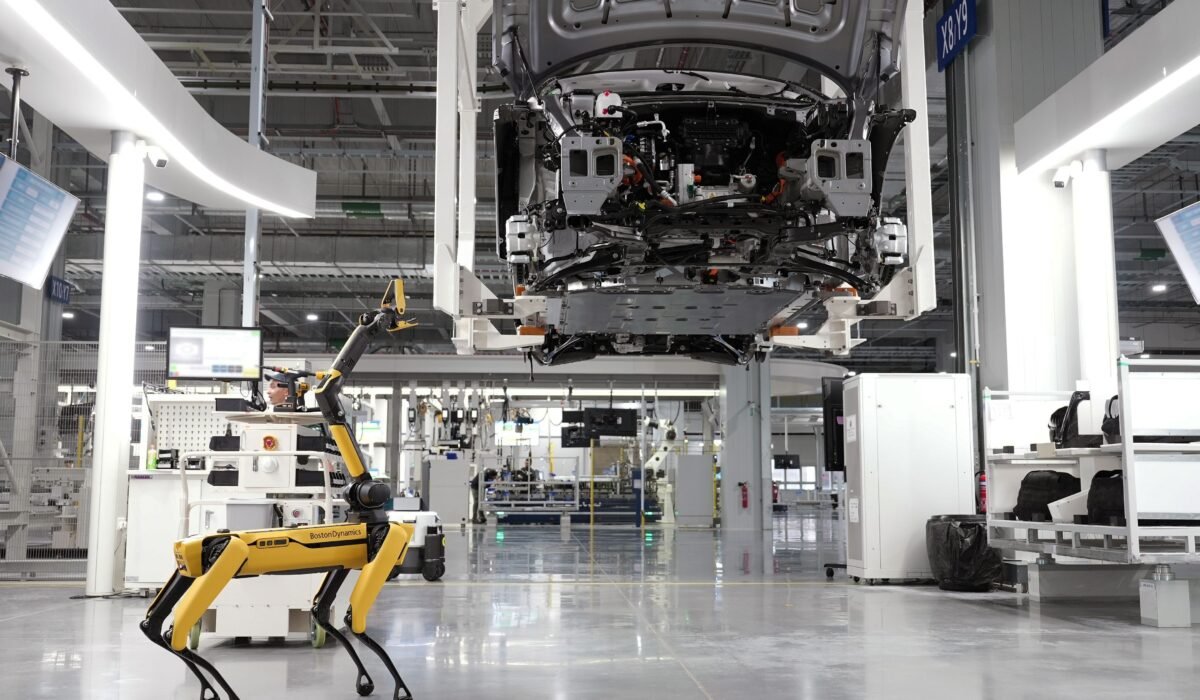
AI optimizing car manufacturing through robotics means faster, more precise assembly with reduced human error. AI-driven automation and robotics are changing automotive manufacturing by optimizing production processes, reducing human error, and improving overall efficiency. This is a key aspect of AI optimizing car manufacturing for the modern era.
AI enhances automotive assembly robots in several ways:
- Advanced Vision Systems: Robots can ‘see’ and identify parts, orient them correctly, and detect assembly errors in real-time.
- Adaptive Gripping: AI enables robots to handle a wider variety of parts and materials with varying shapes and textures.
- Collaborative Robots (Cobots): AI allows robots to work safely alongside human operators, augmenting their capabilities.
- Learning and Adaptation: Robots can learn from experience, improving their performance over time and adapting to new tasks or variations.
Tesla, for instance, deploys AI in its manufacturing processes to enhance its autonomous driving technology and optimize production lines, demonstrating the cutting edge of AI optimizing car manufacturing through advanced robotics.
AI optimizing car manufacturing assembly lines with intelligent robots enhances precision, speed, and adaptability, enabling complex tasks with greater accuracy.
In practice, AI optimizing car manufacturing through robotics leads to higher quality builds and the ability to produce more customized vehicle configurations efficiently, meeting evolving consumer demands.
Generative AI and Digital Twins in Car Manufacturing
Generative AI and digital twins represent the next frontier in AI optimizing car manufacturing, offering powerful tools for design innovation and process simulation. Generative AI can assist in creating novel vehicle designs, optimizing component structures, and even generating production workflows, while digital twins provide a virtual replica of the physical manufacturing process for testing and refinement.
These advanced technologies are crucial for future-proofing the automotive sector. BMW, for example, employs generative AI for vehicle prototype design and production workflow enhancement, integrating AI into 70% of its production for personalized manufacturing. This highlights the impact of AI optimizing car manufacturing for innovation and customization.
Here’s a look at their roles:
- Generative AI in Design: AI can explore thousands of design permutations based on specified parameters (e.g., aerodynamics, weight, material properties), accelerating the conceptual phase.
- Digital Twins for Simulation: A virtual twin of a factory or assembly line allows engineers to test changes, identify potential issues, and optimize processes without disrupting physical operations.
- Predictive Simulation: Digital twins, informed by real-time data, can simulate how changes in AI optimizing car manufacturing processes might affect outcomes.
- AI-Driven Design Optimization: Generative AI can optimize designs for manufacturability, ensuring that innovative concepts are also practical to produce.
Ford utilizes AI-powered digital twins to simulate assembly line scenarios, identifying bottlenecks and streamlining workflows, a prime example of AI optimizing car manufacturing for operational excellence.
Generative AI and digital twins are revolutionizing AI optimizing car manufacturing by enabling rapid design exploration and risk-free process simulation.
From experience, integrating these tools allows manufacturers to move faster, reduce the cost of experimentation, and bring more innovative and efficient vehicles to market, solidifying the power of AI optimizing car manufacturing.
Measuring the ROI of AI in Car Manufacturing
Measuring the ROI of AI in car manufacturing is essential to validate investments and guide future strategic decisions. While quantifying the exact return can be complex, the benefits—ranging from increased throughput and reduced waste to improved quality and lower maintenance costs—are substantial and well-documented.
The overall value proposition is clear: AI optimizing car manufacturing is projected to boost productivity by 40% and add $150 to $250 billion in value by 2030, according to Gitnux (2026). This significant economic impact underscores the importance of tracking AI’s return on investment.
Key metrics for measuring AI ROI include:
| Metric Category | Key Performance Indicators (KPIs) | AI Impact Example |
|---|---|---|
| Efficiency & Productivity | Throughput, Cycle Time, Output Volume | Up to 20% increase in production efficiency, according to Gitnux (2026). |
| Cost Reduction | Maintenance Costs, Energy Consumption, Waste/Scrap Rates, Rework Costs | 25% reduction in maintenance costs, according to Gitnux (2026). |
| Quality Improvement | Defect Rate, Recall Rate, Customer Satisfaction Scores | 90% more accurate defect detection, according to McKinsey (2025). |
| Speed to Market | Product Development Time, Time to Launch | Faster design cycles and process optimization. |
Manufacturers report average productivity gains of 20%, quality improvements of 35%, and maintenance cost reductions of 25% after implementing AI solutions, according to Gitnux (2026). These figures demonstrate the tangible financial benefits derived from AI optimizing car manufacturing.
AI optimizing car manufacturing delivers significant ROI through measurable improvements in productivity, quality, and cost reduction across operations.
The most effective way to demonstrate ROI for AI optimizing car manufacturing is by establishing clear baseline metrics before implementation and then tracking these KPIs rigorously post-deployment, linking them directly to the AI initiatives. This data-driven approach confirms the value and guides further strategic AI investments.
Frequently Asked Questions
What are the main applications of AI in automotive manufacturing?
The main applications of AI in automotive manufacturing include predictive maintenance, advanced quality control, intelligent robotics, supply chain optimization, generative design, and digital twins. These AI applications in automotive manufacturing are transforming production processes by enhancing efficiency and precision.
How is AI used in car production?
AI is used in car production to automate tasks, improve quality checks, optimize machinery upkeep, streamline logistics, and accelerate design processes. AI optimizing car manufacturing leads to faster, more cost-effective, and higher-quality vehicle assembly.
What is the role of AI in smart factories?
In smart factories, AI plays a central role by connecting and optimizing all aspects of production, from machinery and robotics to supply chains and quality control. AI optimizing car manufacturing processes enables these factories to be more autonomous, adaptive, and efficient.
How does AI improve efficiency in manufacturing?
AI improves manufacturing efficiency by reducing downtime through predictive maintenance, minimizing errors in quality control, optimizing resource allocation, and automating complex assembly tasks. AI optimizing car manufacturing processes directly boosts output and lowers operational costs.
What are the benefits of AI in the automotive industry?
The benefits of AI in the automotive industry are vast, including enhanced production efficiency (up to 20%), improved product quality (35% gains), reduced maintenance costs (25% reduction), and faster innovation cycles. AI optimizing car manufacturing ensures competitiveness and customer satisfaction.
In essence, AI optimizing car manufacturing is no longer a futuristic concept but a present-day imperative. By embracing AI across design, production, quality assurance, and logistics, automotive manufacturers can achieve unprecedented levels of efficiency, quality, and innovation, securing their position in the competitive global market. Start exploring how AI optimizing car manufacturing can transform your operations today.