Key Takeaways
- AI predicts smart home needs by analyzing user behavior and device data to proactively manage comfort, security, and energy.
- Smart systems that optimize heating, cooling, and lighting based on habits can reduce energy bills by up to 30%.
- Over 57% of US households are expected to own at least one smart device by 2026.
- AI-powered energy management systems can reduce HVAC costs by 30-40%.
- The global smart home market is projected to reach USD 887.4 billion by 2033.
What if your home could anticipate your needs before you even realized them? Imagine lights dimming as you settle in for a movie, your thermostat adjusting to your preferred temperature before you arrive home, or your security system arming itself automatically when it detects you’ve left. This isn’t science fiction; it’s the reality powered by artificial intelligence, and understanding how AI predicts smart home needs is key to unlocking a truly seamless living experience. This article dives into the seven core ways AI is transforming our homes from passive structures into intelligent, responsive environments.
Quick Answer: AI predicts smart home needs by analyzing user behavior, device data, and environmental factors using machine learning to anticipate requirements for comfort, energy, and security proactively.
How Does AI Predict Smart Home Needs?
AI predicts smart home needs by employing sophisticated machine learning algorithms that analyze vast amounts of data from sensors, connected devices, and user interactions. These systems learn your routines, preferences, and even subtle environmental cues to make educated guesses about what you’ll need next. This predictive capability transforms a house into an intuitive partner, constantly working to enhance comfort, efficiency, and safety. For instance, a system like Amazon Alexa can learn your daily wake-up time and automatically adjust smart blinds and lighting, showcasing how AI predicts smart home needs through learned behavior.
The core of this predictive power lies in machine learning, where algorithms identify patterns in historical data. By processing information like when you typically leave for work, what temperature you prefer in the evening, or when you usually stream music, AI builds a dynamic profile of your household’s behavior. This allows AI to predict smart home needs with increasing accuracy over time. For example, the Google Nest Learning Thermostat learns your schedule and temperature preferences, automatically creating a schedule that saves energy without sacrificing comfort.
Machine learning models analyze patterns in user behavior, device usage, and environmental conditions to forecast future requirements. This is not magic; it’s data-driven insight. The more data an AI system has, the better it becomes at understanding your unique lifestyle and predicting smart home needs. Consider the Aqara Home Copilot, a Gen-AI chatbot interface that analyzes usage patterns and suggests automations, demonstrating a direct application of how AI predicts smart home needs by interpreting your interactions.
Here’s a breakdown of the primary mechanisms AI uses:
- Data Collection: Smart devices (thermostats, lights, locks, cameras) and sensors gather information about occupancy, temperature, light levels, energy consumption, and user commands.
- Pattern Recognition: Machine learning algorithms sift through this data to identify recurring sequences and correlations.
- Behavioral Analysis: AI models observe how users interact with their devices and environment, learning preferences and habits.
- Contextual Awareness: AI can incorporate external factors like weather forecasts, traffic conditions, or calendar events to refine its predictions.
- Predictive Modeling: Based on learned patterns and context, AI generates predictions about future needs for comfort, security, or resource management.
This constant learning cycle is what makes AI so powerful in anticipating what’s next. It’s a fundamental shift in how our homes operate, moving from reactive commands to proactive support. The sophistication of AI in smart home automation means that your home is always a step ahead, optimizing itself to serve you better.
AI Predicts Your Energy Management Needs
AI predicts smart home needs related to energy management by learning your household’s consumption patterns and optimizing device usage for efficiency. Systems can anticipate when you’ll be home or away, adjust heating and cooling schedules, and even manage appliance power consumption to reduce waste and lower utility bills. This proactive approach ensures comfort while significantly cutting down on energy expenditure.
Smart systems that optimize heating, cooling, and lighting based on habits can reduce energy bills by up to 30%, according to industry reports (2023). This is a prime example of how AI predicts smart home needs by understanding your daily rhythm. The Google Nest Learning Thermostat, for example, doesn’t just follow a pre-set schedule; it observes when you manually adjust the temperature and learns your preferences over time to create an energy-saving schedule automatically.
AI-powered energy management systems can reduce HVAC costs by 30-40%. This significant saving is achieved because AI can predict when heating or cooling is truly needed, rather than relying on static timers. External factors like weather forecasts are integrated, so the system can pre-cool or pre-heat your home during off-peak hours or when energy is cheaper, demonstrating a sophisticated level of AI predicting smart home needs.
Here’s how AI excels in predicting energy requirements:
- Learning Occupancy Patterns: AI determines when rooms are typically occupied and when the house is empty, adjusting HVAC and lighting accordingly.
- Predicting Temperature Fluctuations: By analyzing historical data and current weather forecasts, AI can anticipate how quickly a home will heat up or cool down, optimizing the HVAC system’s operation.
- Smart Appliance Scheduling: AI can schedule high-energy-consuming appliances like dishwashers or washing machines to run during off-peak hours when electricity rates are lower.
- Optimizing Lighting: AI can predict when natural light is sufficient and adjust smart lighting levels, or turn lights off in unoccupied rooms.
This intelligent energy management is a critical aspect of how AI predicts smart home needs, directly impacting household budgets and environmental sustainability. It moves beyond simple automation to intelligent optimization, ensuring resources are used only when and where they are needed.
Example: The Google Nest Hub can display energy usage reports, showing you how your AI-driven thermostat is saving you money by predicting your heating and cooling needs.
AI Predicts Your Security Needs Proactively
AI predicts smart home needs in security by analyzing patterns of activity and identifying anomalies that suggest a potential threat. Instead of just reacting to an alarm, AI-powered systems can proactively detect suspicious behavior, differentiate between pets and intruders, and alert you to potential risks before they escalate. This advanced foresight is crucial for modern home protection.
Over 57% of US households are expected to own at least one smart device by 2026, according to market research (2024). As more devices connect, AI plays a vital role in managing and securing this complex ecosystem. AI-powered home security systems use machine learning to understand what “normal” looks like in and around your home. When something deviates from this norm—a door opening at an unusual hour, unexpected motion detected in a yard at night—AI can flag it as a potential security concern.
AI can differentiate between normal environmental changes and genuine security threats, reducing false alarms. For instance, a smart camera might use AI to distinguish between a pet walking across the lawn and a person attempting to break in, preventing unnecessary alerts and ensuring you’re only notified of real issues. This is a prime example of how AI predicts smart home needs by focusing on potential vulnerabilities.
Here’s how AI enhances proactive home security:
- Intelligent Intrusion Detection: AI analyzes sensor data and camera feeds to identify unauthorized entry attempts, distinguishing between people, animals, and vehicles.
- Anomaly Detection: AI flags unusual activity, such as doors or windows being opened when the home is supposed to be empty, or unexpected movement patterns.
- Facial and Object Recognition: Advanced AI can recognize familiar faces (family members, friends) and differentiate them from strangers, tailoring alerts accordingly.
- Environmental Threat Prediction: Some systems use AI to monitor for environmental hazards like smoke or carbon monoxide leaks, predicting and alerting to dangers beyond intrusion.
The ability of AI to predict smart home needs for security means your home is constantly monitored by an intelligent guardian, offering peace of mind. Brands like Amazon Alexa integrate with various security devices, enhancing their predictive capabilities through AI.
Example: A smart camera with AI object recognition, like those compatible with Amazon Alexa, can alert you if it detects a person loitering near your property late at night, predicting a potential security issue.
How AI Personalizes Your Smart Home Experience
AI predicts smart home needs by learning your individual preferences and habits to tailor the environment specifically for you. This goes beyond basic automation; AI creates a living space that adapts to your mood, schedule, and unique lifestyle, making your home feel more intuitive and comfortable. Personalization is at the heart of how AI predicts smart home needs for individual users.
The global autonomous AI in smart homes market is predicted to increase to approximately USD 171.29 billion by 2035, expanding at a CAGR of 25.20% from 2026 to 2035 (2026). This growth is fueled by the demand for hyper-personalized experiences. AI achieves this by analyzing how you interact with your home systems – from the music you play through smart speakers to the lighting scenes you activate in the evening. For instance, Apple HomeKit can learn your preferred settings for different times of day and automatically apply them.
AI crafts bespoke smart home environments by continuously learning and adapting to your specific routines and preferences. This means your home anticipates what you want, whether it’s a specific playlist to wake you up or a particular lighting scene for dinner. This level of personalization is a testament to how AI predicts smart home needs on a deeply individual level, making technology feel invisible yet incredibly useful.
Here’s how AI personalizes your smart home:
- Learning Entertainment Preferences: AI can suggest music, movies, or podcasts based on your past choices and even predict what you might want to listen to or watch next.
- Adaptive Lighting and Ambiance: AI adjusts lighting color temperature and brightness throughout the day to match your circadian rhythm or specific activities, like reading or relaxing.
- Customized Routines: AI learns your daily routines (e.g., morning coffee, evening wind-down) and can trigger a sequence of actions automatically, like brewing coffee and starting a news briefing.
- Voice Assistant Personalization: Voice assistants like Amazon Alexa or Google Assistant can learn to recognize different voices in the household and provide personalized responses or actions based on who is speaking.
This deep personalization is a significant benefit of AI predicting smart home needs, making technology feel less like a tool and more like an extension of your own intuition. It ensures that your smart home is truly *your* home, optimized for your comfort and convenience.
Example: When you say “Good morning” to your Amazon Alexa device, it can respond with personalized news, weather, and calendar updates based on its learned understanding of your morning routine.
AI and Predictive Maintenance for Smart Appliances
AI predicts smart home needs by enabling predictive maintenance for your appliances, meaning it can identify potential issues before they lead to a breakdown. By monitoring appliance performance data, AI can alert you to minor problems or suggest when a component might need servicing, saving you from costly repairs and unexpected downtime. This proactive approach is a vital aspect of how AI predicts smart home needs for appliance longevity and reliability.
The global smart home market size was valued at USD 162.8 billion in 2025 and is projected to grow from USD 207.0 billion in 2026 to USD 887.4 billion by 2033, growing at a CAGR of 23.1% from 2026 to 2033 (2026). This massive growth is supported by increasingly intelligent appliances that leverage AI. For instance, LG SIGNATURE AI Appliances use AI to monitor their own operational status and can alert users to potential issues. This prevents common problems before they escalate.
AI analyzes operational data from smart appliances to predict potential failures and recommend maintenance. This predictive capability means appliances can be serviced during scheduled maintenance windows rather than experiencing emergency breakdowns. This is a key way AI predicts smart home needs, ensuring your appliances run smoothly and efficiently for longer periods. For example, a smart refrigerator might detect subtle changes in its cooling system and alert you that it might need a check-up.
Here’s how AI contributes to predictive maintenance:
- Performance Monitoring: AI continuously analyzes data streams from sensors within appliances, such as motor speed, temperature, vibration, and energy consumption.
- Anomaly Detection: It identifies deviations from normal operating parameters that might indicate wear and tear or an impending failure.
- Failure Prediction: Based on learned patterns of component degradation, AI can forecast the likelihood of a specific part failing within a given timeframe.
- Maintenance Scheduling: AI can recommend optimal times for servicing or replacement, often coordinating with user availability or off-peak usage periods.
This application of AI predicting smart home needs ensures that your essential appliances remain functional and efficient, reducing stress and unexpected expenses. Samsung’s Family Hub refrigerator, for instance, can monitor its internal conditions and alert you if something isn’t right.
Example: If your Samsung Family Hub refrigerator’s AI detects unusual compressor activity, it might send a notification to your smartphone suggesting a service check, predicting a potential cooling issue.
The Future of AI Predicting Smart Home Needs
The future of how AI predicts smart home needs is moving towards even deeper integration and anticipation, creating homes that are truly self-aware and adaptive. We can expect AI to become more intuitive, understanding not just routines but also emotional states and subtle environmental shifts to proactively manage living spaces. This evolution in AI predicting smart home needs promises a more seamless, comfortable, and efficient future.
“The smart home of 2026 is all about subtle sophistication that’s highly livable and practical,” notes Tamara Mattox-Kabat, Real Estate Pro with Redfin (2026). This forward-looking statement highlights how AI will become less obtrusive and more integrated into the fabric of daily life. Future AI systems will likely predict needs based on a wider array of inputs, including biometric data (with user consent), ambient sound analysis, and even social cues, making the prediction of smart home needs incredibly nuanced.
AI agents will replace rigidity with adaptive intelligence, learning household patterns and improving without reprogramming. GearBrain defines an AI agent in a smart home context as software that observes sensor data, learns household patterns, makes autonomous decisions, and improves without reprogramming. This means homes will become dynamic entities, constantly evolving to meet your changing requirements. The sophistication of AI in smart home automation will continue to grow, making homes more responsive than ever.
Key future trends in AI predicting smart home needs include:
- Hyper-Personalization: AI tailoring every aspect of the home environment, from lighting and temperature to music and even scent, based on real-time user mood and activity.
- Proactive Health and Wellness: AI monitoring air quality, sleep patterns, and even subtle health indicators to suggest adjustments for better well-being.
- Advanced Resource Management: AI optimizing water usage, waste management, and renewable energy generation and storage with unprecedented efficiency.
- Seamless Integration: AI acting as a central orchestrator, ensuring all smart devices and systems work harmoniously, learning from each other.
- AI-Powered Assistants: More sophisticated AI assistants capable of complex conversations, problem-solving, and managing intricate household tasks autonomously.
The ongoing evolution of AI predicting smart home needs points towards a future where our homes are not just smart, but truly intelligent partners in our daily lives. As AI learns smart home habits more deeply, the living experience will be profoundly enhanced.
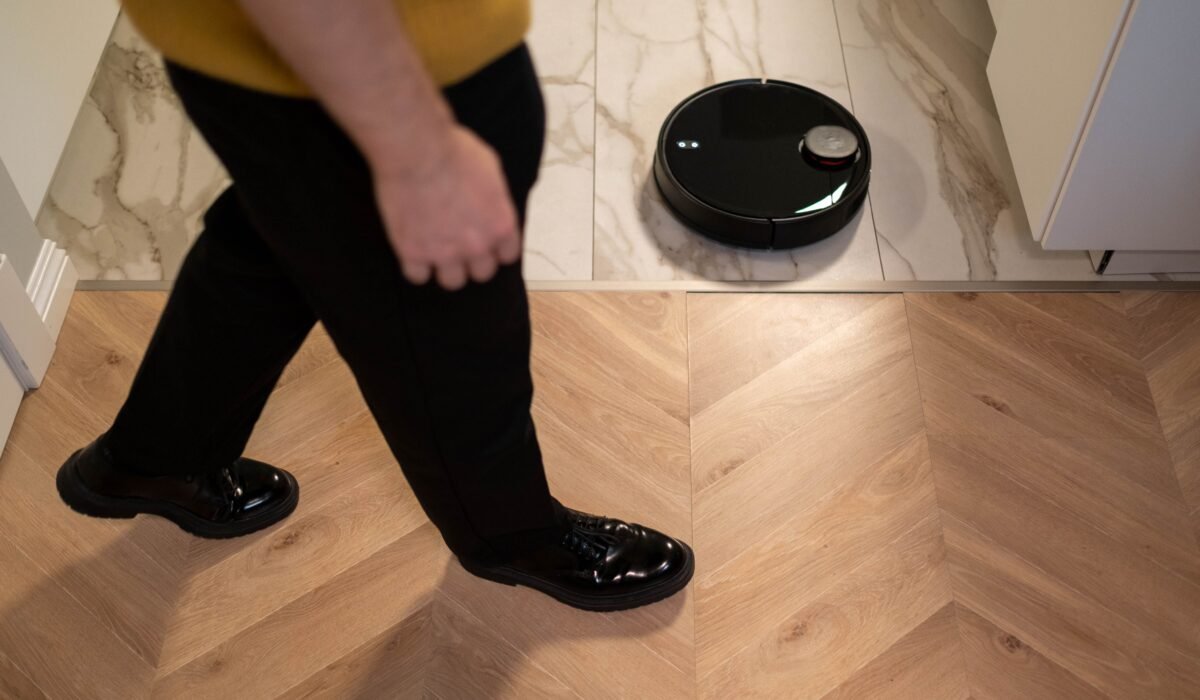
Example: Imagine a future where your Roomba Combo j9+ robot vacuum doesn’t just clean on schedule, but AI predicts when the pet might shed most heavily based on the weather and your pet’s known habits, initiating a cleaning cycle proactively.
Ethical Considerations of AI Predicting Home Needs
While AI predicts smart home needs with remarkable accuracy, it also introduces significant ethical considerations regarding privacy, data security, and potential bias. Understanding these challenges is crucial for ensuring AI enhances our lives without compromising our fundamental rights or creating new forms of inequality. The responsible development of AI predicting smart home needs requires careful attention to these ethical dimensions.
The integration of AI in smart homes is revolutionizing our living experience, but it also raises questions about the vast amounts of personal data being collected and analyzed, according to the National Association of REALTORS® (2025). Ensuring that this data is protected and used ethically is paramount. For example, the continuous monitoring required for AI to predict smart home needs could inadvertently capture sensitive personal moments.
Moving too quickly with AI in the home can ruin a homeowner’s experience with smart home technology if privacy concerns are not addressed, warns Brad Hintze, Executive Vice President of Global Marketing at Crestron (2026). Transparency about data collection and usage, robust security measures to prevent breaches, and user control over their data are essential. Without these safeguards, the trust required for widespread adoption of AI predicting smart home needs could erode.
Key ethical considerations include:
- Privacy: AI systems collect extensive personal data. Ensuring this data is anonymized, encrypted, and used only for its intended purpose is critical.
- Data Security: Protecting smart home systems from cyberattacks is vital, as a breach could expose sensitive information or allow unauthorized control of the home.
- Algorithmic Bias: AI models can perpetuate existing societal biases if trained on skewed data, potentially leading to unfair outcomes for certain demographics.
- Transparency and Control: Users should understand what data is being collected, how it’s being used, and have clear mechanisms to control it.
- Autonomy: Over-reliance on AI could reduce human autonomy or lead to unintended consequences if AI makes incorrect predictions or decisions.
Navigating these ethical landscapes is essential for the responsible advancement of AI predicting smart home needs. It requires collaboration between developers, consumers, and regulators to establish clear guidelines and best practices. The goal is to harness the power of AI while upholding human values and rights.
Example: When setting up a smart home system like Apple HomeKit, users should be aware of the data collection policies and have control over which services share information, ensuring their privacy is respected as AI predicts their needs.
Frequently Asked Questions
How does AI predict smart home needs?
AI predicts smart home needs by analyzing user behavior, device data, and environmental factors using machine learning to anticipate requirements for comfort, energy, and security proactively. This proactive approach optimizes daily living. For example, AI learns your schedule to adjust thermostats, a capability supported by smart systems that can reduce energy bills by up to 30%.
What are the benefits of AI in smart homes?
AI offers significant benefits by enhancing convenience, improving energy efficiency, and boosting home security. It personalizes the living experience, automates routine tasks, and can even predict maintenance needs for appliances. These advantages are driving market growth, with the global smart home market projected to reach USD 887.4 billion by 2033.
How is AI used in smart home automation?
AI is used in smart home automation to learn user habits and preferences, enabling devices to act proactively rather than just reactively. It optimizes energy consumption, enhances security through anomaly detection, and personalizes the home environment. Over 57% of US households are expected to own at least one smart device by 2026, leveraging AI for smarter automation.
What are the future trends in AI-powered smart homes?
Future trends include hyper-personalization, AI-driven health and wellness monitoring, advanced resource management, and seamless integration of all smart devices. AI agents will become more sophisticated, learning and improving without reprogramming. The AI in Smart Home Technology Market is expected to grow at a 21.30% CAGR during the forecast period for 2026 to 2035.
Can AI make my home smarter?
Yes, AI makes homes smarter by enabling them to learn, adapt, and anticipate user needs. Instead of just following commands, AI-powered homes can proactively manage energy, security, and comfort based on learned patterns. This predictive capability transforms a house into an intelligent, responsive living space.
In essence, AI predicts smart home needs by transforming our living spaces into intelligent, adaptive environments. By learning your habits, analyzing data, and understanding context, AI ensures your home is always a step ahead, optimizing comfort, security, and efficiency. Embracing these AI-driven capabilities means unlocking a future of truly seamless and intuitive living. If you’re ready to experience this advanced level of home intelligence, explore smart home solutions that leverage AI to understand and anticipate your unique needs.