Key Takeaways
- Automatic emergency braking can reduce rear-end crashes by 38%, according to Vertex AI Search (March 18, 2026).
- Nearly 94% of all automobile accidents are attributed to human error, a significant portion that AI automotive safety features aim to mitigate, according to Vertex AI Search (March 18, 2026).
- AI predictive maintenance cuts vehicle breakdowns by 40%, according to Gitnux (May 20, 2026).
- Nauto has reduced total accidents across fleets by 60 to 65 percent, according to Moove Connected Mobility.
- Collision avoidance systems can reduce collision risk by 25% or more, according to Vertex AI Search (March 18, 2026).
Are you concerned about the safety of your daily commute or family road trips? Understanding how advanced technology is making vehicles safer is crucial, and the integration of AI automotive safety features is revolutionizing how we protect ourselves on the road. These intelligent systems are moving beyond simple alerts, actively working to prevent accidents before they even happen, transforming the driving experience into a more secure and predictable journey. This article explores the powerful ways AI automotive safety features are enhancing vehicle protection.
Quick Answer: AI enhances automotive safety via ADAS (like automatic braking, lane keeping), driver monitoring, predictive maintenance, and object detection, proactively preventing accidents and improving road safety.
How is AI used in cars for safety?
AI is fundamentally transforming automotive safety by enabling vehicles to perceive their environment, make intelligent decisions, and act proactively to avoid or mitigate collisions. These sophisticated AI automotive safety features process vast amounts of data from sensors like cameras, radar, and lidar in real-time. This allows them to identify potential hazards, predict the behavior of other road users, and alert drivers or even take control of the vehicle to prevent accidents. Companies like Bosch are at the forefront, developing AI solutions that interpret complex driving scenarios.
The core of AI’s role in car safety lies in its ability to analyze patterns and learn from experiences, far beyond human capabilities. This allows for continuous improvement of AI automotive safety features, making them more robust and effective over time. For instance, Nauto uses AI-powered cameras to analyze driving behavior and road conditions, providing insights that have significantly reduced accidents within fleets.
AI acts as an ever-vigilant co-pilot, constantly scanning for risks that a human driver might miss due to distraction, fatigue, or simple oversight. This layered approach, where AI automotive safety features work in tandem with human drivers, forms the basis of next-generation vehicle protection systems. The goal is to create a safer driving ecosystem for everyone.
AI systems in vehicles process sensor data to detect and classify objects, predict trajectories, and make split-second safety decisions. This capability is central to all advanced AI automotive safety features.
By analyzing driving patterns and environmental cues, AI helps vehicles anticipate dangerous situations, such as a pedestrian stepping into the road or another vehicle braking suddenly. This proactive stance is a hallmark of modern AI automotive safety features.
What are the benefits of AI in automotive safety?
The primary benefit of AI automotive safety features is a dramatic reduction in accidents and their severity. Given that nearly 94% of all automobile accidents are attributed to human error, according to Vertex AI Search (March 18, 2026), AI’s ability to mitigate these errors is paramount. AI systems can react faster than humans and are immune to distraction or fatigue, offering a consistent level of vigilance. This leads to fewer injuries and fatalities on our roads.
Beyond accident prevention, AI automotive safety features contribute to a more comfortable and less stressful driving experience. Features like adaptive cruise control and lane-keeping assist, powered by AI, reduce driver workload on long journeys. Furthermore, AI enables predictive maintenance, identifying potential vehicle issues before they lead to breakdowns or safety hazards. AI predictive maintenance cuts vehicle breakdowns by 40%, according to Gitnux (May 20, 2026), ensuring vehicles operate reliably and safely.
AI also plays a crucial role in enhancing driver awareness and behavior. Driver monitoring systems use AI to detect signs of drowsiness or distraction, prompting the driver to take a break. This proactive approach to driver well-being is a significant advancement in AI automotive safety features. Overall, the integration of AI automotive safety features promises a future with significantly fewer road accidents and improved vehicle reliability.
AI automotive safety features significantly reduce accidents by overcoming human limitations like distraction and fatigue, leading to fewer injuries and fatalities.
The implementation of AI automotive safety features leads to improved vehicle reliability through predictive maintenance, minimizing unexpected breakdowns and associated risks.
Top AI-powered safety features explained (ADAS, DMS, etc.)
Advanced Driver Assistance Systems (ADAS) represent a broad category where AI automotive safety features are most visible today. These systems use AI to interpret sensor data and assist drivers. Key among these is Automatic Emergency Braking (AEB), which can reduce rear-end crashes by 38%, according to Vertex AI Search (March 18, 2026). AEB uses AI to detect imminent collisions with vehicles or pedestrians and automatically applies the brakes if the driver doesn’t respond.
Lane Keeping Assist (LKA) and Lane Departure Warning (LDW) are other critical AI automotive safety features. LKA uses AI to monitor lane markings and can steer the vehicle back into its lane if it drifts unintentionally. Adaptive Cruise Control (ACC) uses AI to maintain a set speed and distance from the vehicle ahead, automatically adjusting speed as traffic conditions change. Tesla Autopilot is a well-known system that integrates many of these ADAS capabilities, leveraging AI for steering, acceleration, and braking.
Driver Monitoring Systems (DMS) are also becoming increasingly vital AI automotive safety features. These systems use cameras and AI to track driver attention, eye gaze, and facial expressions to detect drowsiness or distraction. If signs of impairment are detected, systems like those found in Cadillac Super Cruise and Ford BlueCruise can alert the driver or even bring the vehicle to a safe stop. Volvo’s City Safety is another example, using AI to detect other vehicles, cyclists, and pedestrians, automatically braking to avoid or reduce the impact of a collision.
Here’s a look at some prominent AI-powered safety technologies:
- Automatic Emergency Braking (AEB): Detects potential collisions and applies brakes automatically.
- Lane Keeping Assist (LKA): Uses AI to keep the vehicle centered within its lane.
- Adaptive Cruise Control (ACC): Maintains a set speed and distance from the vehicle ahead.
- Blind Spot Monitoring (BSM): Uses sensors and AI to alert drivers to vehicles in their blind spots.
- Driver Monitoring Systems (DMS): Employs AI to track driver alertness and detect distraction or drowsiness.
- Object and Pedestrian Detection: AI algorithms identify various objects and people in the vehicle’s path, crucial for AEB and autonomous systems.
These AI automotive safety features work in concert to create a safer driving environment, moving towards greater vehicle autonomy and significantly reducing accident risks.
How AI enables predictive maintenance and accident prevention
AI automotive safety features extend beyond immediate collision avoidance to encompass proactive vehicle health monitoring and sophisticated accident prevention strategies. Predictive maintenance, powered by AI, analyzes data from various vehicle sensors to forecast potential component failures before they occur. This means a vehicle’s engine, brakes, or battery can be serviced proactively, preventing unexpected breakdowns that could lead to dangerous situations. For example, AI predictive maintenance cuts vehicle breakdowns by 40%, according to Gitnux (May 20, 2026), ensuring critical systems remain functional.
Accident prevention is further enhanced by AI’s ability to analyze vast datasets of driving behavior and traffic incidents. Platforms like Nauto leverage AI-powered cameras and analytics to identify risky driving patterns within fleets, such as harsh braking or rapid acceleration. By providing drivers with real-time feedback and post-trip coaching based on AI analysis, Nauto has reduced total accidents across fleets by 60 to 65 percent, according to Moove Connected Mobility. This demonstrates the power of AI automotive safety features in shaping safer driving habits.
Furthermore, AI’s capability for object detection in cars is paramount for accident prevention. Advanced AI algorithms can accurately identify and classify pedestrians, cyclists, and other vehicles, even in challenging conditions like low light or adverse weather. This allows AI automotive safety features to provide earlier warnings and more precise interventions, such as automatic emergency braking or evasive steering maneuvers. The continuous learning of AI models ensures these prevention capabilities improve over time.
AI predictive maintenance uses vehicle sensor data to forecast component failures, preventing breakdowns and ensuring the reliability of critical AI automotive safety features.
By analyzing driver behavior and road conditions, AI systems like Nauto actively prevent accidents through real-time feedback and targeted interventions.
The future of AI in vehicle safety
The future of AI in vehicle safety is incredibly promising, pointing towards increasingly autonomous and inherently safer vehicles. We are moving beyond current ADAS to more advanced AI automotive safety features that will handle more complex driving tasks autonomously. The integration of AI with V2X (Vehicle-to-Everything) communication will allow vehicles to share real-time information with each other and with infrastructure, creating a connected safety network. This interconnectedness will enable AI automotive safety features to anticipate hazards miles away, not just those immediately surrounding the vehicle.
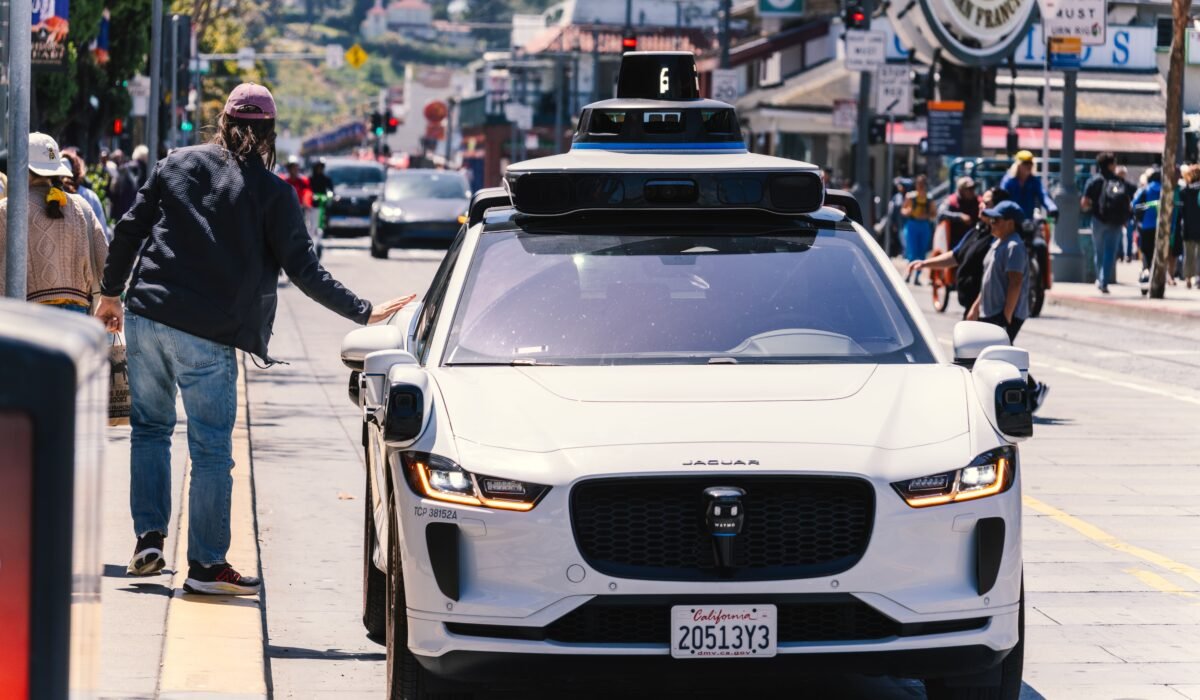
Expect to see more sophisticated AI for pedestrian safety in vehicles, with systems becoming adept at predicting pedestrian intent and movement, even in crowded urban environments. AI and autonomous driving safety will continue to be a major focus, with AI systems becoming more robust and reliable for full self-driving capabilities. While full autonomy may still be some time away for widespread consumer adoption, the AI automotive safety features integrated into today’s vehicles are already laying the groundwork, making driving safer incrementally.
Companies like Bosch are developing AI-powered central domain controllers that can manage multiple AI functions simultaneously, from infotainment to advanced safety. The continuous advancement in AI processing power and algorithms will lead to more nuanced and effective AI automotive safety features, such as enhanced situational awareness and better decision-making in edge cases. The trajectory is clear: AI automotive safety features will become the invisible guardians of our roads.
The future of AI automotive safety features includes enhanced V2X communication and advanced pedestrian detection, creating a fully connected and predictive safety ecosystem.
AI’s role in autonomous driving safety will expand dramatically, with future AI automotive safety features offering ever-greater levels of assistance and eventual self-driving capabilities.
Ethical considerations and challenges of AI in automotive safety
While the advancements in AI automotive safety features are revolutionary, they also bring significant ethical considerations and challenges that must be addressed. One primary concern is data privacy; these systems collect vast amounts of data about driving habits, locations, and even driver behavior. Ensuring this data is collected, stored, and used responsibly and securely is paramount. The ethical considerations of AI in cars require careful balancing of safety benefits with individual privacy rights.
Another critical challenge is algorithmic bias. If the AI models are trained on biased datasets, they may perform less effectively or unfairly for certain demographics or in specific environments. For instance, AI object detection in cars might have different accuracy rates for different skin tones or under varied lighting conditions. Ensuring fairness and equity in AI automotive safety features is an ongoing technical and ethical imperative. The development must adhere to standards like ISO 26262 for functional safety.
The question of liability in the event of an accident involving AI-powered vehicles is complex. Determining fault when an AI system makes a decision requires clear legal and ethical frameworks. Who is responsible: the car owner, the manufacturer, the software developer? These are crucial questions as AI automotive safety features become more sophisticated. Furthermore, the public’s trust in AI automotive safety features depends on transparency, reliability, and demonstrable safety improvements. Continuous validation and ethical oversight are essential for public acceptance and the successful integration of these technologies.
Data privacy is a key ethical challenge for AI automotive safety features, requiring robust security measures and transparent data usage policies.
Addressing algorithmic bias is crucial to ensure AI automotive safety features perform equitably across all users and driving conditions, promoting fairness.
Frequently Asked Questions
How is AI used in cars for safety?
AI is used in cars for safety by processing sensor data to detect hazards, predict outcomes, and take preventive actions like automatic braking or steering adjustments. These AI automotive safety features enhance vehicle perception and decision-making beyond human capabilities.
What are the benefits of AI in automotive safety?
The main benefits include a significant reduction in accidents and injuries, improved driver alertness through monitoring, and enhanced vehicle reliability via predictive maintenance. AI automotive safety features offer proactive protection, moving beyond reactive measures.
What are the different types of AI-powered safety features in cars?
Key types include Advanced Driver Assistance Systems (ADAS) like Automatic Emergency Braking and Lane Keeping Assist, Driver Monitoring Systems (DMS), and AI-powered predictive maintenance. These AI automotive safety features collectively aim to prevent accidents.
How does AI improve car safety?
AI improves car safety by providing constant vigilance, faster reaction times, and the ability to analyze complex situations to predict and prevent potential accidents. Features like object detection and predictive analytics are central to AI’s role in enhancing automotive safety.
What are the ethical considerations of AI in cars?
Ethical concerns include data privacy related to collected driving information and potential algorithmic bias that could affect performance for certain groups. The responsibility for AI-driven decisions in accidents is also a significant ethical challenge for AI automotive safety features.
The integration of AI automotive safety features represents a monumental leap forward in protecting drivers, passengers, and pedestrians. By leveraging advanced algorithms and real-time data analysis, these systems are not just reacting to danger but actively preventing it, making our roads significantly safer. As AI technology continues to evolve, we can anticipate even more sophisticated and reliable AI automotive safety features that will redefine personal transportation. Embracing these advancements is key to a future with fewer accidents and a more secure driving experience for all.