Key Takeaways
- Microsoft Windows dominates the desktop OS market with approximately 82.74% share, according to Statcounter (2024).
- Global PC shipments increased by 9.1% for the full year 2025, reaching over 270 million units, according to Canalys (2025).
- Global semiconductor revenues are forecast to rise over 22% to US$772 billion in 2025, according to Gartner (2025).
- The CPU is the brain of the computer, executing most of the instructions.
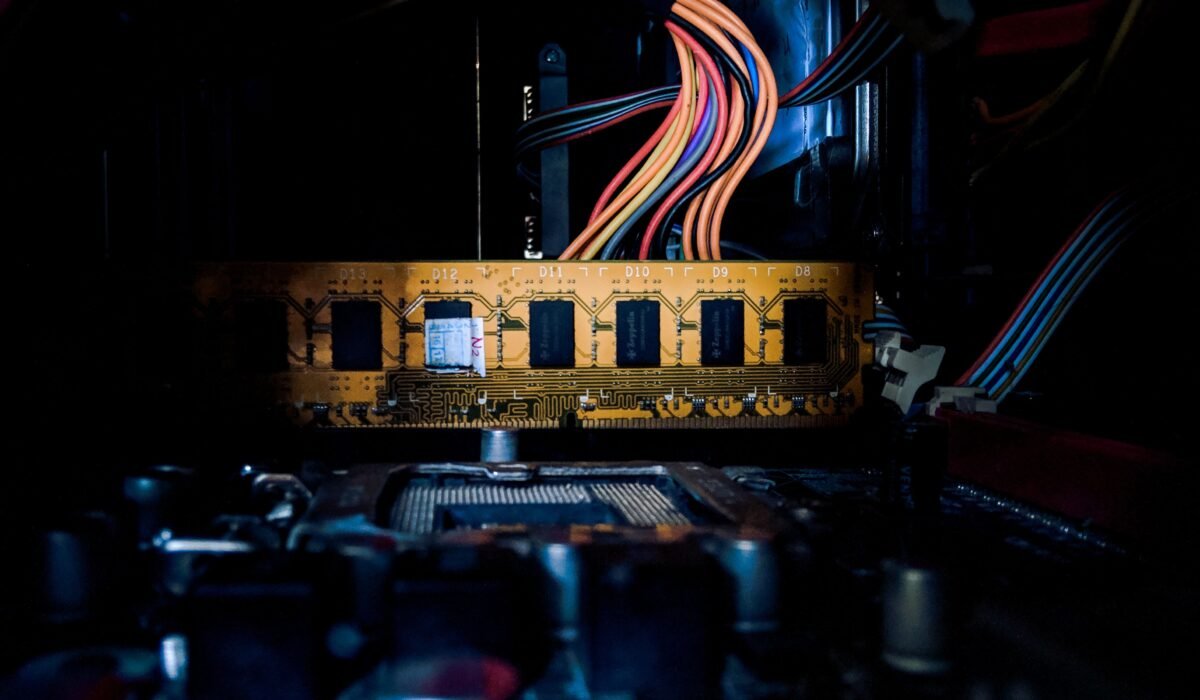
- RAM provides fast, temporary storage for active programs and data.
What are the 10 essential components of a computer system that make your digital world hum? It’s easy to get lost in the jargon, but understanding these core elements is key to appreciating how your devices work, troubleshooting issues, and even making informed purchase decisions. This guide breaks down the fundamental hardware and software that form the backbone of any modern computing experience, ensuring you grasp the full picture of what makes a computer tick.
Quick Answer: A modern computer system includes CPU, motherboard, RAM, storage, GPU, power supply, peripherals, and software like the OS. These parts interact to process data, run applications, and generate output.
What are the 10 essential components of a computer system?
The 10 essential components of a computer system form a cohesive unit, each playing a vital role. These include the Central Processing Unit (CPU), motherboard, Random Access Memory (RAM), storage devices (SSD/HDD), Graphics Processing Unit (GPU), power supply unit (PSU), input/output (I/O) devices (peripherals), cooling systems, and crucially, the operating system (OS) and other essential software. Understanding these essential components of a computer system helps demystify how technology performs complex tasks.
In practice, these essential components of a computer system work in concert. For instance, a high-end Intel processor requires a robust motherboard and sufficient RAM to perform optimally. The seamless integration of these essential components of a computer system is what defines its overall capability and user experience. Without any one of these essential components of a computer system, functionality would be severely limited or nonexistent.
Here’s a detailed look at each of the essential components of a computer system:
- Central Processing Unit (CPU): The brain of the computer.
- Motherboard: The main circuit board connecting all components.
- Random Access Memory (RAM): Fast, volatile memory for active data.
- Storage Devices (SSD/HDD): For long-term data retention.
- Graphics Processing Unit (GPU): Handles visual output and parallel processing.
- Power Supply Unit (PSU): Converts wall power to usable energy for components.
- Input Devices: Allow users to interact with the system (keyboard, mouse).
- Output Devices: Display or convey information from the system (monitor, speakers).
- Cooling System: Prevents overheating of critical components.
- Operating System (OS): Manages hardware and software resources.
Each of these essential components of a computer system is critical. The interplay between them determines the computer’s speed, efficiency, and capabilities. When we discuss the essential components of a computer system, we are essentially outlining the fundamental building blocks of modern digital devices.
The journey from raw data to usable information involves the coordinated effort of all these essential components of a computer system. Even a simple task like opening a document requires multiple essential components of a computer system to spring into action. The architecture of a modern PC hardware setup is a testament to the evolution of these essential components of a computer system.
What is the role of the CPU in a computer system?
The CPU, or Central Processing Unit, is the primary component responsible for executing instructions and performing calculations within a computer system. It acts as the brain, processing all the commands issued by software and hardware. The speed and efficiency of the CPU directly impact the overall performance of the computer. This is one of the most critical essential components of a computer system.
The CPU executes billions of operations per second, fetching instructions from memory, decoding them, executing them, and writing back results. This constant cycle is fundamental to how all essential components of a computer system function. Manufacturers like Intel produce some of the most powerful CPUs available, driving innovation in processing power.
Key CPU Functions:
- Fetch: Retrieves instructions from memory.
- Decode: Interprets the instruction.
- Execute: Performs the operation specified by the instruction.
- Write-back: Stores the result of the operation.
This continuous loop makes the CPU one of the most, if not the most, essential components of a computer system. Without a functioning CPU, the computer cannot process any data or run any programs. The performance of your computer is heavily dependent on the capabilities of its CPU, making it a central piece among the essential components of a computer system.
The core count and clock speed of a CPU are key metrics that determine its processing power. A higher core count allows for better multitasking, while a higher clock speed means faster execution of individual tasks. Understanding these aspects is vital when evaluating the essential components of a computer system for specific needs.
Quotable Insight: The CPU is the heart of any computing device; its power dictates how quickly and effectively the entire system can respond to commands and process information, making it a cornerstone among the essential components of a computer system. This makes the CPU a primary factor when considering the essential components of a computer system.
Why is RAM crucial for computer system performance?
RAM, or Random Access Memory, is crucial for computer system performance because it provides fast, temporary storage for data and programs that the CPU is actively using. It allows the processor to access information much quicker than it could from slower storage devices like hard drives. This speed is vital for the responsiveness of the entire system, solidifying RAM’s status as one of the essential components of a computer system.
Think of RAM as your desk space: the more you have, the more papers and tools you can have laid out and readily accessible for your current tasks. When you open an application or a file, it’s loaded into RAM so the CPU can work with it efficiently. Insufficient RAM can lead to slowdowns, as the system has to constantly swap data between RAM and slower storage, a process known as “paging.”
RAM vs. Storage:
- RAM: Volatile (data lost when power is off), fast, for active tasks.
- Storage (SSD/HDD): Non-volatile (data persists), slower, for long-term storage.
The amount and speed of RAM directly influence multitasking capabilities and the performance of demanding applications. For instance, video editing or running virtual machines requires substantial RAM to handle large datasets smoothly. This highlights why RAM is considered one of the most important essential components of a computer system.
When considering the essential components of a computer system, RAM’s role in enabling quick data retrieval is paramount. A system with ample RAM can keep more applications and data readily available, leading to a smoother user experience. This makes RAM a non-negotiable part of the essential components of a computer system for modern computing.
Quotable Insight: RAM acts as the computer’s short-term memory, providing the CPU with instant access to the data it needs for immediate tasks, thereby significantly boosting the overall responsiveness and performance of the system, marking it as a key element among the essential components of a computer system.
Understanding Storage: SSDs vs. HDDs in a computer system
Storage devices are essential components of a computer system responsible for permanently storing your operating system, applications, and personal files. In modern computers, the primary choices are Solid State Drives (SSDs) and Hard Disk Drives (HDDs), each offering different advantages for a computer system. Understanding the differences between SSDs and HDDs is crucial when building or upgrading your system.
SSDs use flash memory chips to store data, offering significantly faster read and write speeds compared to HDDs. This means quicker boot times, faster application loading, and snappier file transfers. HDDs, on the other hand, use spinning magnetic platters and a read/write head, making them slower but generally more cost-effective per gigabyte. This distinction is important when selecting essential components of a computer system.
Storage Comparison:
| Feature | Solid State Drive (SSD) | Hard Disk Drive (HDD) |
|---|---|---|
| Speed | Very Fast | Slower |
| Durability | More durable (no moving parts) | Less durable (moving parts) |
| Cost per GB | Higher | Lower |
| Noise | Silent | Audible spinning/seeking |
| Boot Time | Rapid | Slower |
Many users opt for a combination: an SSD for the operating system and frequently used applications, and an HDD for mass storage of photos, videos, and documents. This hybrid approach leverages the speed of SSDs and the capacity of HDDs, optimizing the performance of the essential components of a computer system. Choosing the right storage is a critical decision for the essential components of a computer system.
Global IT spending is expected to reach US$5.5 trillion in 2025, a 10% increase from 2024, reflecting the ongoing demand for computing hardware, including storage solutions, according to IDC (2025). This trend underscores the importance of storage as one of the essential components of a computer system. The evolution of these essential components of a computer system continues to drive technological advancement.
Quotable Insight: SSDs provide a dramatic speed boost for booting and loading applications, making them a highly recommended upgrade among the essential components of a computer system for a significantly improved user experience. This is a key consideration for the essential components of a computer system.
The importance of the Motherboard in a computer system
The motherboard is arguably the most central of all the essential components of a computer system, acting as the main circuit board that connects everything together. It houses the CPU, RAM slots, expansion slots for graphics cards and other peripherals, and connectors for storage devices and front-panel ports. Without a motherboard, none of the other essential components of a computer system could communicate or function.
It provides the electrical pathways, known as buses, that allow data to flow between different parts of the computer. The quality and features of a motherboard can significantly impact system stability, upgradeability, and the ability to overclock components. Brands like ASUS, Gigabyte, and MSI are well-known for producing reliable motherboards, crucial for any build. It is a foundational piece among the essential components of a computer system.
Motherboard Functions:
- Connectivity: Links CPU, RAM, GPU, and storage.
- Power Distribution: Routes power to connected components.
- Expansion: Provides slots for additional hardware (e.g., PCIe for GPUs).
- BIOS/UEFI: Basic input/output system firmware for system initialization.
When building a PC, selecting a compatible motherboard is paramount. It must support the chosen CPU socket type, RAM speed and capacity, and have the necessary expansion slots. This makes the motherboard a critical decision point when assembling the essential components of a computer system.
A modern PC is both simple and complicated; it is simple in the sense that many components have become integrated, yet complicated as each part performs more functions than older systems. The motherboard orchestrates this complexity, making it a vital hub among the essential components of a computer system. Its role underscores the interconnectedness of the essential components of a computer system.
Quotable Insight: The motherboard is the central nervous system of a computer, enabling all other essential components of a computer system to communicate and function harmoniously, thereby defining the system’s architecture and potential. This makes it indispensable among the essential components of a computer system.
How does the GPU impact a modern computer system?
The Graphics Processing Unit (GPU) is a specialized electronic circuit designed to rapidly manipulate and alter memory to accelerate the creation of images intended for output to a display device. While essential for gaming and graphics-intensive tasks, its role has expanded significantly, impacting the performance of many modern computer systems. NVIDIA is a leading name in high-performance GPUs.
A GPU offloads graphics rendering tasks from the CPU, allowing for smoother visuals, higher resolutions, and faster frame rates in games and video playback. Beyond visuals, GPUs are increasingly used for general-purpose parallel processing (GPGPU), accelerating tasks like video editing, 3D rendering, scientific simulations, and even certain AI computations. This makes the GPU a critical part of the essential components of a computer system for many users.
GPU Use Cases:
- Gaming: Renders complex 3D environments and effects.
- Video Editing: Accelerates rendering and encoding.
- AI/Machine Learning: Handles parallel computations for training models.
- 3D Modeling: Improves viewport performance and rendering times.
Spending on compute and storage hardware for AI deployments surged 166% year-over-year in Q2 2025, reaching US$82 billion, according to IDC (2025). This surge is largely driven by the parallel processing capabilities of GPUs, highlighting their growing importance among the essential components of a computer system. The impact of GPUs on the essential components of a computer system is profound.
For users involved in creative work or gaming, the GPU is often the most critical component to consider after the CPU. Its ability to process vast amounts of data in parallel makes it indispensable for many demanding applications, further cementing its status as one of the essential components of a computer system. The power of modern GPUs is a testament to advancements in the essential components of a computer system.
Quotable Insight: The GPU revolutionizes visual computing and parallel processing, enabling stunning graphics and accelerating complex computational tasks far beyond the CPU’s capabilities, making it an indispensable element among the essential components of a computer system. This is a key factor for the essential components of a computer system.
Essential Software: The Operating System’s role
While hardware components form the physical structure, the operating system (OS) is arguably the most essential software component of a computer system, acting as the intermediary between the user, applications, and the hardware. It manages all the system’s resources, ensuring that programs run smoothly and efficiently. Microsoft Windows is the most widely used desktop operating system globally.
The OS provides a user interface, allowing you to interact with the computer, and manages tasks like file management, memory allocation, process scheduling, and device control. Without an OS, the hardware would be inert, unable to perform any useful functions. It is the foundational layer upon which all other applications are built, making it a critical element among the essential components of a computer system.
Key OS Functions:
- User Interface: Provides a way for users to interact with the computer.
- Process Management: Schedules and manages the execution of programs.
- Memory Management: Allocates RAM to running applications.
- File System Management: Organizes and controls access to files and directories.
- Device Management: Controls and communicates with hardware devices.
Microsoft Windows holds a dominant market share of around 82.74% among desktop operating systems, according to Statcounter (2024). Apple’s macOS is another major player, particularly in the creative professional space, showcasing different approaches to managing the essential components of a computer system. The choice of OS can significantly influence user experience and software compatibility.
From powering simple laptops to complex servers, the OS is the unifying force that makes the hardware accessible and functional. It is the glue that holds together all the disparate hardware and software elements, making it an indispensable part of the essential components of a computer system. Understanding the OS is key to mastering the essential components of a computer system.
Quotable Insight: The operating system is the conductor of the digital orchestra, orchestrating the complex interactions between hardware and software to deliver a seamless and functional computing experience, thus being a core among the essential components of a computer system. Its role is vital for the essential components of a computer system.
How do computer components work together?
Computer components work together through a sophisticated system of communication managed by the motherboard and the operating system. Data flows between the CPU, RAM, storage, and peripherals via electrical pathways on the motherboard. This intricate dance ensures that every command is processed and every task is executed efficiently, illustrating the synergy of the essential components of a computer system.
For example, when you click an icon to open an application, the CPU fetches instructions from the storage device (SSD/HDD) and loads them into RAM. The CPU then processes these instructions, using RAM for quick access to active data. The GPU renders any visual output, which is sent to the monitor. All these actions are coordinated by the OS, which manages the flow of data and resources between these essential components of a computer system.
Data Flow Example: Opening a File
- User Input: You click an icon (input device).
- OS Instruction: The OS signals the CPU.
- Fetch from Storage: CPU requests the application file from the storage drive (SSD/HDD).
- Load into RAM: The file is loaded into RAM for faster access.
- CPU Processing: The CPU executes the application’s code, using RAM for data.
- GPU Rendering: If graphical elements are involved, the GPU processes and renders them.
- Output Display: The final output is sent to the monitor (output device).
The efficiency of this interaction is what defines a computer’s performance. A bottleneck in any one of the essential components of a computer system—like slow RAM or an underpowered CPU—can hinder the performance of the entire machine. This interconnectedness highlights the importance of a balanced system configuration when considering the essential components of a computer system.
Manufacturers like Lenovo design their systems to ensure optimal compatibility and performance among the essential components of a computer system. Whether it’s a high-performance gaming rig or a business laptop, the goal is to make all the essential components of a computer system work harmoniously. The synergy of these essential components of a computer system is what delivers a powerful computing experience.
Quotable Insight: The seamless interaction between hardware and software components, orchestrated by the motherboard and OS, is what brings a computer to life, transforming individual parts into a powerful, functional system; this collaborative effort is the essence of the essential components of a computer system. This cooperation is key to the essential components of a computer system.
Frequently Asked Questions
What are the 10 parts of a computer?
The 10 essential components of a computer system are the CPU, motherboard, RAM, storage (SSD/HDD), GPU, power supply, input devices, output devices, cooling system, and the operating system. These parts work together to process data, run applications, and provide user interaction. The specific configuration of these essential components of a computer system dictates the computer’s capabilities and performance.
What are the most important parts of a computer?
The most important parts of a computer system are the CPU, motherboard, and RAM, as they form the core processing and communication backbone. However, storage (for data persistence), the GPU (for visual output and parallel processing), and the OS (for managing everything) are also critical. All these essential components of a computer system are interdependent for full functionality.
What are the 5 main parts of a computer?
The five main essential components of a computer system are typically considered the CPU (processing), motherboard (connectivity), RAM (short-term memory), storage (long-term memory), and the operating system (software management). These form the fundamental hardware and software foundation. Each of these essential components of a computer system plays an indispensable role.
What are the 11 basic components of computer hardware?
Beyond the core 10, an eleventh could be considered the case or chassis that houses and protects all the essential components of a computer system. Other lists might include specific I/O controllers or network interfaces as separate entities. The fundamental principle remains that a computer is a collection of interconnected essential components of a computer system working in unison. Global PC shipments increased by 9.1% for the full year 2025, reaching over 270 million units, according to Canalys (2025).
What hardware is needed for a computer?
The essential hardware needed for a functional computer includes a CPU, motherboard, RAM, storage drive (SSD or HDD), power supply unit, and input/output devices like a keyboard, mouse, and monitor. These are the core essential components of a computer system required for basic operation. Without these, the system cannot boot or interact with the user.
Understanding the essential components of a computer system is more than just a technical exercise; it’s about appreciating the intricate engineering that powers our digital lives. From the lightning-fast calculations of the CPU to the foundational management by the operating system, each part plays an indispensable role. By grasping these core elements, you gain a deeper insight into how your devices function and how to optimize their performance. Building a balanced system with compatible essential components of a computer system ensures longevity and efficiency.
The journey through the essential components of a computer system reveals a complex yet elegant design. Whether you’re a gamer, a professional, or an everyday user, recognizing the function of each piece—Intel’s processors, NVIDIA’s graphics, Microsoft’s OS, Apple’s ecosystem, or Lenovo’s hardware innovations—enhances your appreciation. Investing wisely in these essential components of a computer system leads to a more powerful and satisfying computing experience.