Key Takeaways
- AI significantly enhances perception in autonomous vehicles by integrating sensor data for a comprehensive real-time understanding of surroundings.
- The global autonomous vehicle AI market size was valued at USD 3.89 billion in 2025, according to Intel Market Research (2026).
- Predictive AI algorithms forecast road user behavior, allowing autonomous vehicles to anticipate actions and react proactively.
- Generative AI creates synthetic data, crucial for training autonomous vehicles on rare “edge cases” to improve safety.
- The global ADAS market is valued at 361.4 million units in 2026, according to MarketsandMarkets (2026).
Have you ever wondered how self-driving cars navigate complex roads with such precision? The secret lies in advanced artificial intelligence, and it’s clear that AI improves autonomous vehicle decision-making in numerous critical ways. We’ll explore seven essential methods by which AI is revolutionizing how autonomous vehicles perceive, predict, and plan, making our roads safer and more efficient.
Quick Answer: AI enhances autonomous vehicle decision-making by improving perception, predicting road user behavior, planning safe trajectories, and learning from vast data. This enables real-time adaptation to complex and unpredictable environments, boosting safety and reliability.
How Does AI Help Self-Driving Cars Make Decisions?
AI helps self-driving cars make decisions by processing vast amounts of sensory data, interpreting complex road scenarios, and predicting the actions of other road users with unparalleled speed and accuracy. This capability is critical because it allows autonomous vehicles to navigate dynamic environments safely, a core reason why AI improves autonomous vehicle decision-making. For instance, Tesla Autopilot utilizes AI algorithms that learn from billions of miles driven by Tesla owners worldwide, continuously refining its decision-making for tasks like lane-keeping and automatic lane changes.
In essence, AI algorithms for self-driving cars act as the vehicle’s brain, constantly analyzing input from various sensors to construct a real-time understanding of its surroundings. This intricate process enables the vehicle to identify objects, understand traffic laws, and react appropriately to unexpected events.
What most people miss is the sheer volume of data involved; machine learning in autonomous vehicles is a continuous loop of data collection, analysis, and model refinement. This iterative improvement means that the more these systems operate, the better their decision-making becomes, directly demonstrating how AI improves autonomous vehicle decision-making.
Consider the difference between a human driver and an AI system: while humans rely on experience and intuition, AI relies on statistically robust models derived from massive datasets. This fundamental difference allows AI to operate with a level of consistency and precision that human drivers often cannot match, especially in high-stress situations. The ability to make consistent, data-driven decisions is paramount for safety.
What is the Role of AI in Autonomous Vehicles?
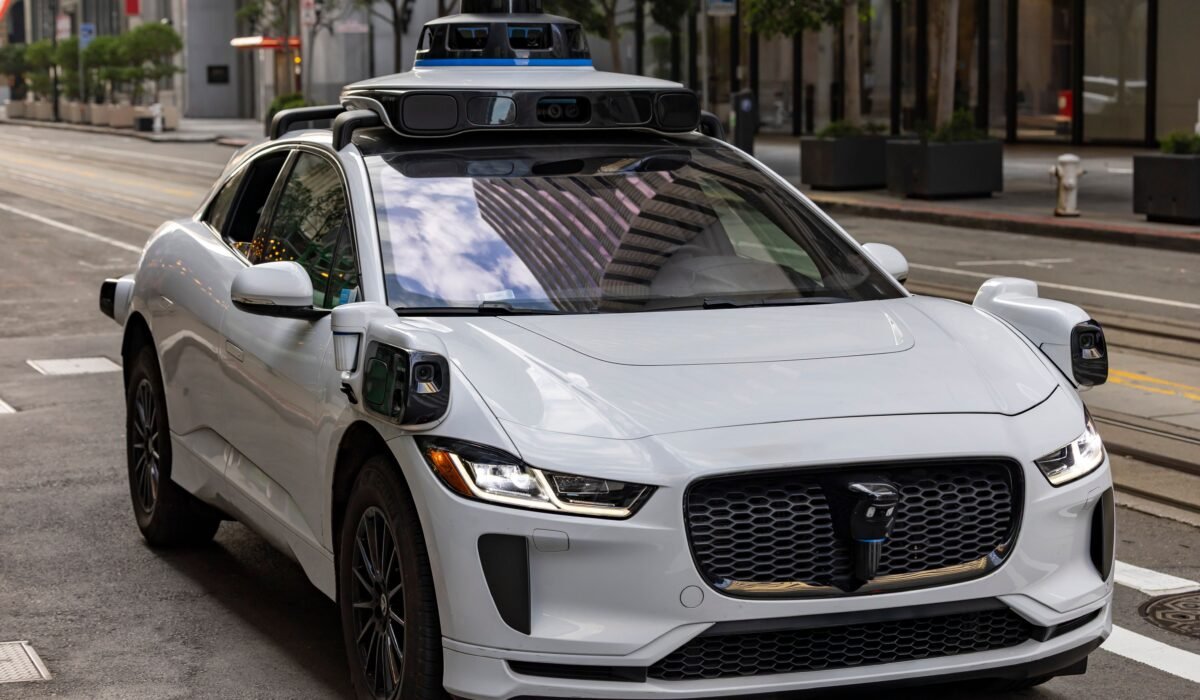
The role of AI in autonomous vehicles is foundational, serving as the central intelligence that enables perception, prediction, planning, and control, ultimately ensuring that AI improves autonomous vehicle decision-making for safe and efficient operation. Waymo Driver, for example, integrates LiDAR, radar, and computer vision AI systems to expertly handle complex urban scenarios, proving AI’s indispensable role in navigating unexpected pedestrians and busy intersections.
AI algorithms are not just about recognizing objects; they are about understanding context and intent. This advanced comprehension allows autonomous vehicles to anticipate potential hazards and adjust their driving strategy proactively. Such predictive analytics for autonomous vehicle safety are a cornerstone of modern self-driving technology.
Without AI, self-driving cars would merely be sophisticated robots unable to adapt to the unpredictable nature of real-world driving. The global autonomous self-driving cars market is projected to grow from US$ 47.89 billion in 2025 to US$ 707.72 billion by 2035, registering a robust CAGR of 31.5%, according to DataM Intelligence (2026), highlighting AI’s central role in this expansion.
Here’s a breakdown of AI’s critical roles:
- Perception: Interpreting sensor data (cameras, radar, LiDAR) to understand the environment.
- Prediction: Forecasting the movements and intentions of other road users.
- Planning: Determining optimal paths and maneuvers based on perceived and predicted data.
- Control: Executing planned actions through steering, acceleration, and braking.
- Learning: Continuously improving performance through vast datasets and simulations.
Each of these roles is interconnected, forming a robust system where AI improves autonomous vehicle decision-making at every step. This integrated approach is what sets truly autonomous systems apart.
Enhancing Perception with Sensor Fusion and AI Algorithms
Enhancing perception with sensor fusion and AI algorithms provides autonomous vehicles with a comprehensive and reliable understanding of their environment, directly demonstrating how AI improves autonomous vehicle decision-making in real-time. This sophisticated integration of data from multiple sensors, such as cameras, radar, and LiDAR, creates a more complete and resilient environmental model than any single sensor could achieve. For example, Cruise employs AI algorithms alongside LiDAR and high-definition mapping to interpret surroundings for safe navigation in urban settings, showcasing the power of sensor fusion.
Sensor fusion in autonomous driving mitigates the limitations of individual sensors. Radar excels in adverse weather but lacks precise object classification, while cameras offer rich visual data but struggle in low light. LiDAR provides accurate depth mapping but can be affected by heavy rain or fog.
By combining these inputs, AI algorithms for self-driving cars can cross-reference information, eliminating false positives and filling in gaps. This process leads to highly accurate object detection, classification, and tracking, which is fundamental for safe navigation and explains why AI improves autonomous vehicle decision-making.
The global ADAS market, a precursor to fully autonomous systems, is valued at 361.4 million units in 2026 and is expected to reach 582.6 million units by 2033, according to MarketsandMarkets (2026). This growth underscores the increasing reliance on advanced perception systems.
The NVIDIA DRIVE platform, for instance, uses deep learning AI to process vast amounts of sensor data, enabling vehicles to perceive pedestrians, vehicles, traffic signs, and lane markings even in challenging conditions. This robust perception system is a primary reason why AI improves autonomous vehicle decision-making, allowing for safer and more confident navigation.
For more on this topic, you might find our article AI’s Role in Automotive Sensor Fusion: Essential 2026 Guide insightful.
Predicting Road User Behavior with Advanced AI
Predicting road user behavior with advanced AI allows autonomous vehicles to anticipate the actions of pedestrians, cyclists, and other drivers, moving beyond simple reaction to proactive navigation and significantly improving safety as AI improves autonomous vehicle decision-making. Machine learning in autonomous vehicles trains on vast datasets of real-world driving scenarios to recognize patterns and infer intentions, leading to more fluid and safer interactions. This predictive capability is a monumental leap from purely reactive systems.
Consider a pedestrian at a crosswalk: a human driver might infer their intent to cross based on body language. AI uses algorithms to analyze speed, trajectory, gaze direction (if visible), and environmental cues to make a similar, often more accurate, prediction. This is a prime example of how AI improves autonomous vehicle decision-making.
AI expert Neil Lawrence explained that autonomous vehicle AI failed Elaine Herzberg, a pedestrian killed by a self-driving car in 2018, because “she was a pedestrian pushing a bicycle,” a scenario the system had not seen before and classified as “other.” This highlights the critical need for robust predictive models trained on diverse and comprehensive data.
Advanced AI models, often leveraging deep neural networks, continuously refine their understanding of human behavior. This means they can predict not just *what* might happen, but *when* and *how likely* it is to happen. This nuanced understanding is essential for complex urban driving.
Here’s how predictive AI enhances safety:
- Anticipating Lane Changes: Predicting when a neighboring vehicle might merge, allowing the AV to adjust speed or lane proactively.
- Pedestrian Intent: Forecasting if a pedestrian on the sidewalk intends to step into the road.
- Cyclist Maneuvers: Understanding the likely path of a cyclist in traffic, especially in busy intersections.
- Sudden Braking: Predicting the likelihood of a vehicle ahead stopping abruptly, enabling earlier braking.
By moving from reactive responses to proactive anticipation, AI improves autonomous vehicle decision-making, dramatically enhancing overall road safety and efficiency.
Optimizing Path Planning and Trajectory in Autonomous Vehicles
Optimizing path planning and trajectory in autonomous vehicles involves AI algorithms calculating the most efficient, safest, and most comfortable route through a dynamic environment, ensuring that AI improves autonomous vehicle decision-making for seamless navigation. These algorithms consider a multitude of factors, from traffic conditions and road hazards to speed limits and the predicted actions of other road users, to plot a precise and adaptable course.
The complexity of path planning goes beyond simply finding the shortest route. It involves real-time adjustments for obstacles, construction, and sudden changes in traffic flow. This dynamic optimization is where machine learning in autonomous vehicles truly shines, allowing for instantaneous recalculations.
Think of it as a continuous, rapid-fire game of chess, where the AI is always looking several moves ahead, evaluating potential outcomes for every micro-decision. This capability is a core reason why AI improves autonomous vehicle decision-making, leading to smoother and more predictable journeys.
Path planning algorithms must also factor in passenger comfort, avoiding abrupt braking or sharp turns where possible. This is a delicate balance between safety, efficiency, and the user experience. The constant refinement of these algorithms is a testament to the power of AI.
Here’s a comparison of traditional vs. AI-optimized path planning:
| Feature | Traditional Path Planning | AI-Optimized Path Planning |
|---|---|---|
| Flexibility | Static, rule-based | Dynamic, adaptable to real-time changes |
| Reaction Time | Slower, relies on pre-programmed responses | Instantaneous, predictive adjustments |
| Efficiency | May not find optimal route in complex scenarios | Continuously seeks most efficient, safest path |
| Comfort | Less emphasis, can be jerky | Prioritizes smooth, comfortable ride |
| Learning | Limited to updates | Continuous learning from data (machine learning in autonomous vehicles) |
The ability to continuously learn and adapt is why AI improves autonomous vehicle decision-making so dramatically in path planning, moving beyond rigid rules to intelligent, context-aware navigation.
Leveraging Generative AI for Training and Edge Cases
Leveraging generative AI for training and edge cases allows autonomous vehicle developers to create vast amounts of realistic synthetic data, crucial for preparing AI systems for rare, dangerous, or hard-to-replicate scenarios, thereby significantly enhancing how AI improves autonomous vehicle decision-making. This approach addresses a major challenge: the scarcity of real-world data for “edge cases” that are critical for safety but infrequent in everyday driving. Waabi, for instance, utilizes generative AI models to create synthetic data for training autonomous vehicles, directly mitigating safety risks associated with real-world training limitations.
Training autonomous vehicles solely on real-world data is time-consuming and expensive. More importantly, it’s virtually impossible to encounter every possible “edge case” – like a child chasing a ball into the street, or an unusual animal crossing the road – through real-world driving alone. Generative AI fills this gap by creating highly realistic simulations of these scenarios.
This synthetic data allows AI algorithms for self-driving cars to be exposed to millions of variations of dangerous or unusual events in a safe, controlled environment. This intensive training ensures that when a genuine edge case occurs in the real world, the vehicle’s AI has already “seen” and learned from similar situations, which is vital for how AI improves autonomous vehicle decision-making.
The cost of unplanned equipment downtime inflicts an estimated $50 billion annual cost across global manufacturing, stripping 5% to 20% of total productive capacity from a typical automotive plant, according to Deloitte (2026). This statistic, while not directly about training, highlights the immense financial and safety implications of system failures, making comprehensive AI training via generative AI even more critical.
Benefits of Generative AI in AV Training:
- Scalability: Generate virtually unlimited data variations at a fraction of the cost of real-world data collection.
- Safety: Safely train for hazardous scenarios that would be too risky to replicate in physical tests.
- Diversity: Introduce diverse environments, weather conditions, and road user behaviors that are difficult to capture organically.
- Efficiency: Accelerate the development cycle by rapidly creating targeted training data.
By enabling comprehensive preparation for the unforeseen, generative AI for autonomous vehicle training is a powerful tool ensuring that AI improves autonomous vehicle decision-making in the most critical moments.
Addressing Ethical Dilemmas and Building Trust in AI Decisions
Addressing ethical dilemmas and building trust in AI decisions is paramount for the widespread acceptance and deployment of autonomous vehicles, as public confidence directly influences how effectively AI improves autonomous vehicle decision-making. These ethical challenges often involve “trolley problem” scenarios where an AI system must make a life-or-death choice, forcing a societal discussion on accountability and moral programming. Harvard Business School Professor Joseph Badaracco states, “At the point [at] which you believe that adding autonomy reduces injury and death, I think you have a moral obligation to deploy it even though you’re going to get sued and blamed by a lot of people” (2024).
The core of the dilemma lies in programming machines to make decisions that, for humans, involve complex moral reasoning. Who is responsible when an autonomous vehicle makes a decision that results in harm? This question of ethical considerations of AI in self-driving cars is not just theoretical; it has profound legal and societal implications.
Building trust requires transparency. People need to understand not just that AI improves autonomous vehicle decision-making, but also *how* these decisions are made. This leads to the concept of Explainable AI (XAI), which aims to make AI’s internal processes understandable to humans.
The “trolley problem” is a classic thought experiment that highlights these challenges:
- Should an autonomous vehicle prioritize the lives of its occupants over pedestrians?
- What if a decision must be made between two bad outcomes, such as hitting a group of children or swerving into a wall, endangering the passenger?
These are not simple equations; they involve values that vary across cultures and individuals. Computer scientist Stuart Russell suggests that to make AI safe, machines should “check in with humans—rather like a butler—on any decision,” emphasizing the need for a human-centric approach to AI ethics. This collaborative model is crucial for building public trust, reinforcing that AI improves autonomous vehicle decision-making when aligned with human values.
The Future: Explainable AI and Human Oversight in Autonomous Systems
The future of autonomous systems hinges on Explainable AI (XAI) and robust human oversight, ensuring that the sophisticated ways AI improves autonomous vehicle decision-making are transparent, auditable, and aligned with human values and safety protocols. XAI focuses on developing AI models whose decisions can be understood and interpreted by humans, moving beyond “black box” algorithms to provide clarity on why a specific action was taken. This transparency is vital for public acceptance and regulatory approval.
Anthony Corso, executive director of the Stanford Center for AI Safety, emphasized this point, stating, “Our main challenge as a field is how do we guarantee that these amazing capabilities of AI systems—driverless cars and pilotless planes—are safe before we deploy them in places where human lives are at stake?” (2022). The answer lies partly in XAI.
Human oversight doesn’t imply constant intervention but rather a framework for monitoring, auditing, and, when necessary, overriding autonomous decisions. This ensures accountability and a crucial safety net. The combination of advanced AI and human intelligence is the most robust path forward.
Key aspects of this future include:
- Post-Incident Analysis: XAI allows investigators to understand the exact reasoning behind an autonomous vehicle’s actions in case of an accident.
- Regulatory Compliance: Demonstrating how AI adheres to safety standards becomes easier with interpretable models.
- Operator Confidence: Human operators, whether remote or in-vehicle, can better trust the system if they understand its logic.
- Continuous Improvement: Identifying patterns in AI decision-making can pinpoint areas for further algorithm refinement.
Ultimately, the goal is to create autonomous systems where AI improves autonomous vehicle decision-making not just efficiently, but also with demonstrable safety and ethical consideration, fostering genuine trust from all stakeholders.
Frequently Asked Questions
How does AI help self-driving cars make decisions?
AI helps self-driving cars make decisions by processing vast amounts of sensor data, understanding complex environments, and predicting road user behavior to plan safe trajectories. Over 65% of new vehicles are expected to be equipped with predictive maintenance features by 2026, according to Addepto (2026), highlighting AI’s role in proactive safety. This enables vehicles to navigate dynamically and react appropriately to unforeseen circumstances.
What is the role of AI in autonomous vehicles?
The role of AI in autonomous vehicles is to serve as the central intelligence for perception, prediction, planning, and control, ensuring safe and efficient operation. For instance, Waymo Driver integrates AI systems like LiDAR and computer vision to handle complex urban scenarios. AI is indispensable for making real-time, context-aware decisions that human drivers typically make.
What kind of AI is used in self-driving cars?
Self-driving cars primarily use deep learning, machine learning, and computer vision AI, often combined with sensor fusion techniques. These AI algorithms for self-driving cars enable tasks like object detection, behavior prediction, and path planning. These advanced AI methods allow autonomous vehicles to continuously learn and adapt to diverse driving conditions.
What are the ethical considerations of AI in self-driving cars?
Ethical considerations of AI in self-driving cars include programming moral choices in unavoidable accident scenarios, establishing accountability for AI-driven decisions, and ensuring fairness in algorithmic biases. Joseph Badaracco of Harvard Business School (2024) noted the moral obligation to deploy autonomy if it reduces injury, despite potential blame. Addressing these dilemmas is crucial for public trust and regulatory acceptance.
How AI improves road safety in AVs?
AI improves road safety in AVs by enhancing perception through sensor fusion, accurately predicting the behavior of other road users, and planning optimal, defensive driving trajectories. This significantly reduces human error, which is a major cause of accidents. Unplanned equipment downtime costs global manufacturing an estimated $50 billion annually, according to Deloitte (2026), illustrating the critical need for reliable systems like AI-driven AVs to prevent costly and dangerous failures.
As we’ve explored, the multifaceted ways AI improves autonomous vehicle decision-making are nothing short of revolutionary, impacting everything from basic perception to complex ethical dilemmas. By continually refining AI algorithms for self-driving cars and integrating advanced techniques like generative AI for autonomous vehicle training, we are moving towards a future where autonomous vehicles are not just possible, but inherently safer and more reliable. The journey ahead will involve continued innovation, robust regulatory frameworks, and a commitment to transparency and human oversight to fully realize the promise of this transformative technology. Ready to see how AI continues to reshape our world?